

Health

Food allergies are on the rise, affecting 32 million Americans. Yet local clinicians are optimistic about future treatments, including one that could soon receive FDA approval.

New imaging techniques will allow researchers to study small changes in the retina that could indicate the early stages of brain diseases, like Alzheimer’s and Parkinson’s.

The three-year funding award will be used to develop population-specific cancer prevention and screening programs at community hospitals and health centers in Austin, Humboldt Park and South Shore.


Measles, a virus once thought to be eradicated in the U.S. less than 20 years ago, seems to be rearing its head again. Where are we seeing the virus take hold, and why doesn’t it completely die off?

Northwestern University is one of dozens of medical centers across the country studying whether the drug can protect against or slow down the progression of the disease in patients already experiencing symptoms.
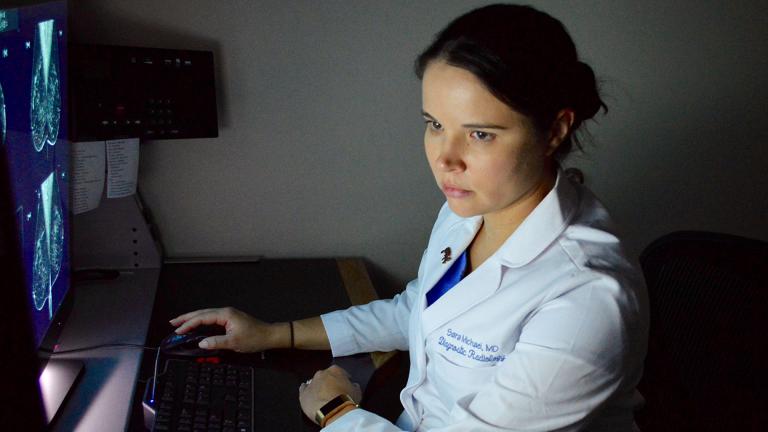
A new rule would require that mammography providers notify women who have dense breast tissue, a risk factor for breast cancer.

An individual with a confirmed case of measles visited more than a dozen Cook County stores, restaurants and theaters before realizing they were sick, according to health officials.

A state audit contradicted former Gov. Bruce Rauner’s claim that his administration had done everything federal experts recommended to remedy a deadly 2015 Legionnaires’ disease crisis.

Regulators plan to clean up the soil of several residential yards with high levels of brain-damaging manganese, but they have yet to finalize a plan for addressing homes with elevated levels of lead in the soil.

Caring for a sick family member, such as a child, is the top reason why parents take off work, according to a new citywide survey. Yet nearly 40 percent of working parents don’t have paid leave.

As many as one in seven women experience postpartum depression, which can be life-threatening when severe. But there hasn’t been a treatment specific to the condition – until now.

There are 12 million infants and toddlers living in the United States, but the state in which they spend their first few years can make a big difference in their well-being for years to come, a new report finds.

The latest U.S. research on eggs won’t go over easy for those who can’t eat breakfast without them. Adults who ate about 1.5 eggs daily had a slightly higher risk of heart disease than those who ate no eggs, a study shows.

Can an app help people stick to their medications? That’s what local researchers hope find out in a new study funded by the National Institutes of Health.

A year after lawmakers approved an identical bill that was vetoed by then-Gov. Bruce Rauner, senators vote 39 to 16 to raise the age from 18 to 21 for the legal purchase and use of tobacco products and e-cigarettes.

The Illinois Department of Public Health is warning patients and health care providers about the risks of stem cell therapies that are not approved by the FDA following a national investigation into their use.
Trending
Pritzker Says Chicago Bears Stadium Legislation Could Be Voted on in Fall Veto Session

11 of the Chicago Area’s Most Dazzling Holiday Light Shows

Trump Replaces Susie Wiles With Stephen Miller as Chief of Staff After GOP’s Midterm Defeat

Cook County’s Top Prosecutor Bars Vendor From Sharing Data With ICE

Pritzker Appeals FEMA’s Decision to Deny Illinois Disaster Aid

Sign up for the WTTW News newsletter