

Study
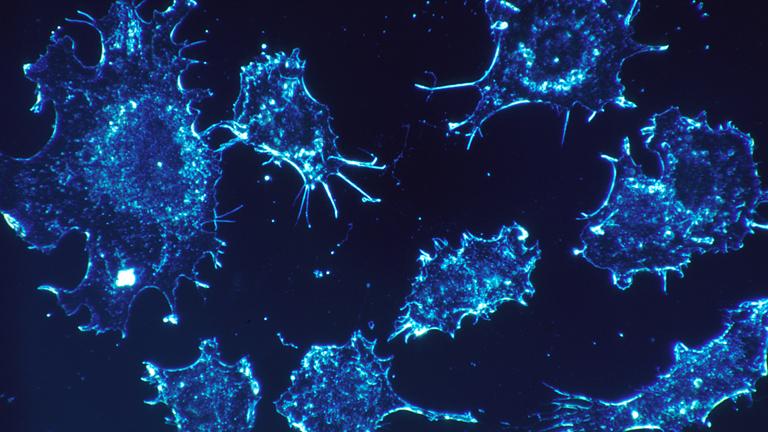
People with Huntington’s disease, a fatal genetic illness, are less likely to develop cancer than the general population. Now, scientists have a better understanding as to why, thanks to the discovery of an “assassin molecule” by Northwestern University.

Two Chicago-area researchers have uncovered what they think is the first piece of physical evidence showing that forgotten memories could still live on inside our brains.

A new University of Chicago study finds 92 percent of teens who received sexual and reproductive health care via mobile health units would recommend their friends use them too.

Football players are often thought of as modern-day gladiators, but even the most hard-headed linebacker has nothing on the woodpecker, at least when it comes to sustaining blows to the noggin.

Men are less likely to develop multiple sclerosis than women, and now scientists have a better understanding as to why that is, thanks to the discovery of a “guardian molecule” by Northwestern University scientists.

Researchers have created a tool that can predict language learning in deaf children after they receive a cochlear implant. Prediction is just the first step, says Dr. Nancy Young. “We’re trying to create precision therapy.”


You may have been warned that “sitting is the new smoking,” but a new study may have you second-guessing the purchase of a standing desk – and not so worried if you tend to fidget.

Parents have admonished children for making funny faces since about the dawn of time. But a 30-minute facial exercise routine can erase some signs of aging in middle-aged women, a new study finds.

A gene found in an Amish family in Indiana may hold the secret to living longer and healthier. We speak with the lead author of a new study.

Babies born within 2 miles of a fracking site are more likely to suffer negative health effects, according to a new study co-authored by a professor at the University of Chicago.

People with early stage Parkinson’s disease could benefit from high-intensity exercise, according to a first-of-its-kind study which found that it decreased the worsening of motor symptoms when performed three times a week.

Fibromyalgia affects up to 6 percent of the world’s population, yet little is known about the cause of the disorder, characterized by widespread pain and fatigue. University of Illinois at Chicago researchers now hope to uncover its origins.

In an effort to reduce the number of back-to-back pregnancies among adolescents, Chicago researchers are designing a multimedia tool kit to educate, engage and offer resources to young women.

Northwestern University scientists believe they may have found the “Achilles’ heel” of cancer. In a recent study, researchers were able to almost completely eradicate the disease in laboratory cell cultures.

Scientists say there are more bacteria in the ocean than stars in the universe, yet little is known about them. A new study outlines the “crazy idea” that led to a project described by one scientist as the “Google database for microbes.”

In some Chicago neighborhoods, pharmacies appear to be in abundant supply. In others, they’re scarce. Researchers will spend the next three years addressing their dwindling numbers on the city’s South and West Sides.
Trending
Who Is Running, or Thinking About Running, to Become Chicago’s Next Mayor

Suspend CPD Officers, Sergeant Repeatedly Accused of Making Improper Traffic Stops for a Combined 330 Days: Police Brass

Johnson’s Debt Refinancing Plan Results in Just Half of What He Promised, Forcing Officials to Scramble to Fill Budget Gap

No Tax Hikes or Layoffs Needed to Close Cook County’s $550M Gap Thanks to ‘Budget Magic’: Preckwinkle

Hilario Dominguez, Candidate for CPS Board President, Defends Conduct as Watchdog Reopens Probe Into Inappropriate Behavior Allegations

Sign up for the WTTW News newsletter