Politics
E-Scooter Safety Concerns Rise as Chicago Sees Record-High Ridership
Chicagoans are spending more time outside in the summer months, but there’s a new trend in how they’re getting around.
Earlier this year, the Chicago Department of Transportation announced that e-bikes and e-scooters are seeing more riders than ever.
Dave Simmons, executive director of Ride Illinois, a nonprofit that aims to promote safe and accessible rides across the state, said most users aren’t aware of the specific requirements for their micromobility devices.
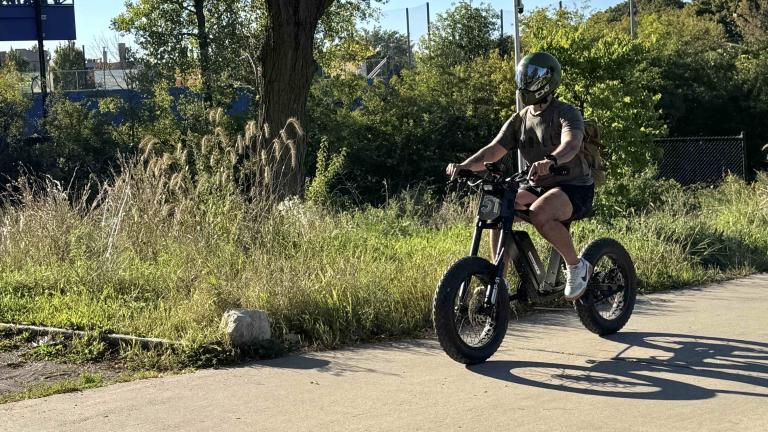
“Class 1 and Class 2 e-bikes have a maximum speed of 20 miles an hour, the difference is Class 1 has a pedal-assist, which means that the user has to be pedaling it,” Simmons said. “Class 2 is a throttle, so it can go without the user pedaling. And the Class 3 is similar to a Class 1, it just has a higher maximum speed, which is 28 miles an hour. … Currently they can be used on bike lanes, they can be used on bike trails, not on sidewalks.”
As ridership grows, so do safety concerns. So far in 2026, there have been three teen deaths related to e-scooters in Chicago. Alex Bacio, 16, Astrid Alexandra Carrillo Nogera, 17, and Violet Harris, 15, were all fatally struck by motor vehicles while riding e-scooters.
“The users need to be aware, they need to be defensive when they’re riding and do certain things to keep themselves safe,” Simmons said. “And then, motorists need to realize that they are sharing the road, bike lanes that may be adjacent to the road, with vulnerable road users who don’t have the same protection that they do in their vehicles.”
Nationally, death and injury rates are increasing. The United States Product Safety Commission released new data earlier this year that shows that emergency room visits related to e-bikes and e-scooters nearly quadrupled from 2017 to 2024.
To combat these national increases, CDOT is taking new steps to promote safety and education for riders, including the launch of a new e-scooter safety campaign. In a statement to WTTW News, a spokesperson from CDOT said, in part, “Chicago is also rapidly expanding infrastructure that supports safer riding, including protected bike lanes and street design changes that reduce speeds and conflicts between road users. These are proven safety tools that have helped result in significant traffic safety gains in Chicago over the last several years (~30% reduction in overall traffic fatalities since 2021 and ~60% decline in fatalities involving people riding a bike or scooter in that same time).”
Illinois is also working to promote safety through a new bill passed in the General Assembly. SB 3484 aims to install new license and registration requirements, set age restrictions and create clearer distinctions between micromobility vehicles based on speed. The bill is expected to be signed into law by Gov. JB Pritzker, with changes taking effect Jan. 1, 2027.
In Edgewater, e-scooters are blocked on a busy stretch of Sheridan Road, from Bryn Mawr to Devon avenues, using geofencing technology. Ald. Leni Manaa-Hoppenworth (48th Ward) said because the road functions as the entrance to the lakefront, it needs to be safer for all pedestrians.
“What we’re saying is all of Sheridan Road should not be subjected to scooters on the sidewalks,” Manaa-Hoppenworth said. “Because it is a very pedestrian-friendly ward, we want people to be able to age in place and to be able to walk around no matter how they get around. We have a lot of older folks who live on Sheridan Road also, and there have been complaints about high-speed bicyclists and also scooters.”
Lime and Divvy are two of the most popular micromobility vehicle suppliers in Chicago. Both companies declined WTTW News’ invitation to join “Chicago Tonight,” but issued statements supporting the city’s efforts to promote safety for riders and pedestrians.
“We send regular reminders through our app, and bikes and scooters have highly legible stickers that make clear sidewalk riding is not allowed,” LeAaron Foley, regional head of government relations for the Midwest at Lime said. “If we identify a rider as underage, we ban them immediately. For riders who ride on sidewalks or park vehicles obstructively, we take escalating enforcement actions, ranging from warnings, fines, suspensions and even bans for repeat offenders.”
A spokesperson from Lyft, which owns Divvy’s parent company, said, “We support CDOT’s continued efforts to expand safe riding infrastructure and strengthen education and enforcement for all riders, and we’ll keep working with the City as ridership grows to help make the system safer for everyone.”
Despite these efforts, Simmons said companies can do more to ensure users are riding safely.
“The assumption is that these things are fun and people can just hop on and go, but they do move quickly, people ride with more than one person,” Simmons said. “There are some kind of logical safety precautions that could be taken.”