Democrats Win Control of US House and Senate in Strong Rebuke to Trump and Republicans
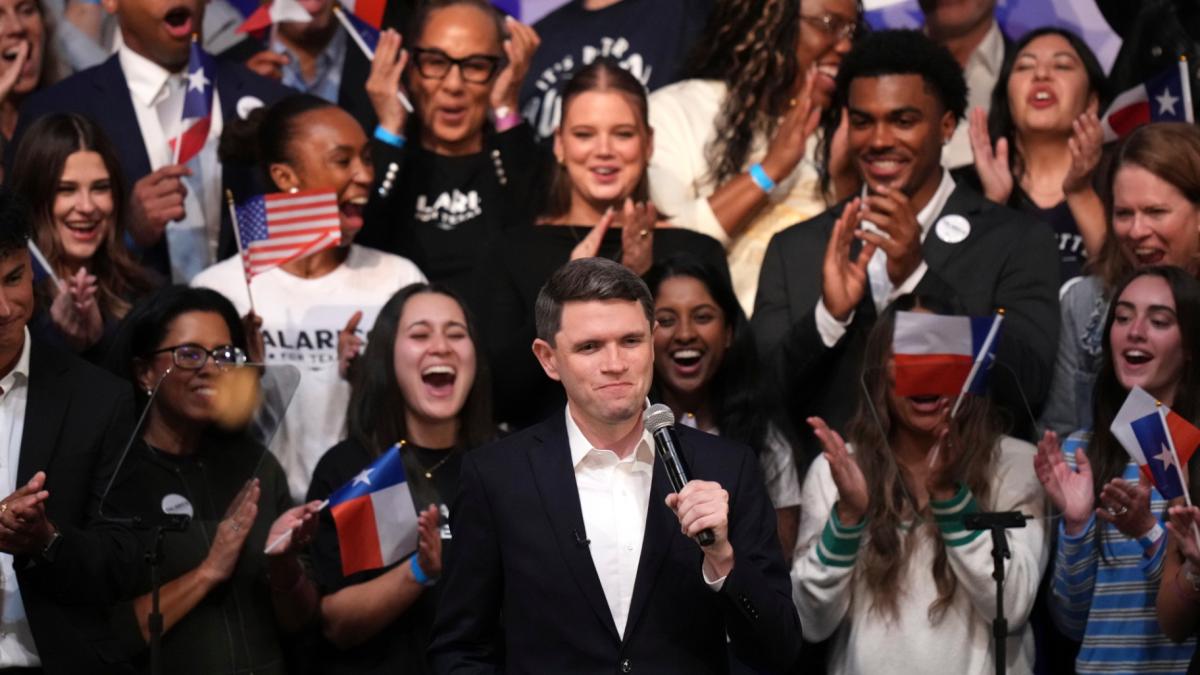 Democratic Senate candidate Texas state Rep. James Talarico speaks at an election night event in Austin, Texas, Tuesday, Nov. 3, 2026. (AP Photo/Eric Gay)
WASHINGTON (AP) — Democrats have won control of both chambers of Congress, delivering a decisive rebuke of Republican governance in Washington and ushering in a new era of congressional resistance to President Donald Trump.
The midterm elections that came to a close Tuesday channeled voters' deep frustrations over high prices, the Iran war and concerns over government corruption. Democrats routed their rivals across the map, flipping states that have voted Republican for decades and that Trump won by double digits just two years ago.
That includes James Talarico’s stunning Senate victory in Texas, where no Democrat had won statewide office in more than 30 years, and Annie Andrews’ upset victory over Sen. Darline Graham in South Carolina. Trump had thrown his full weight behind both losing candidates.
Even Republican Sen. Susan Collins of Maine, a battle-tested survivor of difficult elections, lost to Democrat Troy Jackson.
The results from across the country were a major blow to Trump, who spent nearly every day of the last month holding rallies to energize his supporters but was unable to stop a wipeout.
Results Will Reshape the Rest of Trump’s Term
While Trump has proven adept at steamrolling efforts to rein him in, Democratic control will profoundly reshape Trump’s final two years in office and hamstring his legislative agenda.
Party leaders have signaled they’ll use their new power to ensure Trump’s final two years in office are dominated by a series of investigations of top members of his administration and deeper scrutiny of how he’s enriched his family. Impeachment of Trump and his Cabinet officials is not off the table. Defense Secretary Pete Hegseth and tech titan Elon Musk, a former top Trump adviser, are among possible targets for investigations.
In celebratory events Tuesday night, Democratic Senate Leader Chuck Schumer called the results a “generational remake of the Senate map.” Democratic House Leader Hakeem Jeffries said “the American people are crying out for transformational change.”
Trump immediately sought to shift blame for his party’s losses, posting on his social media site before polls even closed on the West Coast that he wasn’t on the ballot — even though he spent weeks asking voters to act like he was. He vowed to veto Democrat-controlled legislation, sharing a picture of a red baseball cap with “VETO” stenciled in the style of his trademark “Make America Great Again” campaign swag.
In a late-night phone interview with Fox News, Trump said he didn’t consider the elections to be a personal defeat. Voters, he said, “didn’t like the candidates.”
Democrats had braced for Trump to again try to undermine the results if they won after he warned that noncitizens would cast ballots en masse and filed lawsuits in Alaska and California. Instead, he said on Fox that he would accept them.
Despite the results, Senate Majority Leader John Thune wrote on X that “Senate Republicans will not stand idly by as the far-left, socialist wing of the Democrat Party attempts to unwind everything we’ve done.” He said they will work with Trump “to stop the worst impulses of Democrat extremism.”
Democrats Charted an Extraordinary Path to Senate Victory
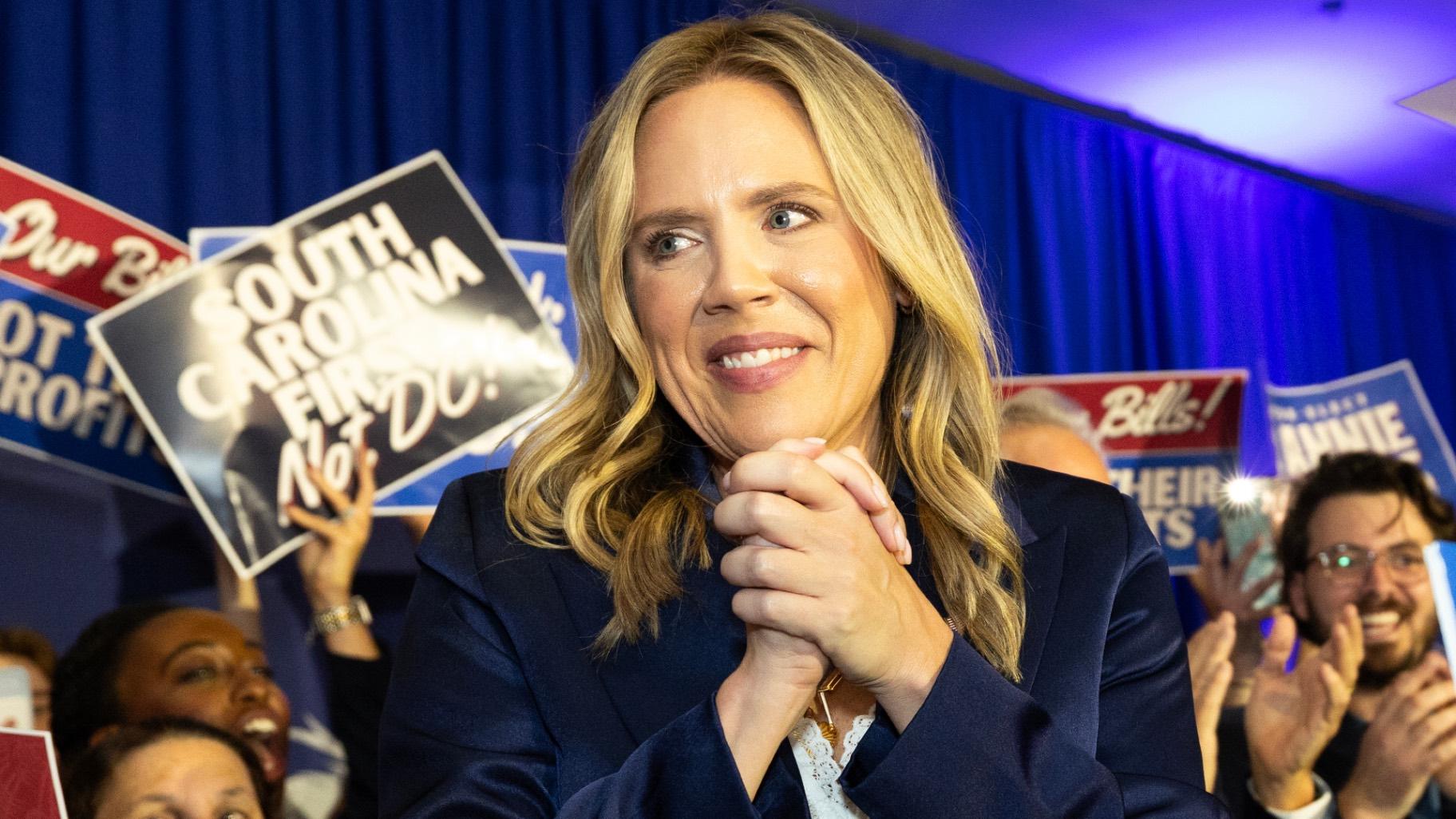 outh Carolina Democratic Senate candidate Dr. Annie Andrews takes the stage at an election night event in Charleston, S.C., Tuesday, Nov. 3, 2026. (AP Photo/Mic Smith)
Midterm elections are typically difficult for the president’s party, but Republicans had originally expected that their Senate majority was safe. Instead, Democrats marched through some of the most conservative states in the nation.
Josh Turek defeated Rep. Ashley Hinson in Iowa, while Adam Hamilton ousted Sen. Roger Marshall in Kansas to become the state’s first Democratic senator since 1932. A cascade of surprising Democratic victories included Talarico defeating Ken Paxton in Texas, Andrews upsetting Graham in South Carolina, Sherrod Brown topping Sen. Jon Husted in Ohio and Roy Cooper taking an open North Carolina seat.
Trump played an outsized role in the Texas, North Carolina and South Carolina races. He endorsed Paxton and helped him defeat incumbent Sen. John Cornyn in the Texas primary, even as Republican officials warned his efforts could be costly. He sharply criticized North Carolina Republican Sen. Thom Tillis, who opted not to seek reelection. He also supported Graham, despite doubts within the party that she was the right candidate to replace her brother, who died unexpectedly earlier this year.
Less of a surprise was Democratic Sen. Jon Ossoff winning reelection in Georgia, defeating Rep. Mike Collins. Rep. Chris Pappas also won a Senate race in New Hampshire, defeating former Sen. John Sununu to replace retiring Democratic Sen. Jeanne Shaheen.
In the House, Democrats reached deeply into Trump-won territory to defeat his preferred candidates and win in even some of the most Republican states. There were multiple Democratic pickups in Iowa, Texas, Florida and Pennsylvania and new Democratic seats in Kentucky, Missouri, Nebraska, Ohio and Utah. In Iowa, there was an all-Republican congressional delegation going into the election. Democrats will now represent three of them.
Defeated Republicans included Rep. Tom Kean of New Jersey, who missed four months of votes in Washington this year as he underwent treatment for depression, and Rep. Mike Lawler in New York.
Bracing for a tough night, Republicans had spent the campaign’s final stretch pumping tens of millions of dollars into states and districts that Trump won handily two years ago, as Trump campaigned in heavily red areas. But even Republicans' money advantage didn’t stem the Democratic tide.
“I wasn’t on the Ballot and if I was, we would have won IN A LANDSLIDE!” Trump wrote on his social media site.
The Electorate is Frustrated and Unhappy
Voters were sour heading into Tuesday, deeply unhappy with the country’s direction and pessimistic about the future, according to The AP Voter Poll.
Most said they feel frustrated, with about three-quarters saying they feel “angry” or “dissatisfied” with the country’s current trajectory. Dissatisfaction was particularly high in blue states, but even in red states, a majority of voters were at least “dissatisfied.”
The economy was key to Trump’s White House comeback two years ago. But the poll found that three-quarters of voters say the economy is “not so good” or “poor." About 8 in 10 say inflation has caused a “severe” or “moderate” financial hardship for their households.
Government corruption was also a big issue with voters. Roughly half cited it and the cost of living as “crucial” to their vote for Congress — higher than immigration enforcement policies, the war in Iran and artificial intelligence data centers. About 6 in 10 voters said Trump prioritizes his own personal interests more than the country’s interests.
Despite their relative advantage on issues, the Democratic Party is not much more popular with voters than the Republicans. Just under half of voters have a “somewhat” or “strongly” favorable view of the Democratic Party, while about 4 in 10 view Republicans positively.
Republicans tried to buck historical midterm precedent with an aggressive redistricting effort aimed at creating a more favorable congressional map. But in Florida and Texas, where Republicans hoped to pick up as many as nine seats, the plan fell short, with Democrats picking up targeted districts.
The GOP Could Still Notch Some Key Senate Wins
Outstanding Senate battlegrounds include Alaska, where the Trump administration filed a lawsuit to block certification of Senate results if Republican incumbent Dan Sullivan loses the race, citing the presence of a second candidate named Dan Sullivan on the ballot.
Republicans also hoped to pick up Michigan, where Mike Rogers faces progressive Abdul El-Sayed — one of a crop of left-wing candidates who prevailed in Democratic primaries. El-Sayed’s former primary opponent, Haley Stevens, upended the race by endorsing Rogers, renewing focus on tensions over Israel and the party’s direction.
Beyond Washington, 36 states elected governors. Democrats Josh Shapiro in Pennsylvania, JB Pritzker in Illinois, Wes Moore in Maryland, Maura Healey in Massachusetts and Kathy Hochul in New York all won reelection. In a stunning upset in Texas, Gina Hinojosa defeated Republican Gov. Greg Abbott, who was seeking a fourth term.
In Ohio, Republican Vivek Ramaswamy lost to Democrat Amy Acton after his campaign faced backlash for an ad featuring Acton’s estranged mother, who lost custody of Acton decades ago after her husband, Acton’s stepfather, was indicted for raping Acton as a child.
Democrat Keisha Lance Bottoms of Georgia will be the first Black female governor of any state. In neighboring Florida, Byron Donalds became the nation’s first Black Republican to be elected governor.
Jeffries, in line to make history as the nation’s first Black speaker of the House, has outlined a 100-day agenda focused on lowering the cost of living and aggressively overseeing the Trump administration.
The especially strong showing for Democrats could boost the party’s large crop of potential presidential candidates. It may also complicate the paths of Vice President JD Vance and other Republicans who may have been looking to turn their loyalty to Trump into momentum.