Politics
What Does Sustainable Data Center Development Look Like? Chicago Working Group Makes Recommendations
With a rapid data center build-out underway around the country, a lot can change in two years.
That’s about how much time passed between a near-unanimous Chicago City Council vote on an ordinance incentivizing data center development in the city, and Tuesday’s executive order from Mayor Brandon Johnson calling on that same council to put a pause on new data center construction.
In between, public concern grew around data centers’ energy usage, noise pollution, water consumption and emissions. Now, as city leaders race to catch up, they won’t be starting from square one.
Over the past year and a half, a city working group on sustainable data centers brought together industry partners, community organizations and government stakeholders. The working group’s report, released in July, laid the groundwork for new guardrails on data centers in Chicago.
“When we develop our recommendations, we really want to be thoughtful about our local context,” said Jared Patton, a project manager at the city’s Department of Environment who worked on the report.
“We don’t want to copy and paste what’s worked in other areas, … we want to think really carefully about our own local context,” Patton said.
Chicago’s existing data centers are not the large data center campuses used to train artificial intelligence. Instead, most are centers with space leased out to multiple users, but can still vary in energy needs — ranging from a few megawatts to more than 100, according to Patton.
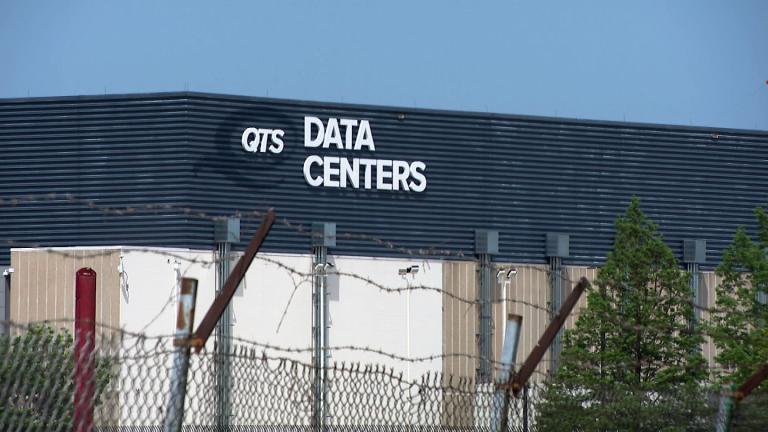
Noise pollution is one of the concerns identified in the report. While data centers in rural or suburban areas may be able to have undeveloped land separating them from residential areas, many of Chicago’s 39 known data centers are concentrated in densely populated parts of the city like the South Loop.
Additionally, diesel generators that provide backup power to data centers and need regular testing can increase air pollution nearby.
The report recommended the city create a new program for issuing noise and air pollution permits, and enhancing the environmental review process — recommendations that were mirrored in Johnson’s executive order.
“Our (current) policies don’t reflect what the modern data center looks like,” said Angela Tovar, commissioner of the city’s Department of Environment and the chief sustainability officer. “(City) Council and the mayor have heard loud and clear from constituents … that there are deep concerns about how rapidly growing this industry is.”
Now, Tovar said it’s important to move quickly on these new policies, a sentiment the mayor echoed prior to signing the executive order.
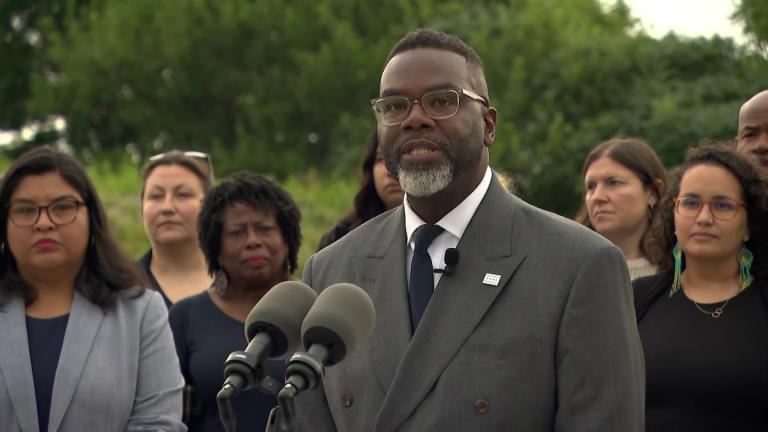
“Chicago will not be passively shaped by this new industry,” Johnson said. “We will lead, and actively set the terms for how this technological development occurs.”
Lawmakers and environmental advocates are also working on the state level to pass guardrails on the data center industry. This includes the proposed Protecting Our Water, Energy and Ratepayers (POWER) Act, which supporters say will address rising energy costs and a lack of transparency from data centers on resource usage.
Read More:
- Data Center Policy Debate in Illinois Spans Environmental, Economic Goals
- Illinois Legislators Introduce Power Act, Which Would Force Data Centers To Foot Energy Costs
Data center industry groups opposed that bill as it stood at the end of the spring legislative session. But some are striking a different tune on Chicago’s efforts to rein in data centers.
“We are hopeful this directive from the Mayor will separate those who are responsible water and energy stewards from those who are not,” Brad Tietz, state policy director of the Data Center Coalition, said in a written statement to WTTW News.
Tovar pointed to the city’s past efforts to foster more sustainable developments, including setting design standards for large commercial buildings, as an example of how to balance environmental goals with economic growth.
As data and computing technology become a more omnipresent part of modern life, Tovar stressed the importance of adapting to this new normal.
“We can certainly work with industry to advance sustainable outcomes,” Tovar said, “and we have to do that with the understanding that these guardrails are important.”