Science & Nature
Illinois Officials Warn Toxic Lead Dust Could Drift From Iowa, Where Army Plans to Blow Up Cache of Explosives
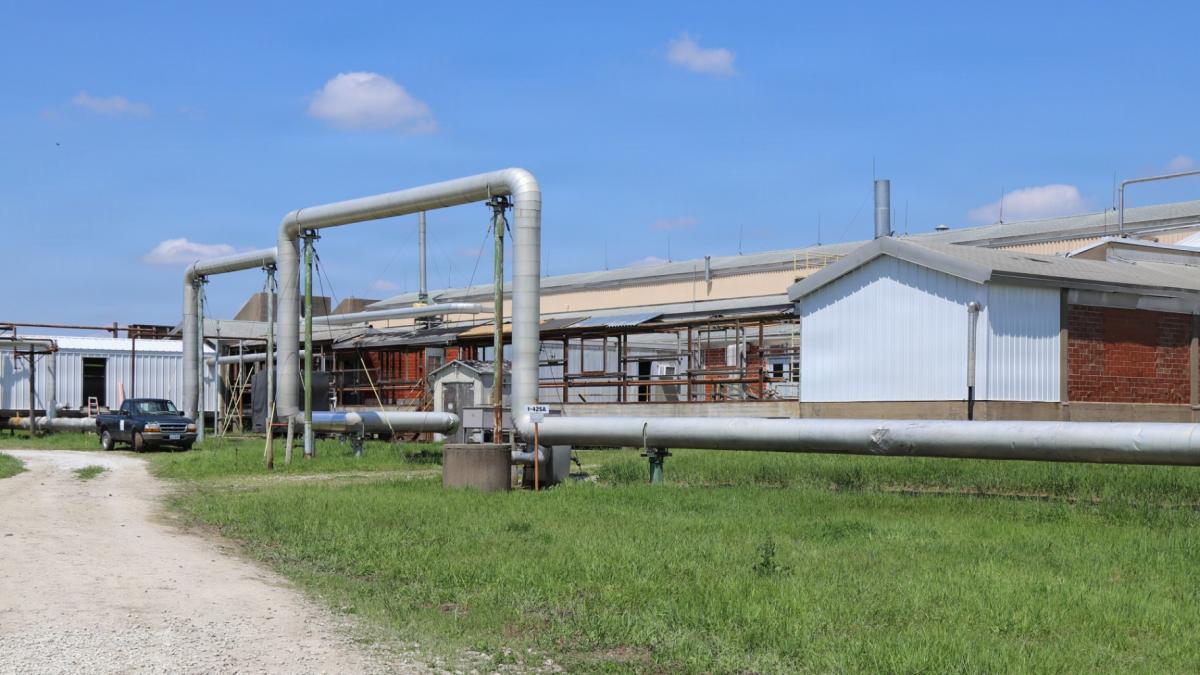 This photo provided by the U.S. Army shows the Iowa Army Ammunition Plant in Middletown, Iowa, on May 14, 2024. (Shawn Eldridge / U.S. Army via AP)
Environmental and public health officials are warning that the U.S. Army’s controlled detonation of bomb-making chemicals in Iowa — planned for Friday — could impact Illinois residents in the path of a potential plume of lead dust.
The Army’s munitions plant in Middletown, Iowa, where the detonation will take place, is close to the state’s border with Illinois’ Mercer County. While residents of Middletown were first informed of the situation in March and received more information regarding the pending blast in mid-October, Illinois officials said they weren’t made aware of the situation until just days ago, after the U.S. Environmental Protection Agency issued a permit for the operation.
Illinois elected officials are calling for a delay in the plans and an exploration of safer alternatives.
Currently, 68 drums of lead azide are being stored at the Iowa munitions plant. Lead azide is a compound used in detonators to trigger explosions in munitions. According to the army, a routine inspection revealed the chemical had degraded and recrystallized while in storage, making it sensitive to movement and handling. In such a “highly unstable and dangerous” state, the material could spontaneously explode.
Since it can’t be moved, the Army has opted to explode the lead azide in place, where it’s securely stored inside certified, earth-covered containers.
The Army is telling people who live closest to the blast site that they should temporarily vacate their homes. Those who choose to say or are unable to leave should remain indoors and keep windows and doors closed for 24 to 48 hours.
“The detonation will result in an air plume with some lead-containing particles which will disperse in the air and deposit on the ground,” an advisory states. “Lead is toxic to humans and animals.”
Specialized water misters will be used to minimize the dust released, the Army said.
According to the Army, extensive modeling predicted that the potential level of lead particles in the air may be elevated, but still well below the level at which the U.S. Environmental Protection Agency would require protective action.
Maps showing the potential drift are being updated based on weather forecasts.
In a joint statement, the Illinois EPA and Illinois Department of Public Health said the Army would update its models prior and following the detonation, which could alter the potentially impacted Illinois communities.
“While U.S. Army officials have indicated they will conduct extensive monitoring for the potential impact from airborne lead dust, no information on the breadth of methodology of this monitoring has been shared with Illinois officials to date,” the statement said.
Citing the past summer’s wildfire season, which saw Illinois heavily affected by smoke from fires burning in Canada, James Jennings, director of the Illinois EPA, said, “Air pollution does not respect state lines and accordingly we strongly urge the Department of Defense to conduct comprehensive post-detonation environmental sampling, including air, soil, and surface dust testing in potentially impacted areas of Illinois, publicly share those results, and take all appropriate steps to address any impacts from this event.”
Illinois Gov. JB Pritzker, along with members of Illinois’ congressional delegation, including U.S. Sens. Dick Durbin and Tammy Duckworth, signed onto a letter sent Thursday to EPA Administrator Lee Zeldin and Acting Secretary of the Army Adam Telle. They acknowledged the “urgent need” to address the volatile materials but called for a delay in Friday’s detonation “to explore safer alternatives.”
They also urged timely communication, having only heard of the detonation at the 11th hour.
Many Iowans have been caught off guard by the Army’s plan and have expressed concerns about lead particles settling on everything from crops and grazing land to playground equipment, or collecting in the soil or waterways, as well as short- and long-term risks to humans and wildlife.
The Iowa Department of Agriculture and Land Stewardship said it was “awaiting additional information from the U.S. Army to help us better understand the potential risks to livestock, food and feed.”
The Army’s plan does call for “immediate cleanup actions … to remove impacted soils and debris,” as well as air, soil, surface water and surface area monitoring and testing.
The Associated Press contributed to this report.
Contact Patty Wetli: [email protected]