Politics
Energy Benchmarks, Possible Moratorium Among the Topics Driving Chicago’s Data Center Discussion
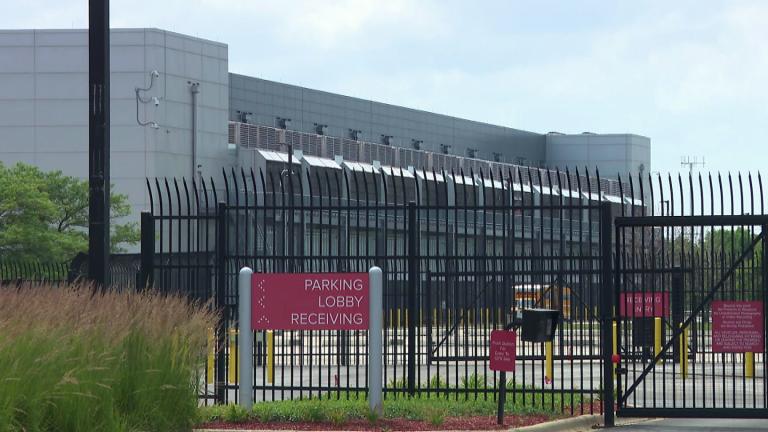
Large, resource-intensive data centers have drawn increased public attention in recent years as their construction ramped up around the country. But in an urban environment like Chicago, data centers of all sizes can have a big impact.
Noise from cooling systems and air pollution from backup generators are two examples of data center impacts that can have an outsize effect in a densely populated city.
Now, as a city task force explores the right guardrails on data centers, policymakers are shifting into gear as they work to catch up with the emerging industry.
At last Wednesday’s City Council meeting, alderpeople voted to remove exemptions for data centers from the city’s Energy Benchmarking Ordinance. That move — a key recommendation from the city’s working group on sustainable data centers — is intended to provide transparency around data centers’ energy efficiency and water usage.
But despite the support for benchmarking requirements, City Council members failed to get behind other proposed data center regulations — including a moratorium.
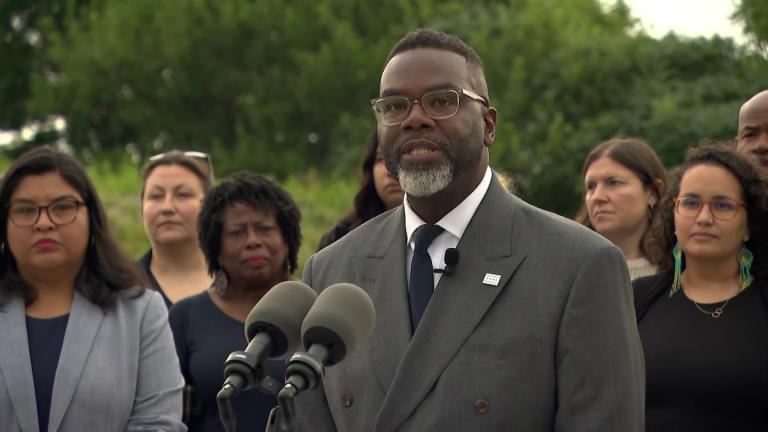
In August, Mayor Brandon Johnson signed an executive order addressing noise controls and air pollution permitting for data centers. Johnson’s order also called on alderpeople to enact a temporary moratorium on new data center development.
That moratorium, introduced Wednesday, would have applied to data centers bigger than 1,000 square feet with more than 20% of their floor space dedicated to servers. But its fate is uncertain, after two alderpeople promptly routed it to the Rules committee upon its introduction.
According to Angela Tovar, the commissioner of Chicago’s Department of Environment as well as the city’s chief sustainability officer, a temporary moratorium could give policymakers time to get the right guardrails in place.
“The city was very transparent in saying, ‘The regulations we have in place today are not adequate for how we should regulate the modern data center,’” Tovar said. “This presents an opportunity for the city to course-correct.”
But for Brad Tietz, the Midwest director of state government affairs at the Data Center Coalition, a pause on data center development isn’t necessary to work with the industry on regulations.
“What (a moratorium) is doing is sending a signal to the industry that this might not be the best place to put forth a multibillion-dollar investment,” Tietz said. “We don’t believe you need a moratorium in place to spend all that time doing this. Quite frankly, we could have reached an agreement on these regulations pretty quickly.”
While the Data Center Coalition opposes the moratorium, Tietz said the industry group did not oppose the mayor’s executive order, or the benchmarking requirements the City Council approved last week.
Working quickly to bypass a moratorium was the goal of a separate ordinance introduced by Ald. Bill Conway (34th Ward), which was also sent to the Rules committee. That ordinance would have zoned data centers as planned developments, subjecting them to the public review process prior to approval. Currently, data centers are permitted by right in most commercial areas of the city.
As data needs for business and personal use change, Tietz said he expects Chicago’s market for new development to shift toward smaller data centers that value proximity to end users. But Tovar said existing data centers in the city vary in their size and use.
“From our perspective, I would say that all sizes of data centers matter here in the city because we’re in an urban area,” Tovar said. “We have data centers that are in mixed-use communities, that are existing right next to residential communities. … We can’t ignore some of the concerns we’ve heard from residents.”
Heather Cherone contributed to this report.