Science & Nature
How Are Shedd’s New Rescued Belugas Adjusting? Go Behind the Scenes
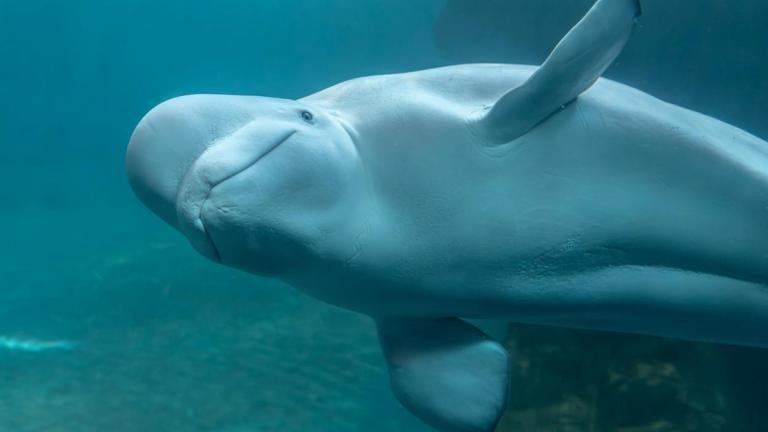
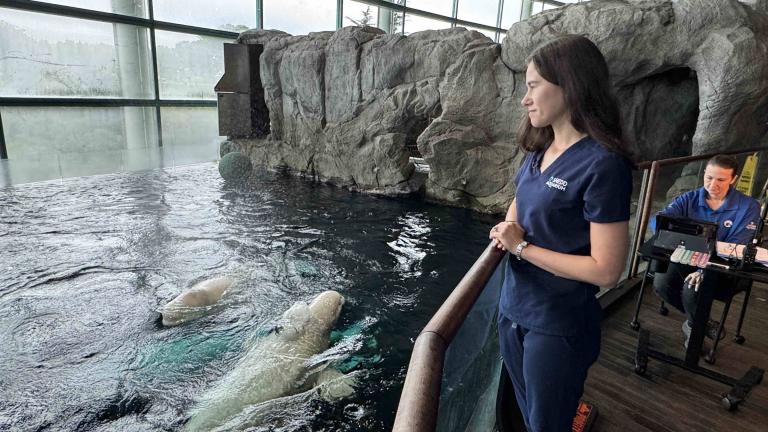
Barely a week after four beluga whales were transferred from Marineland, a defunct Canadian water park, to Shedd Aquarium, the newcomers have already made an impression on their caretakers.
“Sierra is a very independent woman, and she’s spunky. We have Acadia who, she’s 2400 pounds, the largest beluga that we brought here to Shedd, and she loves to eat,” said Charlie Jacobsma, director of animal behavior and training at Shedd.
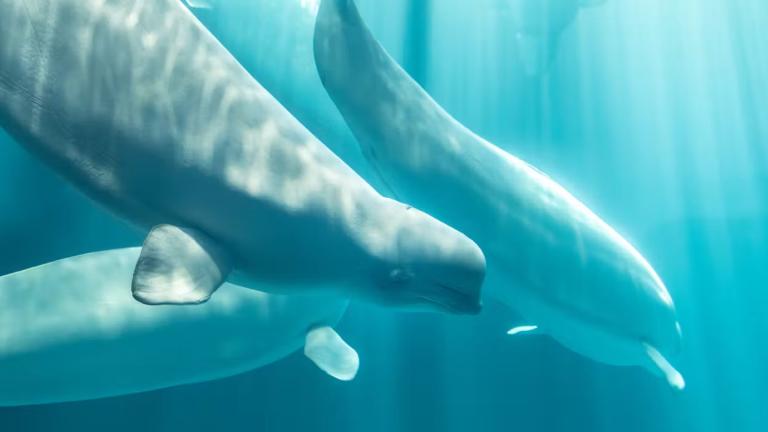
“And then we also have Lillooet and we have Osiris, and both of those are very, very calm and gentle ladies who just go along with the flow,” Jacobsma added.
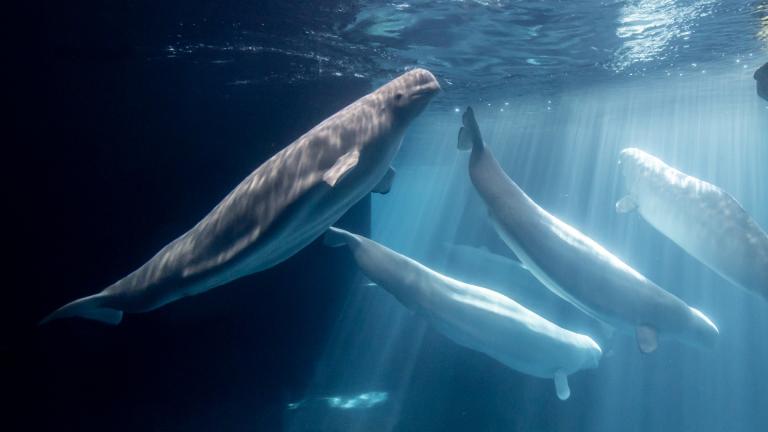
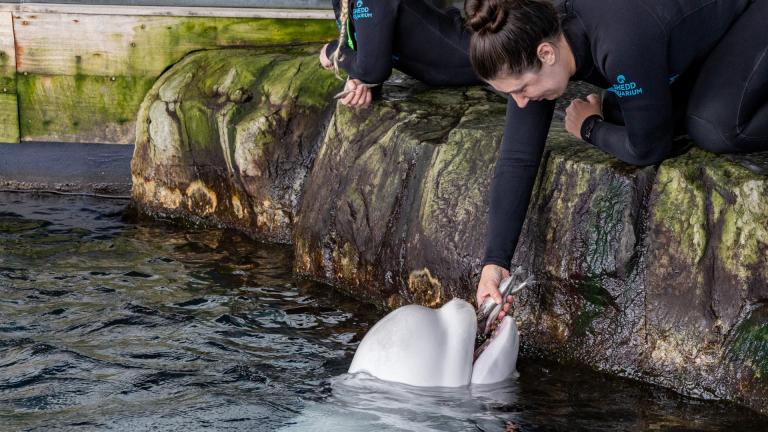
The quartet, which had formed a tight-knit social bond in Canada, have been adjusting to their new digs behind the scenes and have been monitored round-the-clock by Shedd staff — yes, that includes an overnight shift.
Prior to the relocation, a team from Shedd had paid multiple visits to Marineland, a longtime tourist attraction in Niagara Falls, Ontario, that closed to the public in 2024. They interviewed the belugas’ caretakers, pored over diagnostics and records and observed the whales in their home environment to gain an understanding of the animals’ individual personalities and needs.
Since the foursome’s arrival in Chicago, staff have been matching the whales’ behavior against that established baseline.
“What they’re looking for is where the animal’s spending time, who they’re spending time with, what they’re doing at different points in time — how many times they’re pooping, how much they’re eating, how many times they’re breathing,” Jacobsma explained. “Those are all important factors that tell us the overall health and are good signs of what we expect animals to do.”
Dr. Karisa Tang, lead veterinarian and vice president of animal health at Shedd, was among the group that accompanied the whales from Canada to Chicago.
“They’re in stretchers in partially immersed in water— we want to make sure that their blowholes stay above water so that they have all of the room to breathe that they need,” Tang said of the transport process. “We’re monitoring them, making sure that their skin stays wet, their breaths are good, making sure they stay as relaxed as possible. We are with them the whole time.”
She described the “phenomenal amounts of relief” when the team finally pulled up to Shedd.
“The moment that you arrive here you’re just swept up, taken care of, and you just have the best of the best making it happen,” Tang said. “I think a few of us cried for sure.”
So far, she’s pleased with the way the whales have settled in at Shedd.
“We’re taking it hour by hour, day by day,” Tang said, “and we’re seeing some really positive signs right now with these four in terms of the rescue as a whole.”
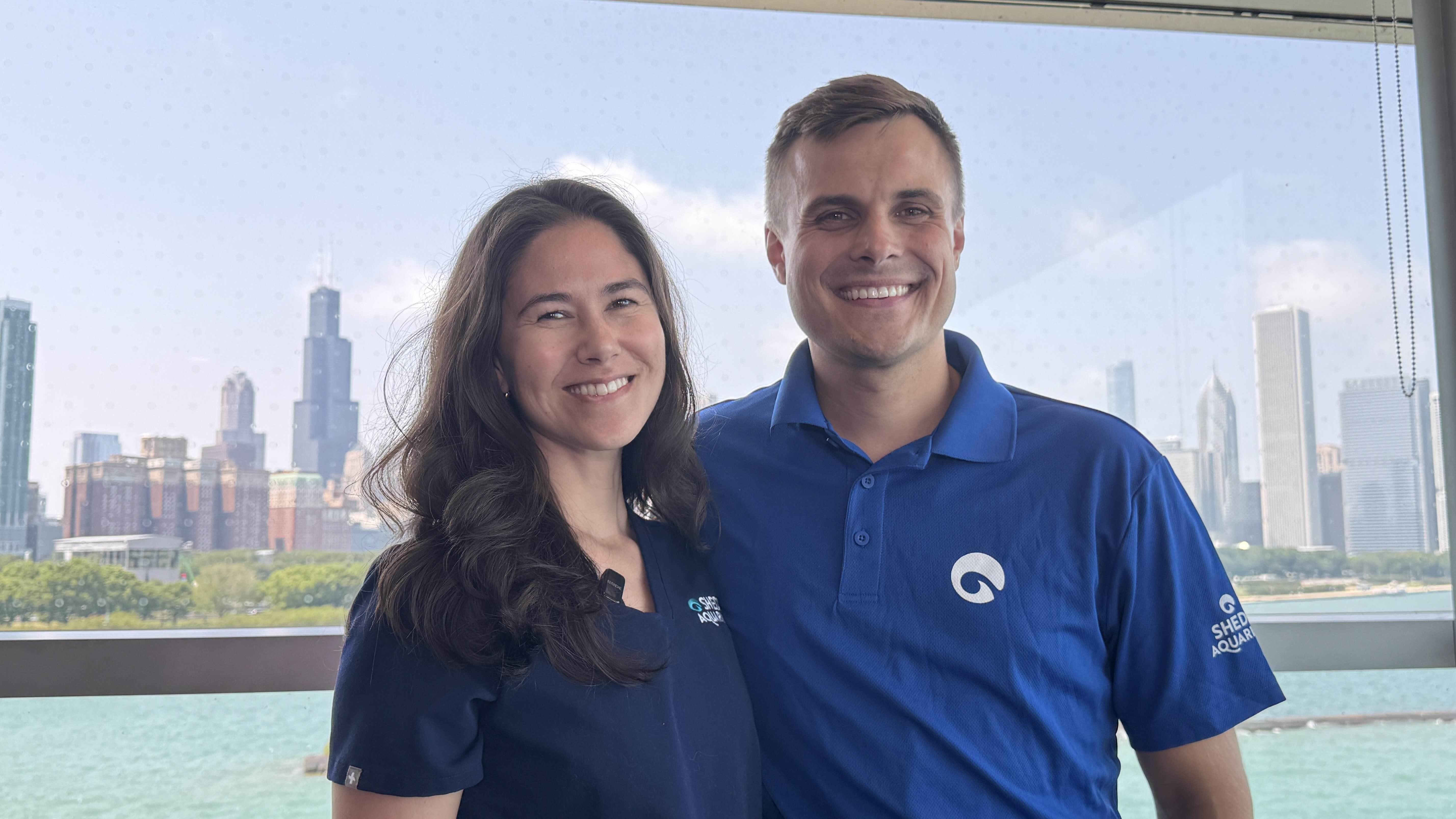 Dr. Karisa Tang, lead veterinarian and vice president of animal health at Shedd Aquarium, and Charlie Jacobsma, director of animal behavior and training, have played key roles in the effort to rescue 30 beluga whales from a marine park in Canada. (Patty Wetli / WTTW News)
Two dozen belugas still remain at Marineland, out of an original 30 in need of new homes. Shedd is one of six institutions involved in the rescue operation, at the request of Canadian authorities and facilities, who reached out for assistance in fall 2025, according to Tang.
All of the rescue partners have experience with belugas and are accredited by and adhere to the strict standards of the Association of Zoos and Aquariums (Marineland is not accredited). They jointly determined which belugas were the best fit for each accepting institution.
Though Tang said the belugas were and are being lovingly cared for at Marineland, the water park’s ownership has said it doesn’t have the financial resources to continue doing so. The park previously attempted to send all 30 belugas to China, a deal that was nixed by Canadian officials, at which point Marineland threatened to euthanize the whales.
“The reason that it’s an urgent rescue is because of the situation — the circumstances of (Marineland) saying, ‘We can no longer provide a long-term home for them,’” said Tang. “It wasn’t because (the whales) were languishing.”
There’s no timetable for when future rescues could take place.
“I can’t even begin to describe the number of people, the number of hours, the different areas of expertise required to make it happen,” Tang said of the rescue operation. “It’s incredibly, incredibly complex.”
Logistics range from obtaining the necessary government permits to chartering cargo planes for transport to pooling equipment resources, like the whale-sized stretchers and tanks needed to move the belugas between locations.
“Somebody had to go through and look at the entire country: Who has what stretcher and what size is it? What poles, what boxes already exist that we can fly to Canada? What are the lengths of the animals up there? Who’s going to fit in what sling comfortably — like a gigantic inventory of everything everybody owns,” Tang said.
Video: Shedd’s newest belugas are being monitored around the clock behind the scenes. (Patty Wetli / WTTW News)
Shedd has committed to taking in as many as 10 of Marineland’s belugas, so six more whales could ultimately join the aquarium’s pod, which now numbers 12 including the latest arrivals.
Is there room?
Yes, said Tang.
The public only sees a portion of the belugas’ available habitat at Shedd. It’s “not the extent of the room that they have to maneuver,” Tang said.
The 3-million-gallon Abbott Oceanarium is 30 feet deep at some points and encompasses six interconnected areas that can be configured in multiple arrangements, giving the whales different places to move between and explore.
“So, we’re able to provide a lot of social flexibility and choice between all of these habitats,” she said.
In the wild, belugas, live in pods of 10 to 25 members, made up of mixed ages and mixed sexes, “and that’s the kind of situation we’re able to provide here,” Tang added.
Tang is aware of opposition to the rescue operation, particularly from Canadian animal rights activists who wanted the whales sent to a marine sanctuary instead of aquariums.
No such sanctuary currently exists, Tang responded.
“There is no sea pen that can provide the same level of care at this moment,” she said.
And as for releasing the belugas into the wild, Tang said it wasn’t an option.
“It has not happened successfully,” she said. “These animals have been living a certain life for the past decades. Understanding what they would even need to make that happen is gargantuan.”
Shedd’s belugas have their own unique role to play in the conservation of the species, from caretakers collecting data on the whales’ health and behaviors to the interest in marine life they generate among visitors.
“These animals are definitely a spark,” said Jacobsma. “My favorite part of my job is walking in underwater viewing and seeing the kids interacting with the belugas. And if we can inspire especially that generation, and we can educate people and we can get people to learn and to care, that’s when we’re going to make a difference.”
Note: This article was updated Aug. 3, 2026, to correct the spelling of Lillooet.
Contact Patty Wetli: [email protected]
Related Stories