Business
Developers Unveil $10B Proposal for New Bears Stadium, Entertainment District at Former Michael Reese Site
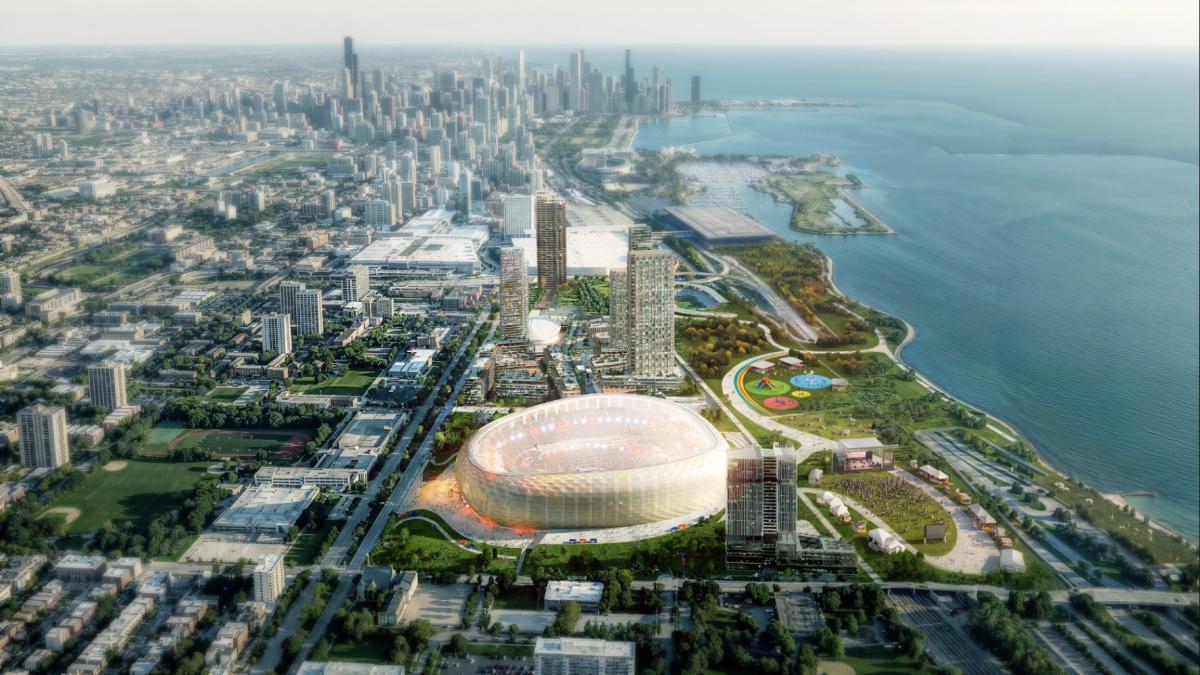 The plan for the “Bronzeville Lakefront” would transform approximately 100 acres that include and surround the former Michael Reese Hospital site. At the center of the proposal is a new domed stadium in an effort to keep the Chicago Bears in the city. (Courtesy of Inference)
A new $10 billion proposal aims to build a stadium and entertainment district at the site of the former Michael Reese Hospital on the South Side in an effort to keep the Chicago Bears in the city, according to a plan unveiled by developers Thursday.
The plan for the so-called “Bronzeville Lakefront” would transform approximately 100 acres that include and surround the former hospital site in the Douglas neighborhood. At the center of the proposal is a new domed stadium with a capacity of 75,000 for major sporting events and concerts. The proposal also includes new housing, commercial development, recreational facilities, cultural attractions, hotels and public space.
The plan was proposed by Quintin E. Primo III, the founder and executive chairman of Capri Investment Group, and GRIT Chicago, a consortium of developers advocating for investment on the South Side.
Ald. Lamont Robinson (4th Ward), whose ward includes the former Michael Reese Hospital site, said in a statement that a development that combines housing investment, transportation improvements, jobs, new businesses and public amenities has the potential to benefit neighborhoods far beyond the site.
“But its success must also be measured by how we protect existing residents, ensure meaningful community participation and make certain that the people who live here share in those benefits,” Robinson said.
The Chicago Bears did not immediately respond to a request for comment Thursday.
When asked whether Mayor Brandon Johnson supports the proposal, a spokesperson with the Mayor’s office said in a statement, “Developers know that all ideas will be vetted thoroughly and advancing their ideas will require community engagement and support. The bottom line is that the Mayor knows that Chicago is and should remain the home of the Bears and will continue to work with stakeholders across the region to make it so.”
The proposal comes before Illinois lawmakers return to Springfield for fall veto session next week to consider legislation on new funding frameworks for stadiums in the state. The Chicago Bears have considered moving to the team’s Arlington Heights property or to Hammond, Indiana.
As part of the proposal, developers aim to build more than 5,000 residential units on site and at nearby off-site locations that include affordable, senior and student housing, according to a news release.
“This is about much more than building a stadium or keeping a football team in Chicago,” Primo said in a statement. “We have an extraordinary opportunity to retain one of our city’s most important institutions while directing transformative investment toward South Side communities.”
The plan proposes the replacement of about 1,000 Prairie Shores apartment units, according to Primo during a Thursday news conference at Olivet Baptist Church. As part of the plan, developers have proposed a community benefits agreement for tenant protections. The proposed commitments include giving affected residents priority to new comparable units at equal rent for a minimum of five years, in addition to no building being touched until replacement housing is under construction, according to a presentation.
Pastor Chris Harris of Bright Star Church said during the news conference the plan to develop the area is essential with or without the Bears. Harris said residents must be able to help shape the community benefits agreement and also have the power to hold people accountable.
“Let me speak directly to the families at Prairie Shores since you are my neighbor — I still live in this community right down the street,” Harris said. “Your home matters, your history matters, your future matters and every door represents a family. Every family has a name, a story and a place in this community. The standard is simple: families should stay in their homes until the new homes are ready.”
The development team’s preliminary financing approach for the proposal combines private investment, proposed stadium financing and public infrastructure funding, according to a news release. The proposed financing plan would make the stadium publicly owned and would include substantial contributions from the Bears.
Additionally, Capri Investment Group and its partners are prepared to purchase the Bears’ Arlington Heights property as an added incentive if the team’s existing investment at that location is an obstacle to considering a Chicago location, according to a news release.
Note: This story was originally published Nov. 12.
Contact Eunice Alpasan: [email protected]