Politics
Sen. Duckworth Calls for Restoration of $125M Cut From Lead Service Line Replacement Budget by Slashing Funding for ICE
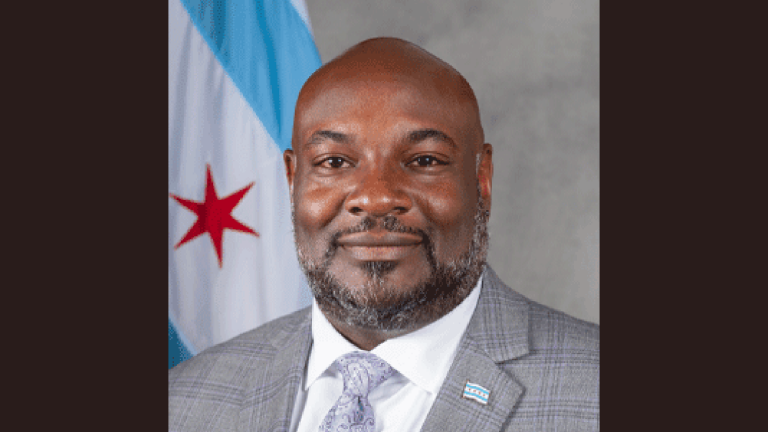
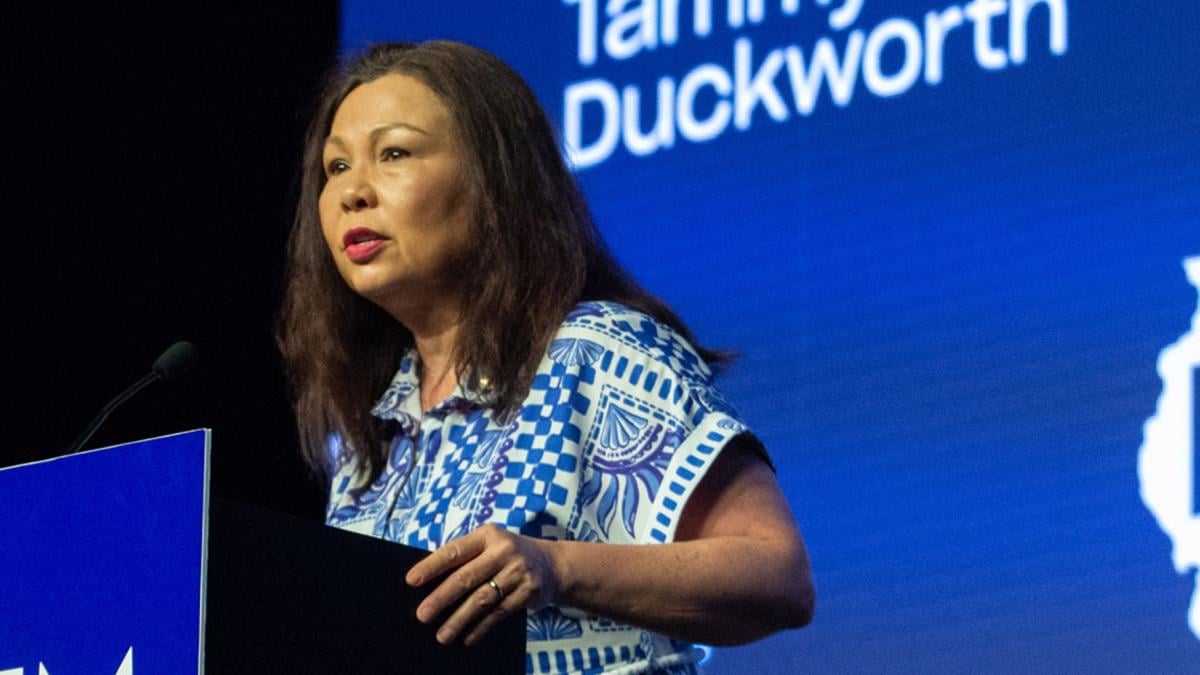 U.S. Sen. Tammy Duckworth speaks at an event in Springfield on Aug. 13, 2025. (Jerry Nowicki / Capitol News Illinois)
The United States Senate should restore the $125 million cut from the effort to replace lead service lines responsible for contaminating drinking water across the country by slashing funding for Immigration and Customs Enforcement, U.S. Sen. Tammy Duckworth told WTTW News.
A spending package approved by the U.S. House of Representatives that included funding for the U.S. Environmental Protection Agency clawed back an unspent portion of the $15 billion set aside in November 2021 to remove the lines that can pollute drinking and bathing water, outraging Duckworth, who helped lead the push to rebuild the nation’s water systems. The Senate will now take up the measure.
“We need fix this problem as soon as possible, so that children are no longer drinking poison water, women who are pregnant are not drinking poison water, and so you and I are not drinking poison water,” said Duckworth, a Democrat from Illinois. “All I’m doing is trying to bring back something that a bipartisan group of senators had agreed to.”
There is no safe level of lead in drinking water, according to federal officials. Lead is a neurotoxin and can be especially damaging to children and pregnant women.
For the Trump administration to take funds set aside to ensure Americans have access to clean drinking water to “to use this money for ICE so they can come in and intimidate people in Chicago and other places is obscene, as far as I am concerned,” Duckworth said.
The spending plan signed by President Donald Trump set aside $30 billion for ICE during the fiscal year that began in October, records show. Congress should cut the agency’s “exorbitant $2 billion slush fund,” Duckworth said.
An additional $635 million from ICE’s budget should be used to fund programs designed to reduce methane gas in the environment and reduce pollution from abandoned coal mines, Duckworth said.
A series of aggressive immigration enforcement actions swept Chicago from September to November. ICE’s focus is now on Minneapolis, where an agent fatally shot Minneapolis mom Renee Good amid a series of militarized raids.
Duckworth stopped short of calling for the elimination of ICE, saying she wanted to “fund responsible law enforcement.”
“ICE has not made any city that they’ve gone into safer,” Duckworth said. “In fact, in every city they’ve gone into, they’ve created chaos.”
Chicago particularly needs additional funding for lead service line replacement projects, Duckworth said.
Lead service lines connect more Chicago homes to water mains than in any other American city, in large part because officials required that lead pipes be used to funnel water to single-family homes and small apartment buildings for nearly a century.
Federal law banned the use of lead pipes in 1986.
City crews have replaced less than 4% of the city’s more than 400,000 lead service lines since the effort began five years ago, the commissioner of the Chicago Department of Water Management told members of the Chicago City Council in October.
Plans call for 10,000 to be replaced this year, at a cost of $300 million, officials said.
Duckworth said she is “deeply concerned” that cuts approved by the U.S. House would make the process of removing lead service lines in Chicago even slower, even as cities like Newark, New Jersey, and Rockford have made rapid progress.
“I know this can be done in Chicago, and I want to make sure that the funds are there when they start to do so,” Duckworth said. “If we don’t get this done, the money’s going to be raided, just like they have tried to do now, in order to fund ICE, so that ICE can come intimidate people.”
In 2027, Chicago must replace 15,000 lead-service lines, with another 19,000 lead-service lines replaced in 2028 to meet federal mandates, officials said.
Federal officials have ordered cities to remove all lead service lines by 2034. Chicago was granted a waiver from that deadline, an acknowledgment of the city’s slow progress and the size of the challenge facing the city.
Chicago has until 2077 to remove all of its lead service lines, under state law.
Congress must approve a spending plan by Jan. 30 or face another government shutdown.
Contact Heather Cherone: @HeatherCherone | (773) 569-1863 | [email protected]