Science & Nature
Research Has Turned Up Fish Swimming Ultra Marathons Every Day in the Chicago River. Take That, Humans
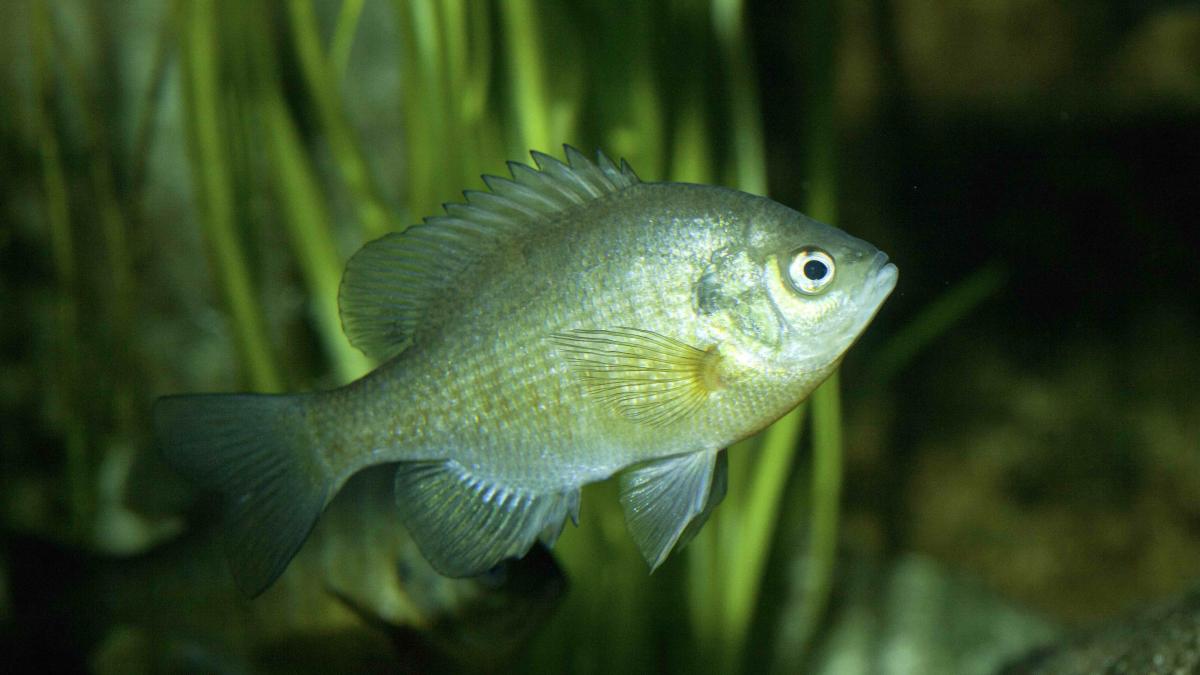 Bluegills may be small, but don’t count them out as long-distance swimmers. (Courtesy of Shedd Aquarium)
Open water swimmers will test themselves at the Chicago River Swim on Sunday, looking to best last year’s winning time of 40:07 on the two-mile course.
You know who could give these folks a real race?
One of the river’s resident bluegills.
Austin Happel, a researcher at Shedd Aquarium, has been tracking the movement of various species of fish in the Chicago River to better understand where they spend their time, how they make use of restored habitat and the environmental factors that influence their behavior.
As he’s analyzed the data obtained from telemetry tags attached to fish, Happel’s expectations have been upended more than once.
He was counting on bluegills to be homebodies in order to discover their nesting sites, but while some stayed put, others surprised Happel with their range.
One-third of the 15 bluegills he tagged logged 5 miles or more in a single day, and one in particular, which Happel dubbed the “marathoner,” swam nearly 7.5 miles in a day on multiple occasions.
“That’s an endurance swim,” Happel said.
Scaled to human size, the overachieving bluegill covered the equivalent of 52 miles, according to the Shedd — approximately the swimming distance from Navy Pier to Racine, Wisconsin.
Happel performed some quick calculations and estimated the fish, roughly the size of an adult’s hand, was moving at 4,000 body lengths per hour, versus 3,000 body lengths per hour for a human marathon swimmer.
“So the fish is going faster,” Happel said. “But that’s an elite swimmer, a marathon swimmer. The average swimmer is going to go about half of that (body lengths). So our fish could in fact swim laps around a person. If I was looking at it correctly, it could do the race twice when the person was doing it once.”
Though Happel laughed at the comparison, in all seriousness, as people prepare to jump into the Chicago River on Friday or race on Sunday, his research is a reminder that while swimming in the river remains a novelty for humans, plenty of fish call the waterway home — some 80 species at last count.
Where precautions are in place for swim participants, including water quality testing, fish have to deal with whatever conditions are present in the river. And this summer, those conditions were rough, Happel said.
When intense rains overwhelm the city’s sewer system, untreated wastewater enters the Chicago River — this is called a combined sewer overflow. Such incidents have become rarer as Deep Tunnel infrastructure has created more capacity to hold wastewater, but in 2026, there have already been overflow days than in all of 2024 and 2025 combined.
Friends of the Chicago River posts alerts when combined sewer overflows occur, warning people to avoid canoeing, kayaking, fishing and other activities in the vicinity.
What these pollutants mean for fish, though, is different than the danger they pose to people, Happel explained.
The bacteria in sewage isn’t what’s harmful to fish, it’s the decomposition of untreated waste, which removes oxygen from the system.
During past combined sewer overflows, Happel’s tracking has shown fish dispersing from the areas of the river where the overflows occurred. The fish generally seem to head for the Riverwalk area, he said, where water from Lake Michigan mingles with the river.
Once he’s had a chance to analyze this year’s data, he’s curious to see whether those fish stayed near the Riverwalk or moved back to their original hangout, only to be displaced again by successive overflows.
These are the swimmers Happel has on his mind as he studies the health of the river, but if events like the Chicago River Swim get more people interested in taking a dip in the waterway, he said he’s all for the attention it brings to the river.
“That connects people to their environment, and people that are connected generally care about that environment a little more,” Happel said. “And the more people that recreate, the more funds generally go to maintaining ecosystems and managing them. So I think there’s a lot to gain from increasing recreational opportunities.”
Contact Patty Wetli: [email protected]