Politics
‘He Was This Transformational Figure’: Reflecting on the Life and Legacy of the Rev. Jesse Jackson
The Rev. Jesse Jackson’s Chicago ties run deep, dating back to the 1960s when he was appointed by the Rev. Martin Luther King Jr. to direct Chicago’s Operation Breadbasket program.
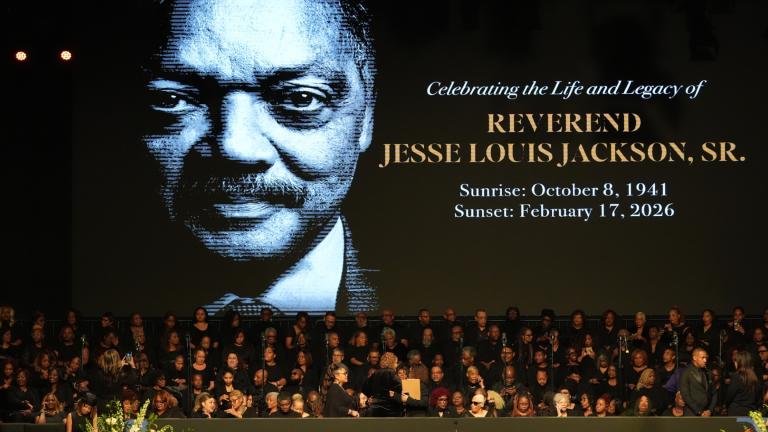
Jackson died Tuesday at the age of 84 at his home on the South Side surrounded by family.
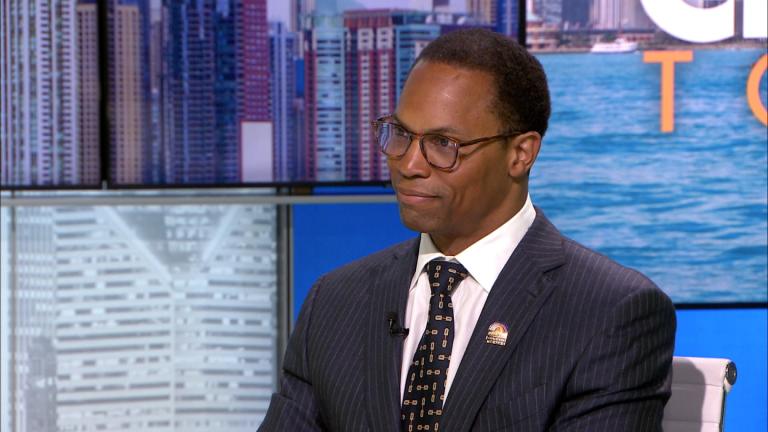
“He was this transformational figure,” said Kevin Boyle, professor of American history at Northwestern University. “He was a bridge between that extraordinary generation that had took the Civil Rights Movement into its greatest breakthroughs, and then the age of Obama at the other side. He’s the man who made it possible for America to transition from Jim Crow America to Barack Obama’s America.”
Barack Obama’s presidency was, in many ways, made possible because of Jackson’s work, Boyle said. Jackson was the first Black presidential candidate to run a competitive race for a major political party.
Jackson ran for president twice — first in 1984 and again in 1988. During that era, he proved there was a substantial base of support for a man of color to run for president of the United States, according to Boyle.
“Political wisdom in the United States said that there was not going to be a Black president in the United States for decades and decades to come,” Boyle said. “He proved that was entirely possible.”
A Black man as the most powerful person on earth was a radical idea, as were Jackson’s ideals about diversity and inclusion in America. The National Rainbow Coalition, the organization Jackson founded in 1984, pushed the same progressive agenda with a multicultural coalition that advocated for affirmative action, LGBTQ+ rights, environmental protection and women’s equality, serving as a “voice for the voiceless.”
“He believed that love could conquer hate,” said Ald. William Hall (6th Ward). “He believed wholeheartedly that love can change the world and he lived it. … He believed in the mission and the gospel of Jesus Christ, and he didn’t need a pulpit. He didn’t need the title. He didn’t need the congregation. The world was his congregation.”
Hall, a man of faith like Jackson, first met the icon as a young adult and credits Jackson as the person who gave him his first chance to use his voice to reach a massive audience.
“For the rest of my life, I will always remember the world that he created for me and showed me,” Hall said.
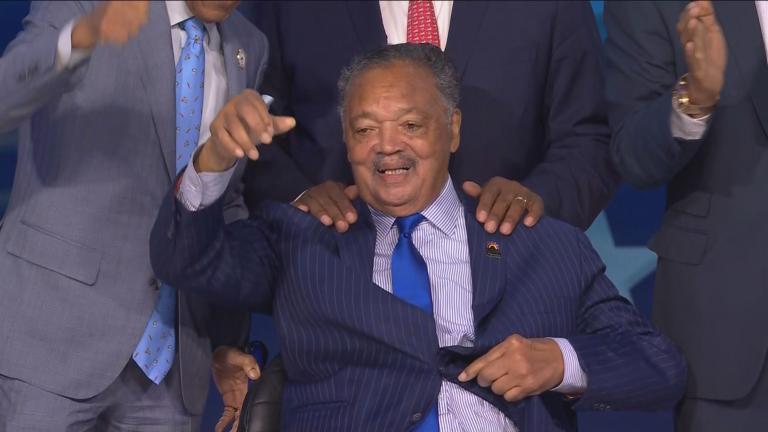
Despite profound health challenges in his final years including a rare neurological disorder that affected his ability to move and speak, Jackson continued protesting against racial injustice into the era of Black Lives Matter. In 2024, he appeared at the Democratic National Convention in Chicago and at a City Council meeting to show support for a resolution backing a ceasefire in the Israel-Hamas war.
“He didn’t do it for money; he didn’t do it for fame,” said the Rev. Janette Wilson, senior advisor to Jackson at the Rainbow PUSH Coalition. “Some people want the stage so that they can be recognized. He didn’t do it for that reason. He was trying to articulate somebody else’s pain so that we could address it and fix it.”
The Associated Press contributed to this report.