Politics
Appeals Court Temporarily Blocks Release of Hundreds Detained in Immigration Crackdown
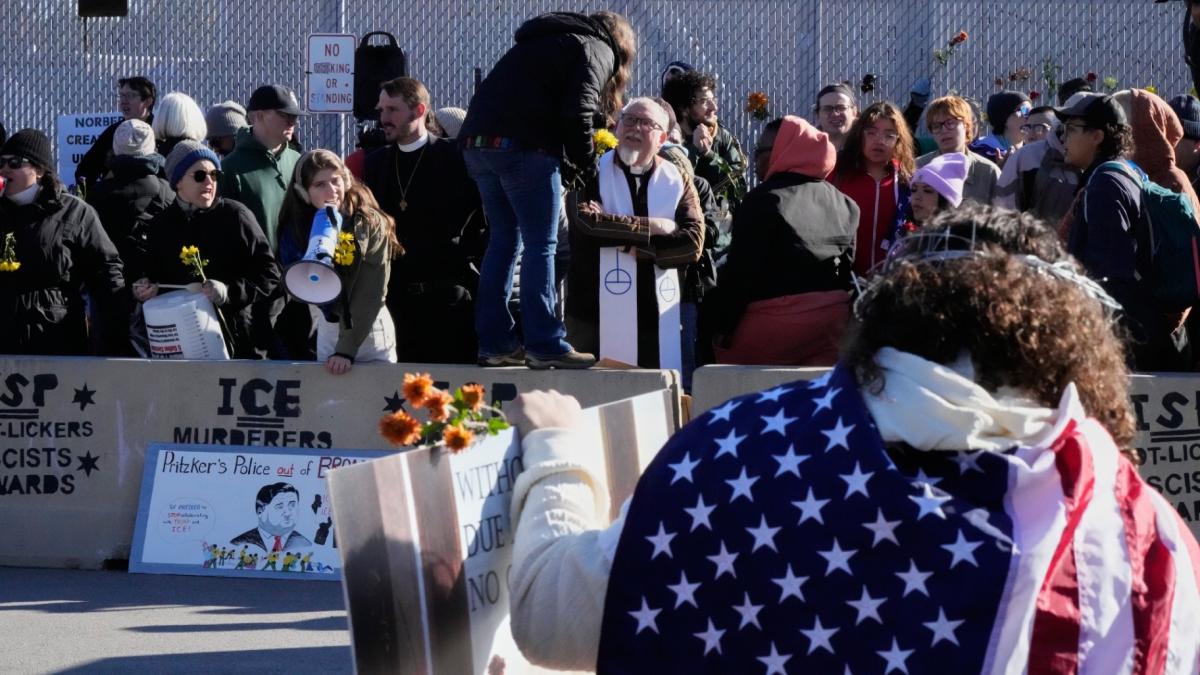 Protesters gather outside an ICE processing facility in Broadview, Ill. a suburb of Chicago, Friday, Oct. 24, 2025. (AP Photo / Nam Y. Huh)
Hundreds of people arrested and detained during the Trump administration’s aggressive immigration crackdown will not immediately be released, an appeals court ruled Thursday.
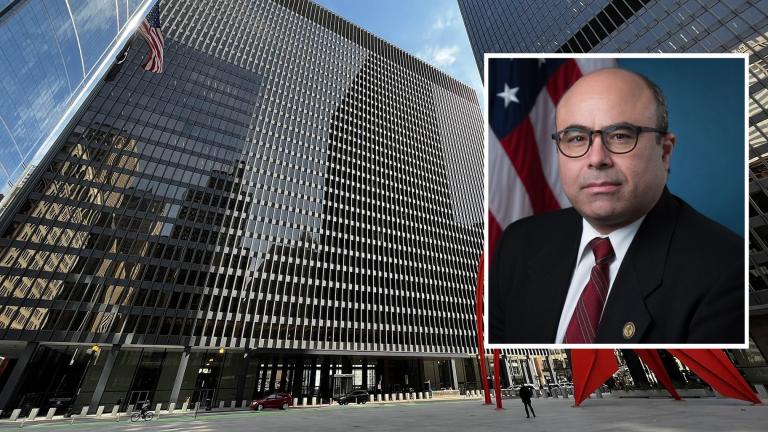
U.S. District Judge Jeffrey Cummings had ordered the release of as many as 615 people based on a 2022 consent decree outlining how U.S. Immigration and Customs Enforcement can make so-called warrantless arrests.
However, the 7th U.S. Circuit Court of Appeals declined to issue the longer-term stay sought by the Trump administration and ordered arguments to take place at 1 p.m. Dec. 2.
Less than 3% of the people Cummings had ordered released had criminal records, court records show, even as Trump administration officials have promised to target the “worst of the worst,” including those convicted of violent crimes.
Federal officials determined that 57 people have been deemed a safety risk, 75 have been deported and 33 have already been released, leaving 442 people set to be released, Cummings said.
By contrast, 54 people were arrested at work, including 20 landscapers and four ride-share or taxi drivers, Cummings ruled. Twenty were arrested commuting to or from work and nine were arrested at a Home Depot or Menards, “presumably either seeking work or to pick up supplies,” Cummings ruled.
Seven were also arrested at court proceedings about their immigration status while 11 were arrested in public places including a park, gas station or a restaurant’s drive-thru.
“It seems highly likely to me that at least some of those individuals are among the 615 detainees who are not subject to mandatory detention,” Cummings said, adding that they are unlikely to be members of gangs, “assorted other ne’er-do-wells” or the “worst of the worst.”
Cummings found that ICE had engaged in “repeated, material violations” of the so-called Castañon Nava negotiated settlement agreement, sometimes referred to as a consent decree. That order restricts the ability of federal agents to make arrests without a signed judicial warrant in Illinois and nearby states.
The consent decree, which expired earlier this year, was extended until February. Although its policy on ICE’s warrantless arrests applies nationwide, remedies for individual cases have been focused in six states covered by the ICE field office in Chicago, where the original lawsuit over immigration sweeps was filed. Those states are Illinois, Indiana, Kansas, Missouri, Kentucky and Wisconsin.
Matt Masterson and the Associated Press contributed to this report.
Contact Heather Cherone: @HeatherCherone | (773) 569-1863 | [email protected]