Politics
Johnson Hopes Watchdog’s Finding That City ‘Accurately and Transparently’ Accounted for Migrant Crisis Spending Prompts Reevaluation
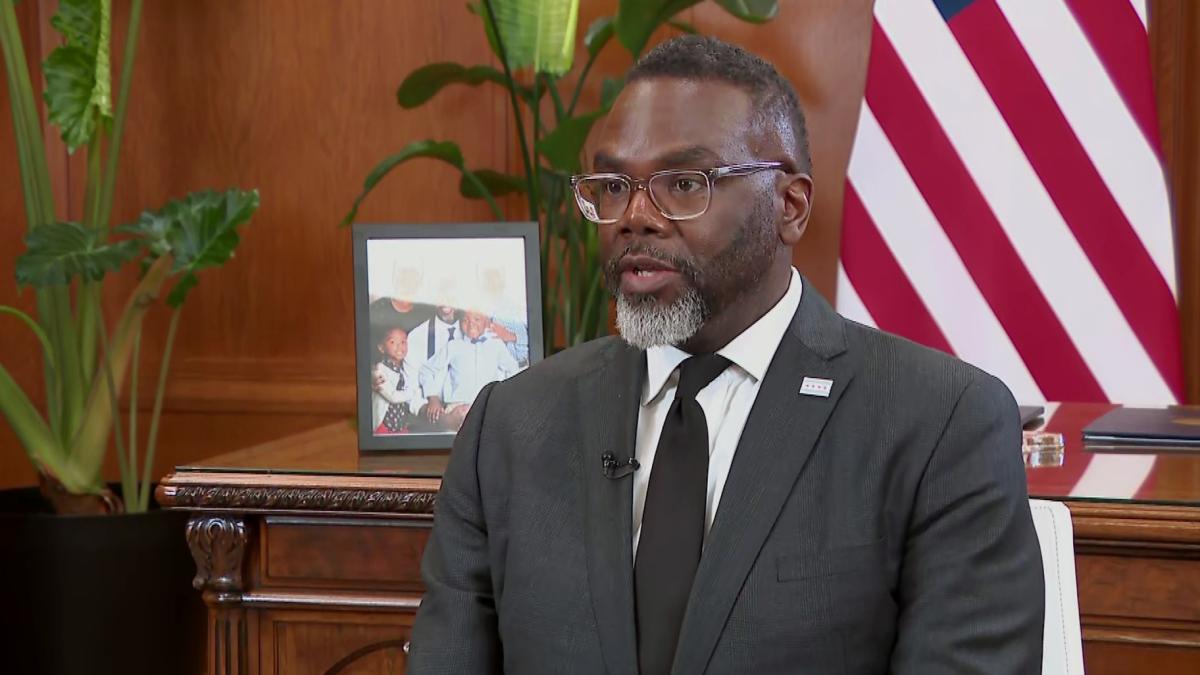 Mayor Brandon Johnson appears on “Chicago Tonight” on May 14, 2026. (WTTW News)
Mayor Brandon Johnson on Tuesday said he was hopeful that an analysis by the city’s watchdog that found the city followed its rules while spending $269 million to care for the men, women and children sent to Chicago from the southern border will prompt a reevaluation of how he handled the humanitarian crisis.
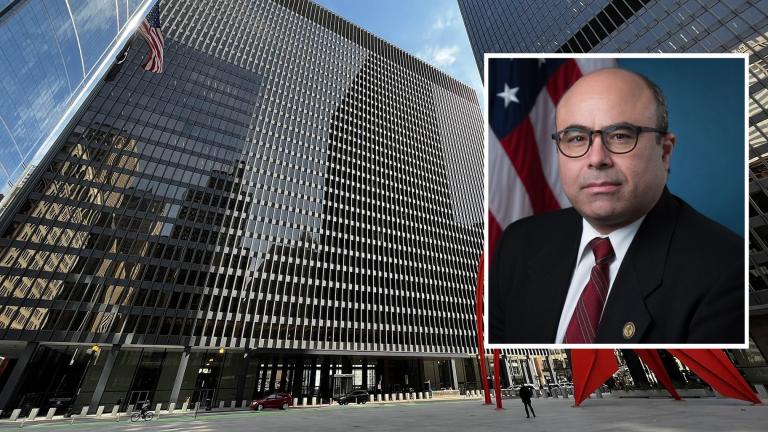
Inspector General David Glockner determined city officials “accurately and transparently” reported what it spent in city funds to feed, house and care for 46,282 people who arrived in Chicago, between August 2022 and December 2024, according to a new report.
In all, the city spent $639.6 million to care for the people who made their way to Chicago, many arriving with not much more than the clothes on their backs and no cold-weather clothing. That total includes the $370.6 million Chicago spent in grants from county, state and federal officials, according to the analysis launched by former Inspector General Deborah Witzburg and released by her successor, Inspector General David Glockner.
“Our review found the city accurately reported this spending and followed established procurement processes — an important foundation for responsible stewardships during urgent, complex operations,” Glockner said in a statement that accompanied his office’s analysis. “The city accurately and transparently reported its spending on the new arrivals mission.”
“I’m humbled that the work that I did has been validated,” Johnson said. “I don’t regret it. I don’t. It was the right thing to do.”
Chicago had just 3,000 beds in its shelter system when tens of thousands of migrants made their way to Chicago, most on buses paid for by Texas Gov. Greg Abbott, a Republican, eager to damage President Joe Biden’s chances for reelection and divide Democratic voters.
With nowhere else to go, many migrants were forced to live for weeks at a time in police stations, Chicago’s two airports and park fieldhouses, a visible sign of the crisis that defined Johnson’s first year in office.
At the peak of the crisis, 15,000 people were living in 38 shelters, according to the report.
The arrival of the migrants strained the city’s social safety net, ballooned the city’s budget shortfall and exacerbated tension between Chicago’s Black and Latino communities.
The city and state’s concerted effort to care for the people they called “new arrivals” by providing temporary shelter and rental assistance infuriated a wide swath of Black Chicagoans, who found it deeply painful to see the city spend hundreds of millions of dollars to care for the newest Chicagoans while they have lived in neighborhoods that have suffered from disinvestment for decades — with no end in sight.
“I understand the frustration that Black people felt during that mission. I do. I do,” Johnson said at a City Hall news conference, struggling to maintain his composure. “We don’t ask for much. We don’t. We just don’t want our schools to close. We want opportunities, good paying jobs.”
Johnson said the Chicagoans who elected him were justifiably frustrated when he took office in May 2023 only to be confronted with a crisis involving people who just arrived in Chicago.
“For Black Chicago in particular, it kind of felt a way that government was able to turn on resources in a moment’s notice that our communities have been starved for decades,” Johnson said. “And I tried desperately to live in my values, even though it cost me politically. It did. It did cost me.”
The crisis also soured relations between Johnson and Illinois Gov. JB Pritzker, who slammed Johnson’s response to the crisis — including the city’s eventually scuttled plan to build winterized base camps to house hundreds of migrants on a polluted empty lot in Brighton Park — and publicly warned that he would not allow migrants to “freeze to death on our doorstep.”
Johnson has yet to announce whether he plans to run for reelection. If he wins a second term in office in 2027, he will have to do it the same way he won the first time: as an underdog.
Johnson said his political opponents “used that crisis to create division within Black communities, and they did it on purpose,” the mayor said. “You know what hurts the most? They were successful.”
Johnson said that effort was aided by a news media that focused almost exclusively on what the city was spending to care for the newest Chicagoans, and not what he was doing to invest in neighborhoods home to a majority of Black Chicagoans.
Contact Heather Cherone: @HeatherCherone | (773) 569-1863 | [email protected]