Crime & Law
‘Broadview Six’ Judge Denies DOJ Request for Special Mediator Ahead of High-Stakes Hearing
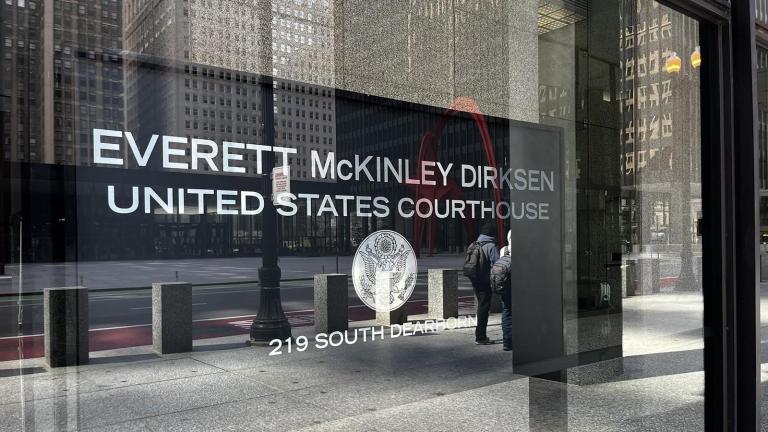
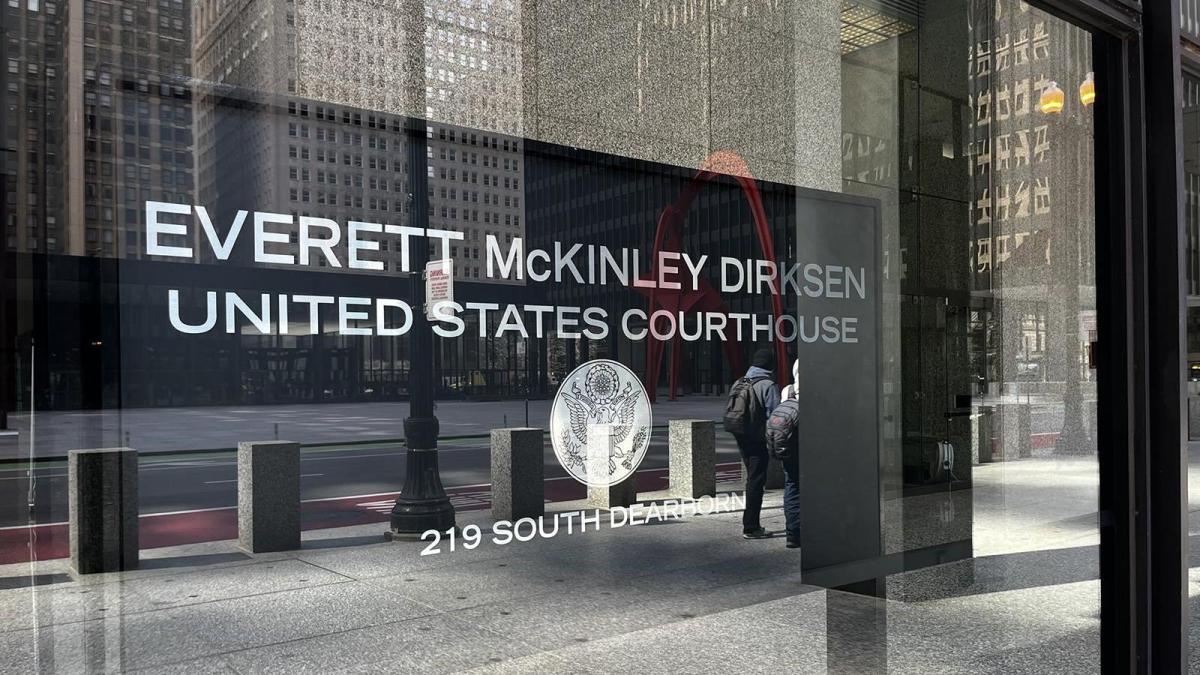 The Dirksen Courthouse is pictured in Chicago. (Capitol News Illinois)
A federal judge won’t allow an independent mediator to decide what information may be off limits ahead of a high-stakes hearing about the collapse of the “Broadview Six” case after Department of Justice officials accused her of acting as “investigator and prosecutor.”
U.S. District Judge April Perry on Friday denied a DOJ request for the appointment of a “special master” to rule on whether any information may be protected by privilege before at least three federal prosecutors are set to testify at a Dec. 2 hearing as Perry continues weighing the possibility of a criminal investigation into the prosecution team.
Perry this month demanded Chicago’s U.S. Attorney Andrew Boutros, as well as three assistant U.S. attorneys who were at various times assigned to the Broadview case, to appear in her court and answer questions about whether they lied or concealed information from the court.
Thus far, the three assistants — William Hogan, Matthew Skiba and Andres Almendarez — have said they are willing to testify. It’s unclear what Boutros intends to do.
Associate Attorney General Stanley Woodward, the DOJ’s third-ranking official, filed a motion Thursday evening, after Perry asked the prosecutors to submit to her under seal written versions of their planned testimony so she can rule on whether any information within may be protected by privilege.
Instead, Woodward asked for a “special master or an otherwise disinterested judicial officer” to decide those matters, arguing that Perry has “assumed the roles of investigator and prosecutor” while also serving as decision maker, and thus “cannot be the one to rule on the government’s privilege assertions.”
In rejecting that motion, Perry said the DOJ has known for five months that she intended to hold a hearing regarding the “conduct of the federal prosecutors” in this case, but waited until the night before potentially privileged materials were set to be turned over to her to make their request.
Perry added that the DOJ appears to have a “basic misapprehension” about what a special master does — saying they do not have the power to issue a final ruling on legal issues — and appeared to take issue with the government’s description of her actions.
“To make it abundantly clear: The Court has not, as the Government claims, ‘assumed the role of ... prosecutor’ in this case, nor will it,” Perry wrote in her Friday ruling.
Prosecutors alleged the Broadview defendants were part of a group that surrounded a government vehicle outside the suburban Immigration and Customs Enforcement processing center last September, “with the intent to hinder and impede” a federal agent from proceeding to the facility and “discharging the duties of his office.”
But the case fell apart in May after unsealed transcripts from the grand jury proceedings last fall revealed Assistant U.S. Attorney Sheri Mecklenburg allegedly excused skeptical grand jurors, admitted to speaking with grand jurors outside of the hearings and “vouched” for the merits of the allegations against the defendants.
That conduct was not revealed to Perry or the public for months, with the judge saying in May she was “incredibly shocked” and had never seen such conduct by a prosecutor before a grand jury.
Perry on Friday said the U.S. Supreme Court has held that “a court has the (inherent) power to conduct an independent investigation in order to determine whether it has been the victim of fraud.”
“No matter who allegedly commits a fraud on the court, a party, an attorney, or a nonparty witness, the court has the inherent power to conduct proceedings to investigate that allegation and, if it is proven, to punish that conduct,” Perry wrote, quoting a Seventh Circuit Court of Appeals ruling from 2008. “That is precisely what the Court intends to do here.”