Science & Nature
Monk Parakeets Have Survived Chicago’s Winters, Why Not This Runaway Parrot? An Expert Explains the Major Difference
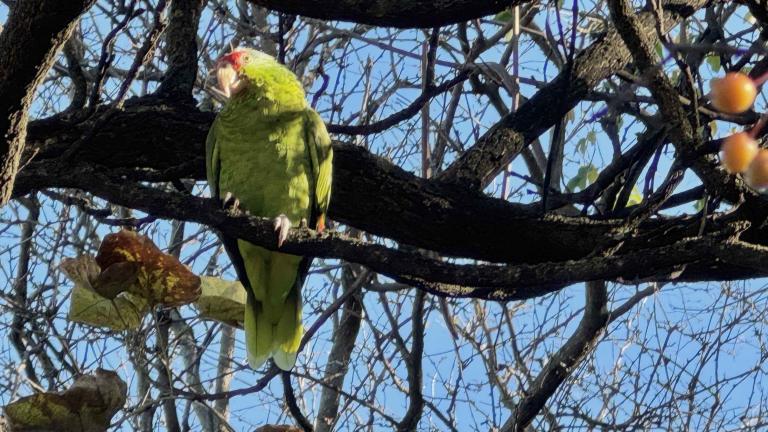
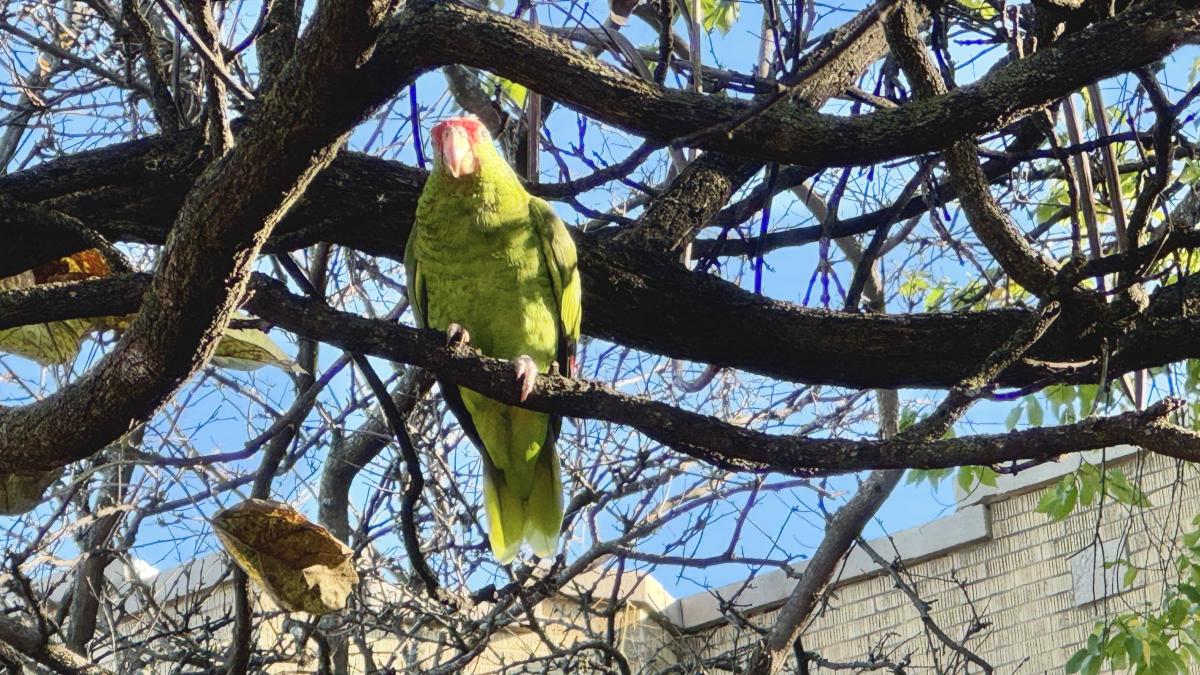 What are the chances this red-crowned Amazon parrot, seen Nov. 16, 2026, in Lincoln Square, could survive a Chicago winter? Slim, without a steady diet of fruit, said one expert. (Patty Wetli / WTTW News)
The saga of the escaped parrot on the loose in Chicago has raised an interesting question. Does it really need to be rescued?
After all, some have argued, there’s a well-established population of monk parakeets — indigenous to South America — doing just fine in the big city.
According to Stephen Pruett-Jones, the elusive red-crowned Amazon parrot (also known as the Mexican red-headed parrot) differs from monk parakeets in one notable way: its diet.
Pruett-Jones, associate professor emeritus with the University of Chicago, spent decades studying Hyde Park’s colony of monk parakeets and is widely known for his research on naturalized parrots.
Though he now lives in Washington state, Pruett-Jones spoke over the phone with WTTW News about the parrot that’s captured the interest and concern of people across Chicago.
Of the roughly 25 species of naturalized parrots in the U.S. — birds that were introduced via the pet trade, escaped or were released from captivity and are now surviving in the wild — the monk parakeet is the only one that lives in places with cold winters.
It’s not so much an issue of temperature as it is a “food thing,” Pruett-Jones said.
Monk parakeets have a varied palate: They’ll eat fruit when it’s seasonally available, but will readily switch to seeds, grains and nuts — including from bird feeders — during winter.
“If an animal has enough to eat, it can stay warm,” he said.
The red-crowned Amazon parrot, on the other hand, consumes fruit almost exclusively. Indeed, the bird most recently has been seen chowing on crab apples in the Lincoln Square neighborhood. Once those resources disappear, the bird’s chances of survival will dip.
“They could adapt on the fly if somebody put out a tray of crab apples,” Pruett-Jones said. “They can’t adapt in terms of changing their diet.”
Nor is it remotely likely the bird will head south for warmer climes where a fruit buffet awaits.
The red-crowned Amazon parrot (Amazona viridigenalis) is a homebody — it establishes a year-round residence versus shuttling back and forth between breeding and wintering grounds. The bird isn’t genetically programmed to migrate, Pruett-Jones said, and that’s not a behavior it’s going to spontaneously develop.
“Unfortunately what this suggests is that it is highly unlikely this particular parrot will survive this winter in Chicago,” he said. “I hope it does, because that would be amazing, but I don’t think it will.”
As of Wednesday, the organization Chicagoland Exotic Animal Rescue (CLEAR) was still sending out volunteers to attempt to net the parrot, but it was missing from its usual perch.
Red-crowned Amazon parrots are native to a small region of northeastern Mexico and south Texas, with feral populations having been established in urban areas of southern California. The birds are considered a globally endangered species, in large part due to the illegal pet trade.
Contact Patty Wetli: [email protected]