Science & Nature
‘We Have Months Before We Take a Breath,’ Shedd Vet Says as Rescued Belugas Remain on 24/7 Watch
Video: Dr. Karisa Tang explains the belugas’ care on an episode of “Chicago Tonight” that aired Sept. 21, 2026. (Produced by Patty Wetli)
The medical and animal care staff at Shedd Aquarium have been on an emotional rollercoaster the past few months.
There was elation in July when the team pulled off the successful rescue of four female beluga whales from the defunct Marineland park in Canada. Four more females from Marineland followed in mid-August and watching them join their pod-mates was a sight Dr. Karisa Tang will never forget.
“Reuniting those two groups of females that lived together in Marineland was really, really beautiful in watching how they greeted each other and rubbed on each other,” said Tang, lead veterinarian and vice president of animal health at Shedd.
But then came the lows.
Two whales in that second group — Peekachu and Rain — have since died, along with Beethoven, a longtime member of Shedd’s resident beluga pod.
“We show up every day, even after a very hard loss,” Tang said in an interview with WTTW News. “That said, it’s devastating and deeply, deeply personal.”
Though the public is clamoring for answers, Tang said staff is still assembling the pieces of a complicated puzzle, waiting on test results and lab reports from facilities across the country.
“A post-mortem, what we call a necropsy exam, is very complex and it involves a lot of different people,” Tang said.
She will say that all of the deaths were “unexpected.”
“There’s so much going on in any given body,” Tang said. “There are a lot of things that can happen suddenly, or that can smolder along without really big signs before there being a drop-off.”
Video: Six rescued female belugas get acclimated at the Shedd Aquarium on Sept. 17, 2026. (Patty Wetli / WTTW News)
Tang and her colleagues at Shedd, along with their counterparts at the other institutions involved in the rescue of Marineland’s 30 belugas and four dolphins, were always keenly aware they were undertaking an inherently risky, high-stakes operation.
Moving 2,000-pound aquatic mammals from the only home most had ever known, placing them in shipping containers, loading them on planes and then releasing them into completely foreign surroundings was never going to be an easy transition.
The rescue team did its best to provide as soft a landing as possible by keeping the belugas together in established social pods — while also considering how the newcomers would fit in with their institution’s resident pod — and they worked to mirror things like the whales’ diets at Marineland.
But as challenging as each move was — the aquarium ultimately took in two younger males, for a total of 10 — Tang knew the whales’ arrival at Shedd was just the beginning, not the culmination of the rescue.
“I think we have months before we take a breath, to be totally honest,” Tang said. “This is going to be a long process of acclimation. We still have 24/7 monitoring. Yes, our phones are still on at all hours of the night. We’re asking, ‘What does today look like? What does tomorrow look like?’ It’s really about survival and triage, wanting these whales to thrive.”
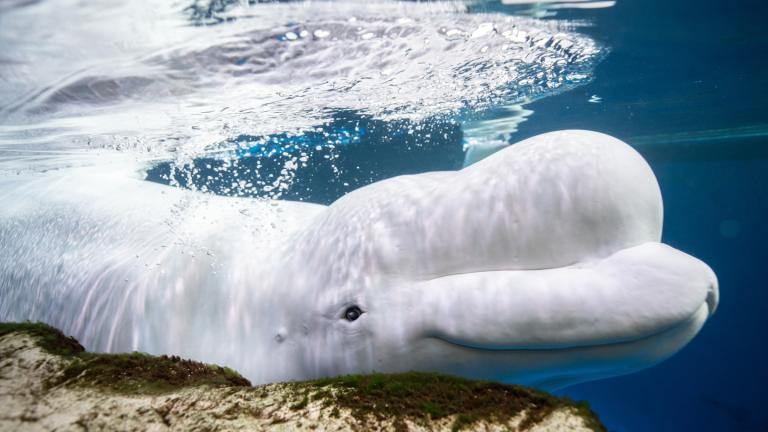
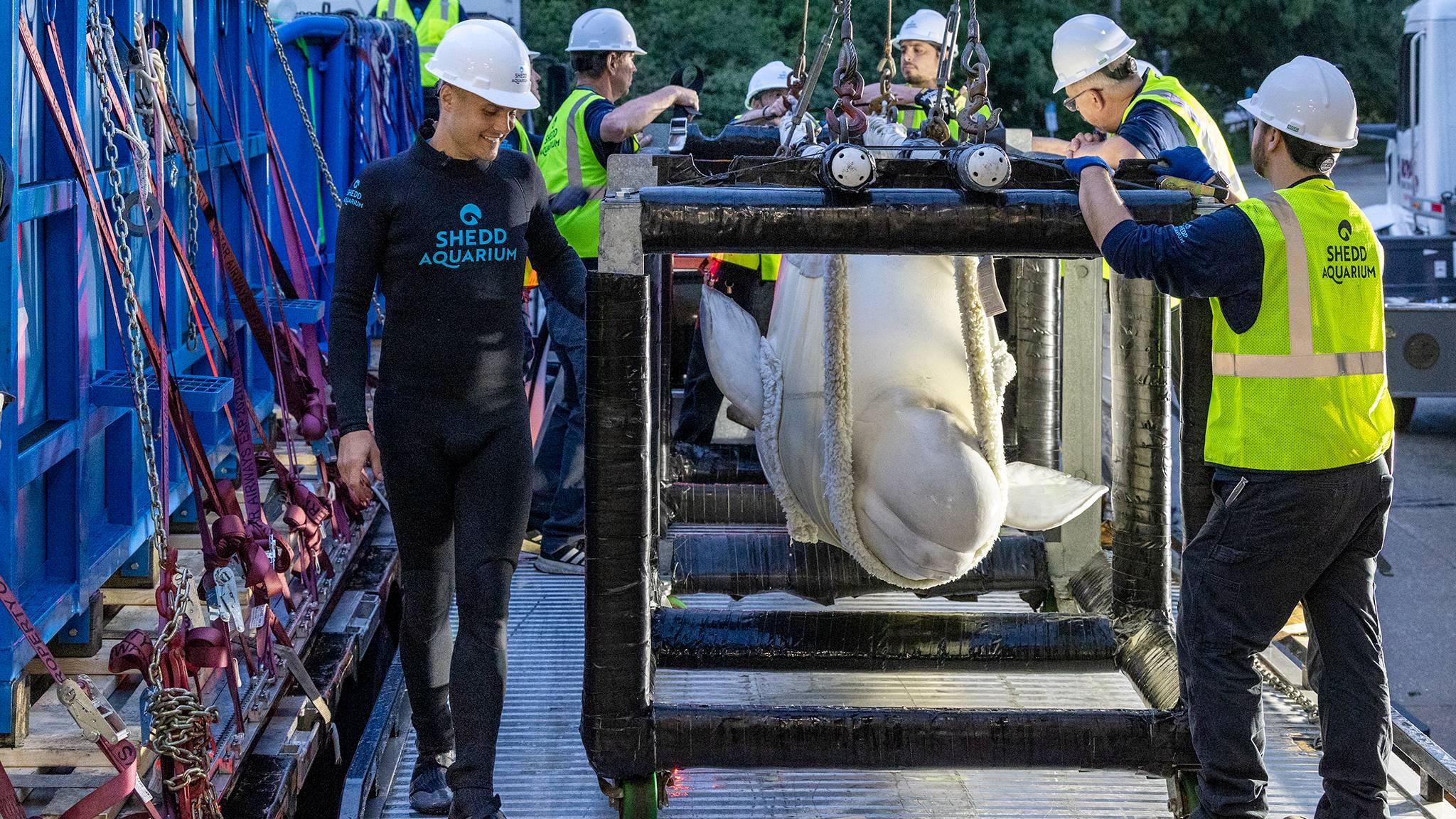 The first four rescued whales from Marineland arrived at Shedd Aquarium in late July 2026. Shedd ultimately took in 10 of Marineland’s 30 whales, though two have died. (Heidi Zeiger / Shedd Aquarium)
From the outset, the rescue came under fire from animal rights advocates, particularly those in Canada who’d been following the Marineland saga for years. They argued that the belugas should be sent to a marine sanctuary, though no such facility currently exists. Activists also faulted Marineland and the Canadian government for rushing the transfer of the whales, some of which advocates speculated were in poor health.
With its care of the rescued whales already under a microscope, Shedd faced even greater scrutiny following the death of Peekachu and then Rain. On Friday, Canadian media reported that a third rescued beluga, Jelly Bean, died at its new home in Spain.
Tang remains steadfast in her position that moving the belugas was an absolute necessity.
“There was no other option for these animals,” Tang said. “The two options were to give them a new home long-term in AZA facilities (accredited aquariums and zoos) or they would be euthanized. There simply is not another option for these animals.”
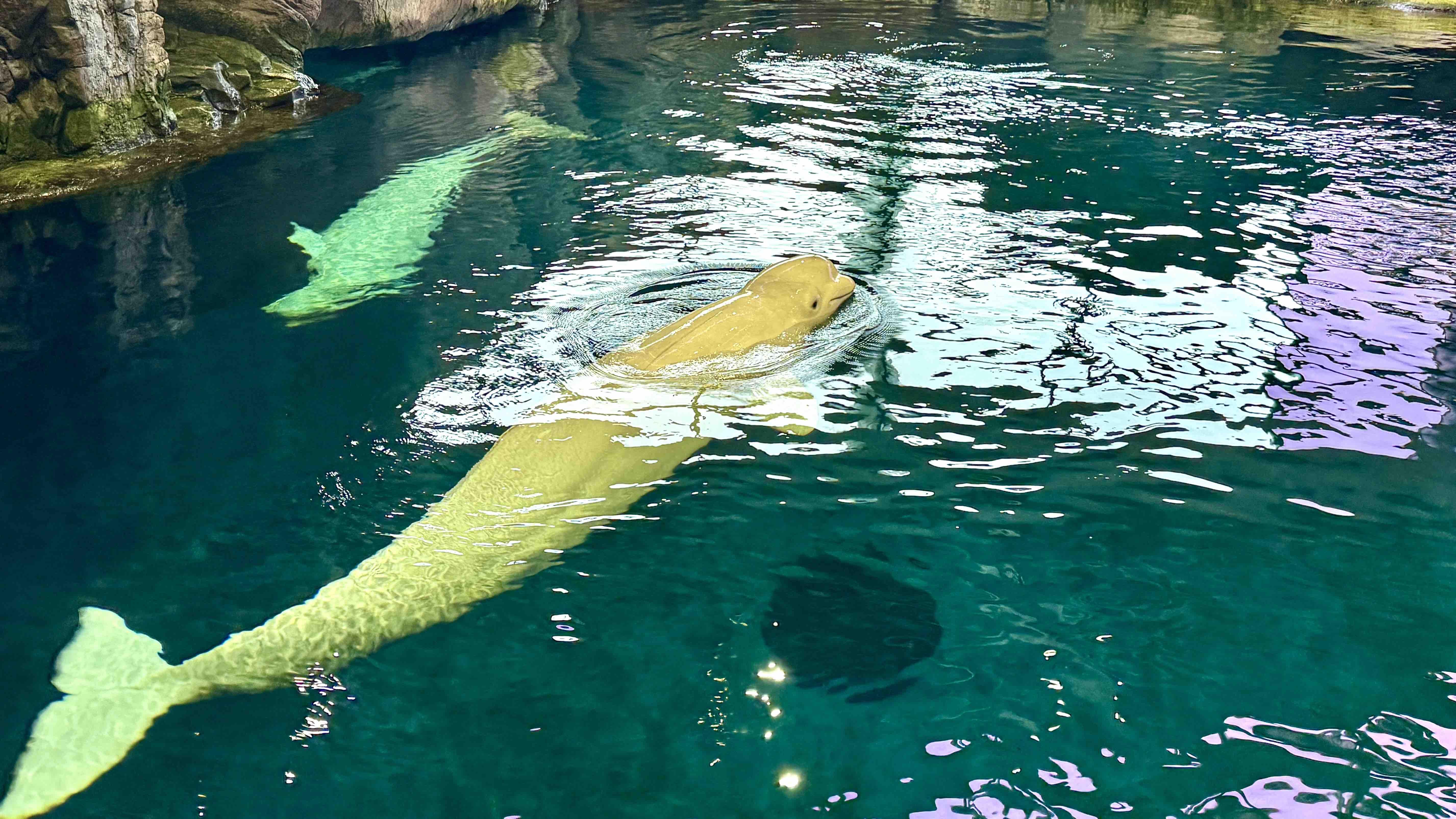 Male belugas Gimli and Yukon, the last to arrive at Shedd from Marineland, check out their new digs, Sept. 17, 2026. (Patty Wetli / WTTW News)
Marineland had been a popular tourist attraction in Canada for decades. But following the death of its founder, the park closed to the public in 2024 and the property was put up for sale.
As the plan for the rescue unfolded, Tang paid multiple visits to Marineland and said she saw dedicated caretakers doing their best to provide for the belugas under challenging circumstances, including crumbling infrastructure.
“They struggled with things like water quality,” Tang said. “They were at the end of their line in terms of resources.”
But there is no truth to speculation that Marineland’s belugas were sick and possibly spread disease to Shedd’s pod, she added.
“Any time an animal is moved, including in this rescue situation, we run a panel of tests that cover infectious diseases or things that we’re worried about bringing into another facility,” Tang said. “And they (Marineland’s belugas) were negative for all of those really big infectious diseases.”
That said, she continued, “These are still individuals that have a complex history. There’s no such thing as a binary healthy/unhealthy — every individual’s a very complex body system.”
So can’t Shedd’s medical team just give each new beluga a complete physical workup?
Tang wishes veterinary medicine were so simple.
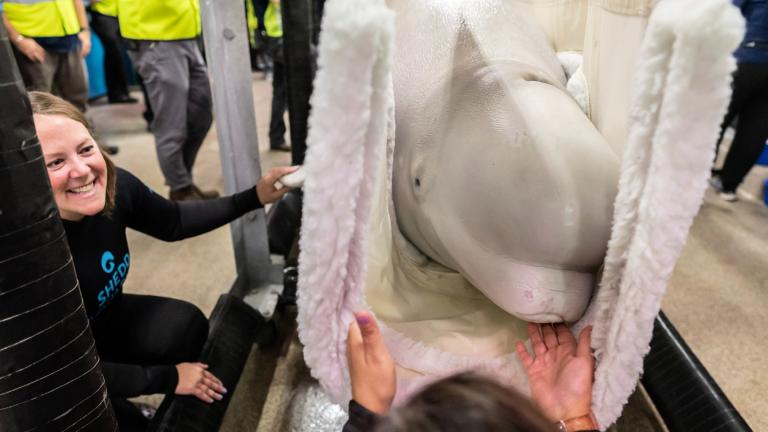
Picture trying to give a house cat a dose of oral medication. Now picture drawing blood from a one-ton mammal, in the water, as it swims away.
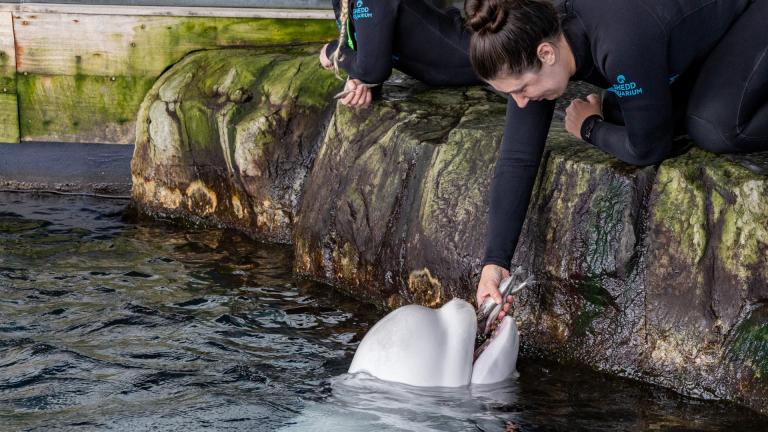
Shedd’s resident belugas have been trained to participate in their own medical care, but Tang said it will take months or even years before the newcomers arrive at the same level of cooperation.
So for now, one of the best indicators of how well any given whale is doing, and whether interventions might be needed, is their appetite.
Tang explained that while humans eat food and drink water, belugas only eat food. They get water from the fish they eat, so if they’re not eating, they can become dehydrated.
“Regardless of the reason that they aren’t eating, if they aren’t eating for a period of time, we get concerned,” she said. “At that point we need to know more, we need to dig a little deeper.”
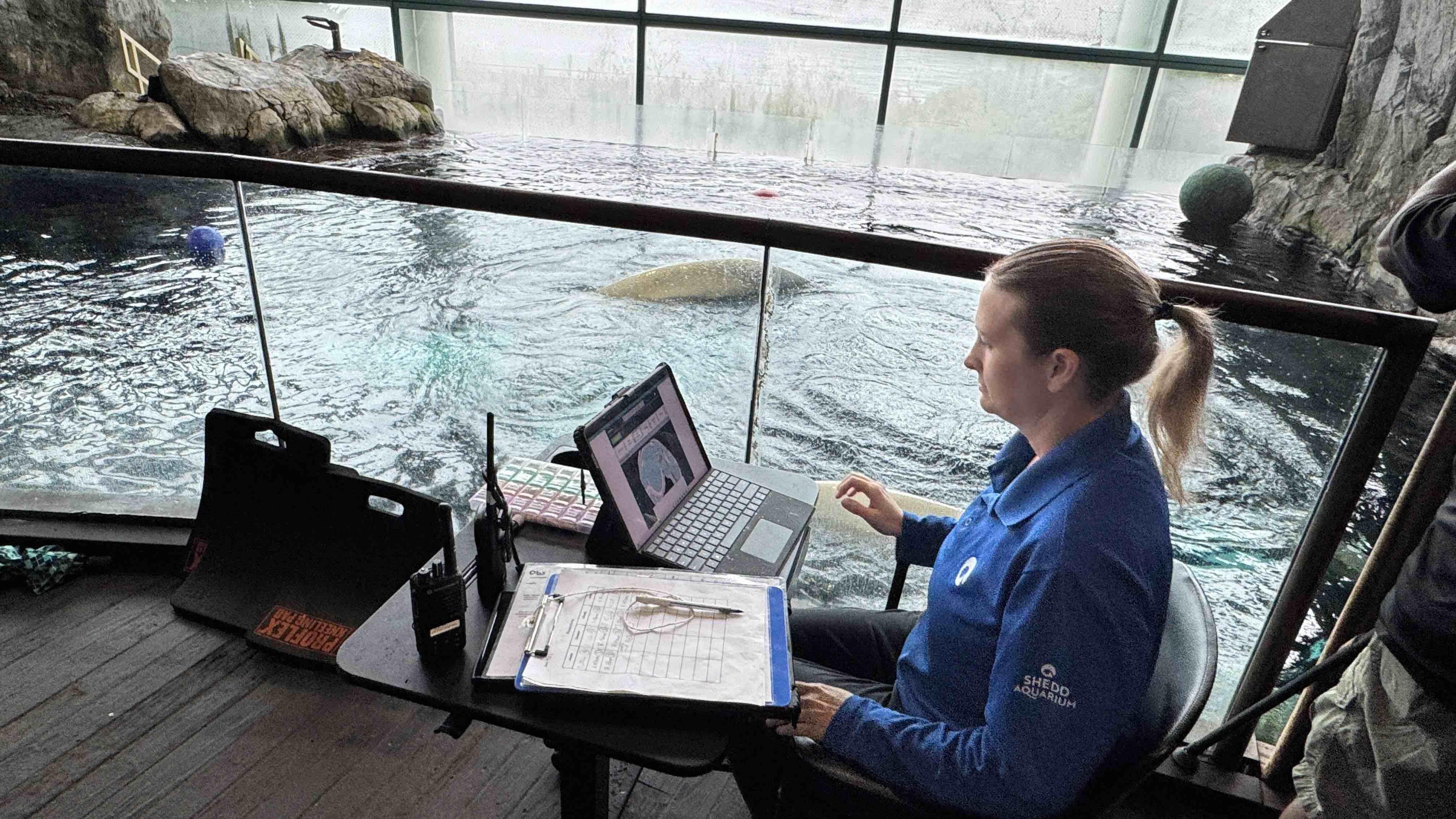 Alicia Atkins, a senior trainer at Shedd, monitors the aquarium’s six rescued female belugas, tracking their behavior. (Patty Wetli / WTTW News)
Shedd’s trainers are also monitoring the beluga’s behaviors for clues into their well-being.
When WTTW News paid a visit to Shedd on Thursday, Alicia Atkins, a senior trainer at the aquarium, was sitting at a portable desk placed next to the habitat where the six surviving female rescued belugas were treating her to an underwater ballet.
As they surfaced to breathe, she listened to their respirations — the pfffft of the exhale and whoosh on the inhale — which varied slightly for each beluga, much like their vocalizations.
Every minute, her laptop would beep and Atkins would enter data on a specific whale: What activity is she doing? Who’s she hanging out with? Where is she in the habitat?
“We can look at everything that they’re doing throughout the day trying to get an overall view of what’s happened,” Atkins said.
It takes an intense amount of concentration, she conceded, particularly during 10-hour overnight shifts, but Atkins wouldn’t trade places with anyone.
“I’ve been here almost 15 years, and I’m never tired of it,” Atkins said. “I love watching these guys, I could watch them all day. And I do.”
The health team works in concert with the care and behavior team, and the two groups come together formally once a day to go over their findings. “But I promise you, the text thread is constant,” Tang said.
“We have dashboards where data gets fed into and you can see it instantly in charts and graphs,” Tang said. “We have a lot of analysis going on at all times.”
All this information is also being shared within the broader collection of institutions involved in the Marineland rescue, creating a closeness and shared purpose that Tang said is unlike anything she’s ever experienced in her career.
“You basically have everybody in the country and beyond who has ever worked with belugas, working and speaking together and collaborating on what we can do to make their lives as good as possible,” she said. “It’s incredibly stressful, and incredibly worth it, and we will continue to show up every day for them.”
Note: This article originally published Sept. 17, 2026, and has been updated with additional information and video.
Contact Patty Wetli: [email protected]
Related Stories