Science & Nature
This ‘Wicked Cool’ Half-Female, Half-Male Bird Landed in Suburban Chicago — Offering a Rare Glimpse Into One of Nature’s Strangest Phenomena
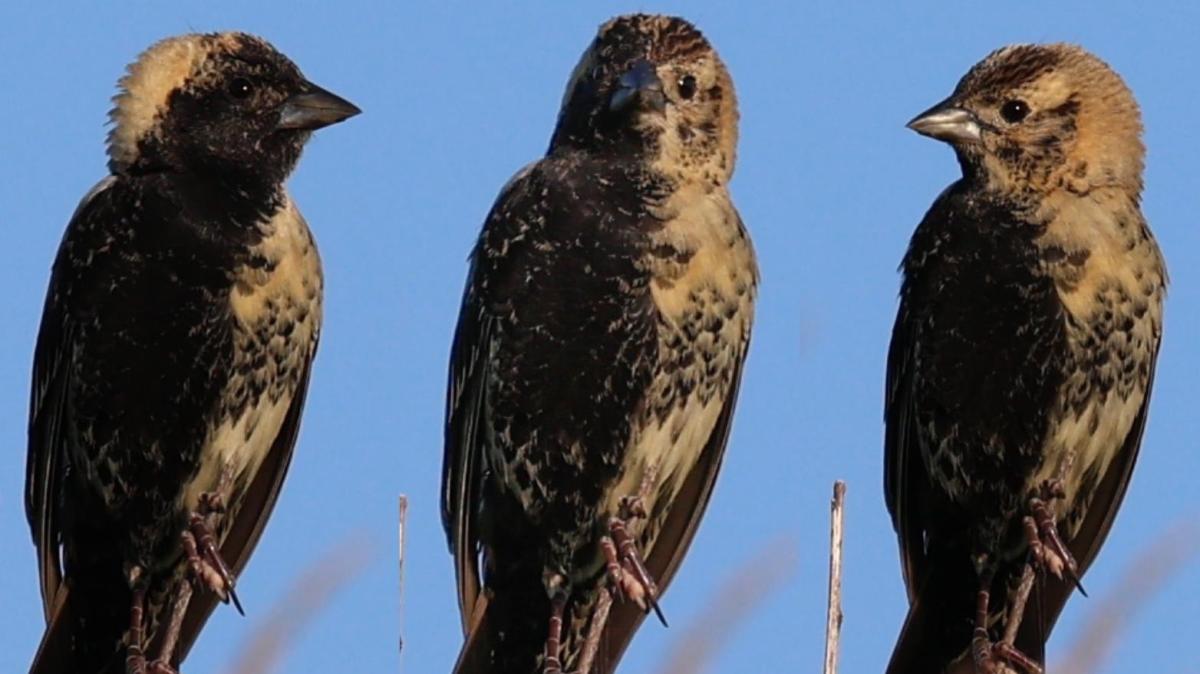 A composite image of the bobolink nicknamed Black and Tan, showing its male and female sides split down the middle. (Luke Dahlberg / Citizens for Conservation)
Back in early spring, Luke Dahlberg, conservation seed program manager with the nonprofit Citizens for Conservation, was spending his Sunday at the office.
His “office,” to be fair, is the 200-plus acre Hill ‘N Dale nature preserve near Barrington Hills, and Dahlberg wanted to take advantage of the lighting to photograph birds, specifically male bobolinks arriving on their breeding grounds after wintering in the pampas of South America.
“That’s when they’re just singing like crazy, they’re showing themselves,” Dahlberg said. “And usually the female bobolinks will come back a couple weeks afterwards.”
After snapping pictures of every bobolink in sight, Dahlberg went home and began scrolling through his camera roll. One bird stood out.
Male bobolinks, as with many bird species, have far more striking breeding plumage than their female counterparts. Dahlberg described the fellas’ white back and black undersides as looking like a tuxedo worn backwards, with a blonde patch on their heads lending a Dennis Rodman-circa-mid-‘90s vibe.
The bird in question didn’t quite fit the profile.
“It turned its face and it was in non-breeding plumage,” Dahlberg said, which struck him as odd but he chalked it up to a strange molt pattern.
A couple weeks later, Dahlberg pointed out this same unusual bobolink to some visitors from Illinois Audubon Society and that’s when he learned he had stumbled onto something extraordinary.
The bobolink was what’s called a bilateral gynandromorph — half female, half male, split down the middle — as the result of a genetic anomaly.
On its right side, the bird presented as male; on its left, it sported the duller plumage of a bobolink female.
“I had a better chance of photographing a unicorn,” Dahlberg said. “It’s extremely rare in nature.”
So rare that Abigail Derby Lewis, executive director of Citizens for Conservation, reached out to former colleagues at the Field Museum to confirm the ID.
“I’ve never seen one of these gynandromorphs in real life and so I was thrilled. I would definitely say the vast majority of birders will never see a gynandromorph in their life,” said Cameron Rutt, ornithologist and conservation ecologist at the Field. “Your chances of running into one, by yourself, in the wild are vanishingly slim.”
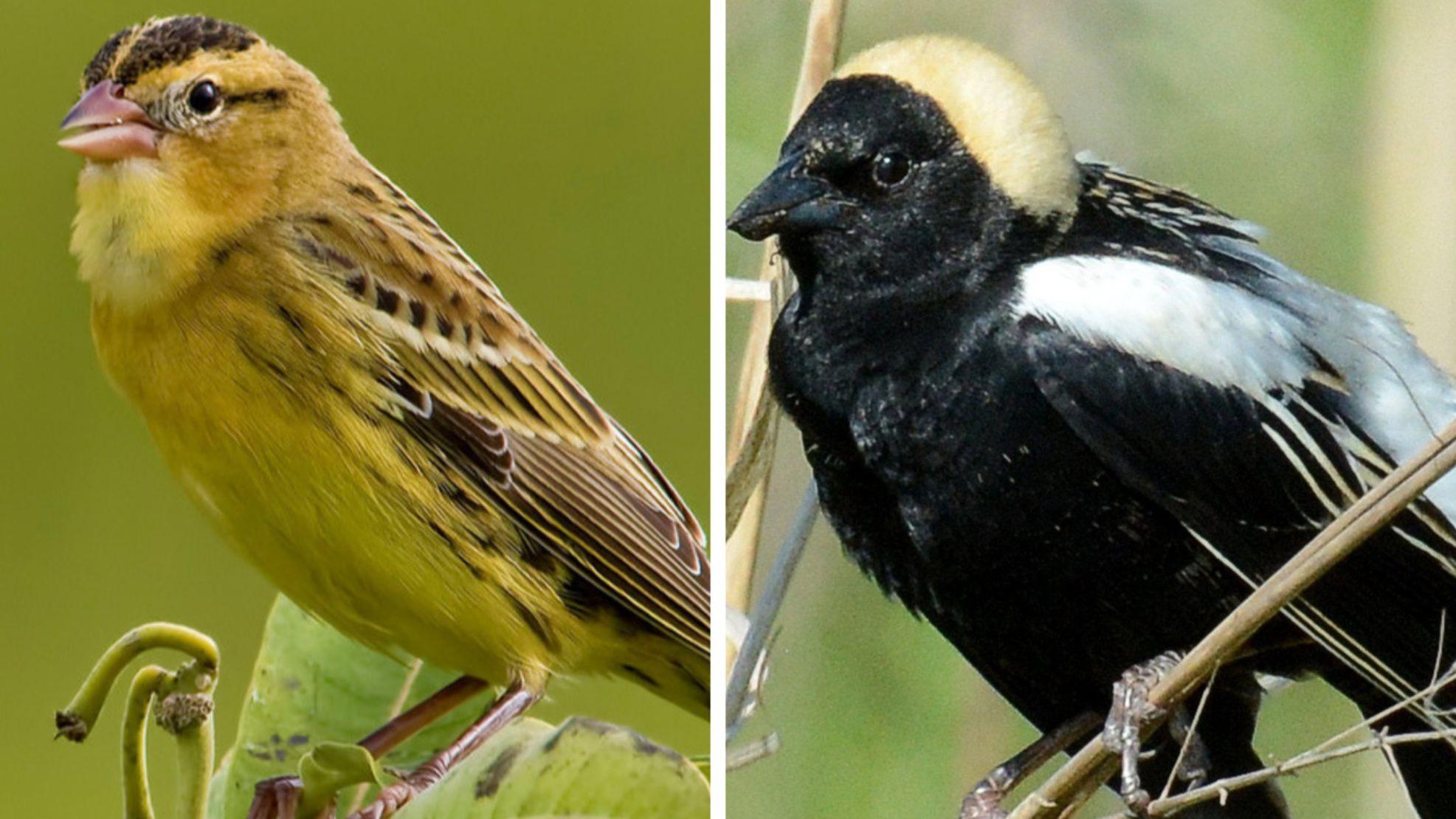 A 100% female bobolink on the left and a 100% male bobolink on the right. (hstiver / iStock; U.S. Fish and Wildlife Service)
Of the approximately 11,000 species of birds on the planet, only 45 are mentioned in the scientific literature as exhibiting gynandromorphism, totaling fewer than 100 individuals, according to Rutt.
The bird at Hill ‘N Dale is the first-ever record of a bobolink gynandromorph.
“I think I described it as a ‘wicked cool bird’ and I stand by that description,” Rutt said of the bobolink, adding that he took something like 1,000 photos of the bird.
“The bird was doing one of its flight songs and so it was circling,” Rutt said. “It was first flying right and then it was next flying left and it looked like two completely different individuals. But it’s the same bird.”
What made Dahlberg’s discovery even more exceptional: While most gynandromorph sightings are one-offs — such as visits to bird feeders during migratory pit stops — this bobolink had set up residence and established a breeding territory. For the better part of two months, it could reliably be found in an area that, as luck would have it, was near the lone pathway running through Hill ‘N Dale.
“I could just walk in the middle of the road here and it’d be flying over me,” said Dahlberg, who wound up naming the bobolink Black and Tan, after rejecting the suggestion of Two-Face as too “villainous.”
Given how little is known about gynandromorphs, Black and Tan provided a unique opportunity for more than a fleeting observation.
“We have so few studies where we can glean this kind of information,” Rutt said. “So it’s half female, half male, but what does it operate as? Behaviorally is it male or female?”
The other male bobolinks certainly seemed confused, Dahlberg said, depending on which side of Black and Tan they were eyeballing.
Looking at the male side, the others would back away, but facing the female side, they would be like, “I’m intrigued. Have we met before?” he said.
“If only you knew what was going on in their minds,” Derby Lewis said with a laugh.
In female birds, only the left ovary is functional, which coincided with Black and Tan’s female side, so theoretically, the bird could produce eggs. But during its time at Hill ‘N Dale, its behavior was indistinguishable from the other males.
“It was doing lots of singing, it was doing courtship flights and attending females,” Rutt said.
Ultimately, Black and Tan wooed a mate, nested and raised fledglings.
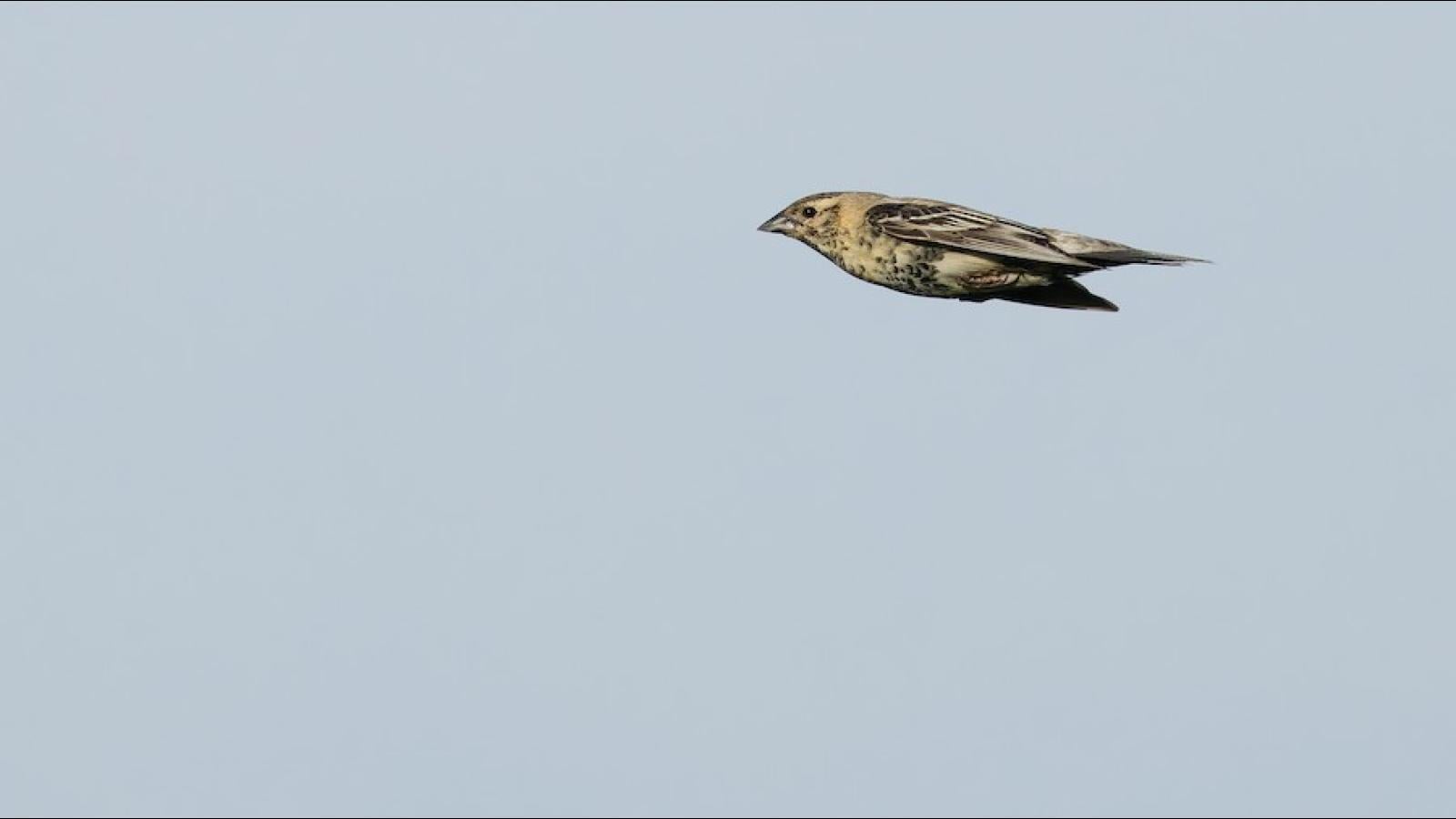
The bobolink in flight, looking like a female. (Cameron Rutt)
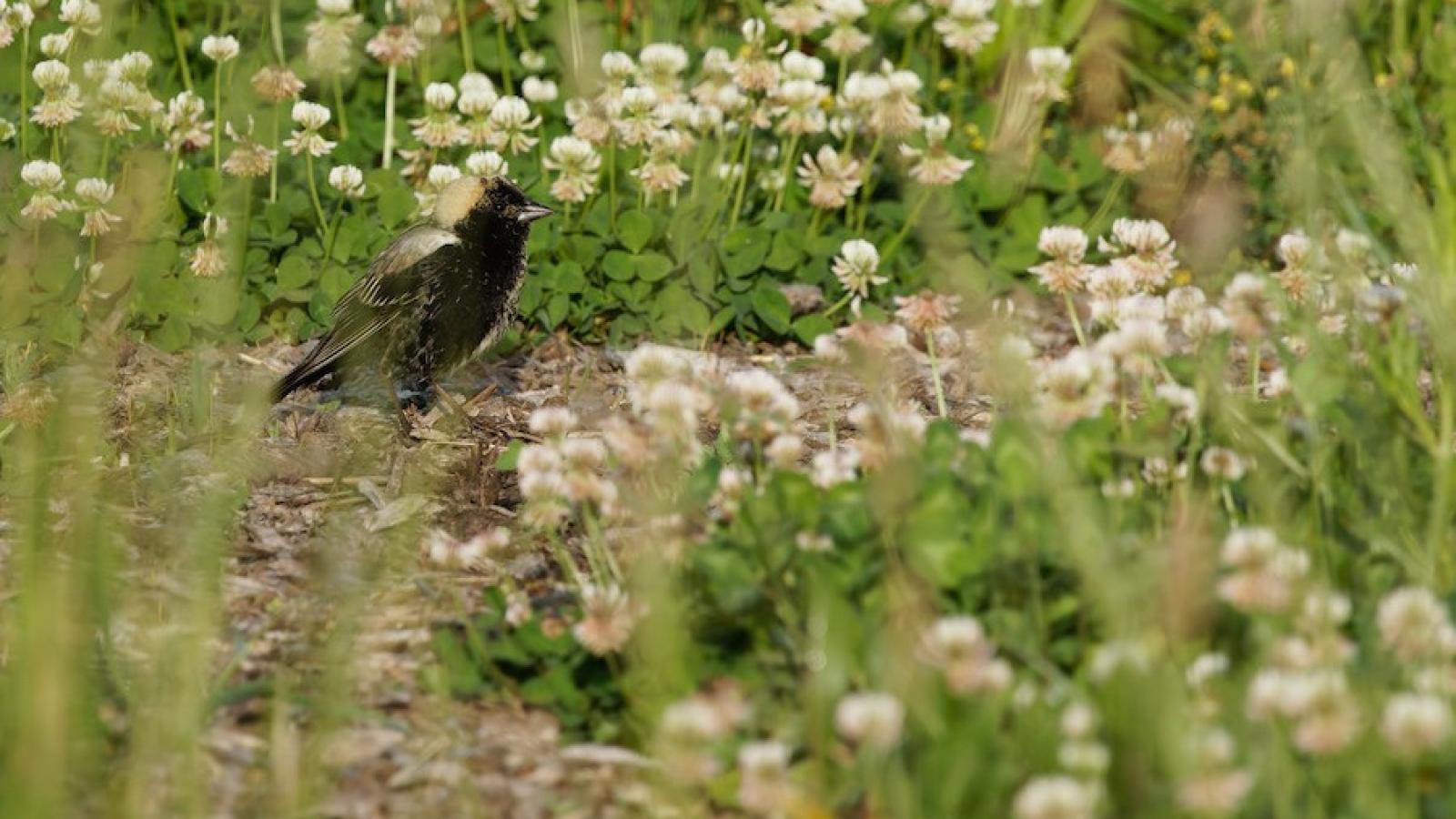
The bobolink’s male side, which seemed to dominate the bird’s behavior. (Cameron Rutt)
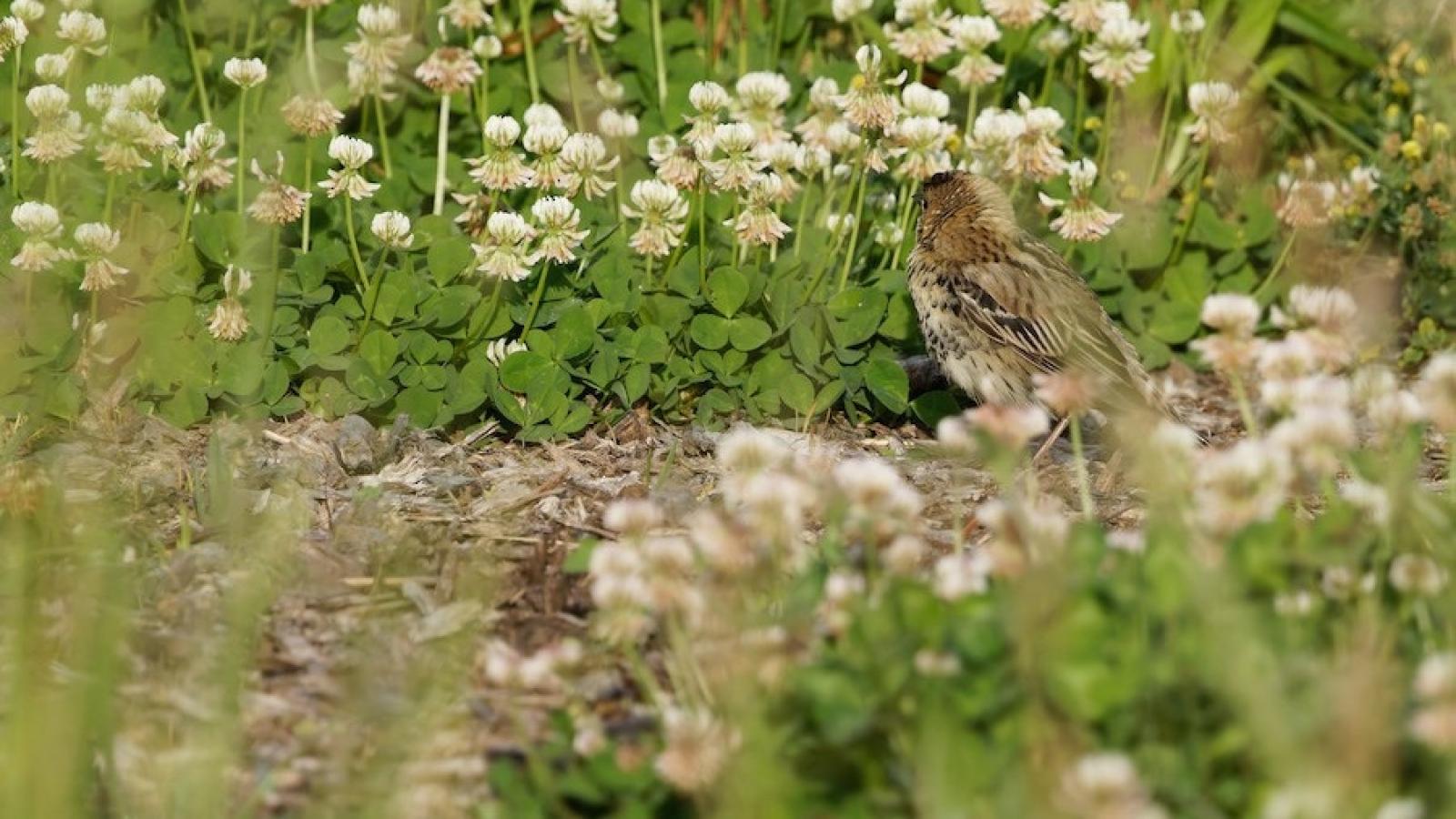
The bobolink’s female side. (Cameron Rutt)
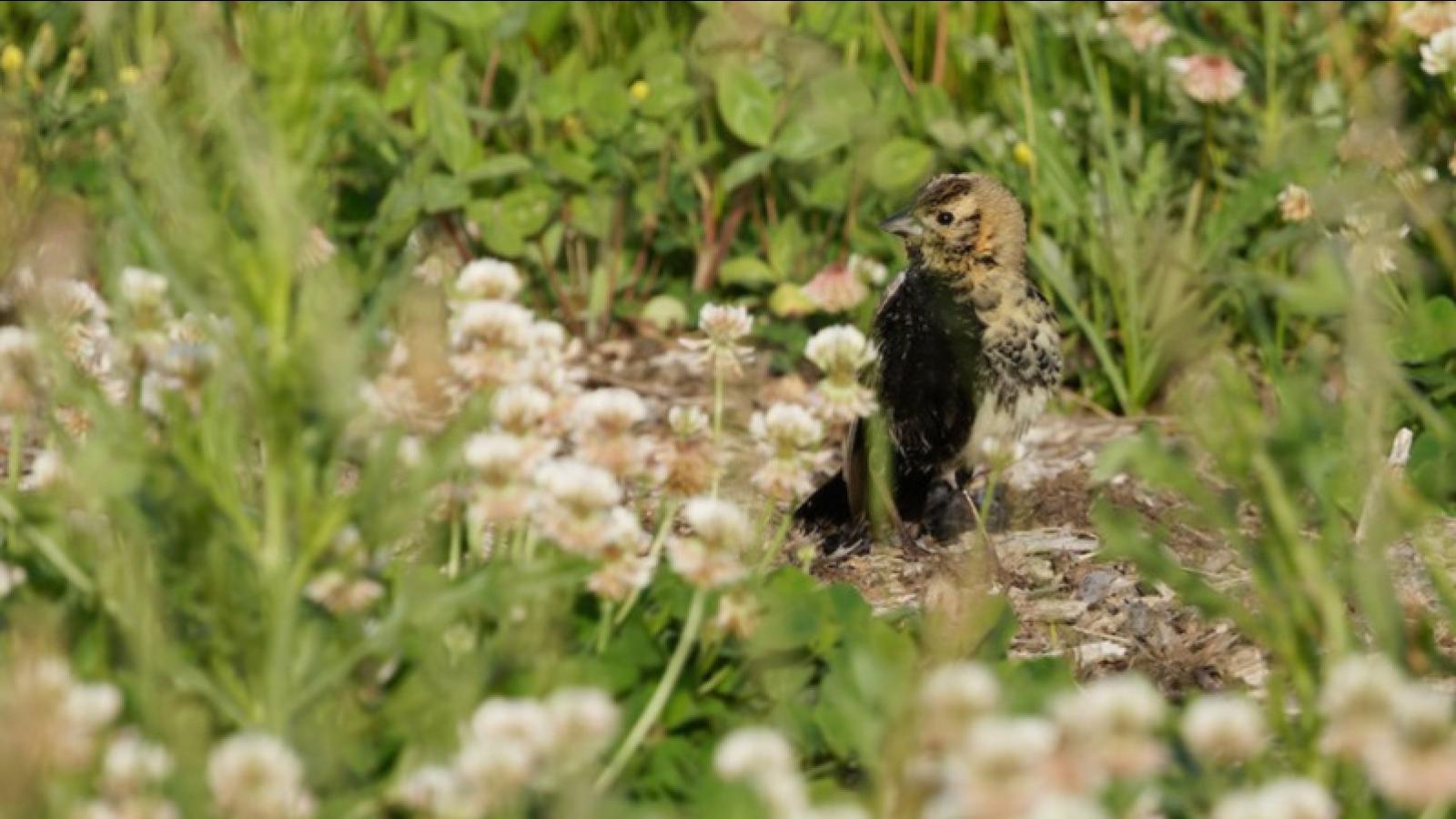
The bobolink nicknamed Black and Tan, showing the female side of its head, but a clear line down the middle separating its male and female halves. (Cameron Rutt)
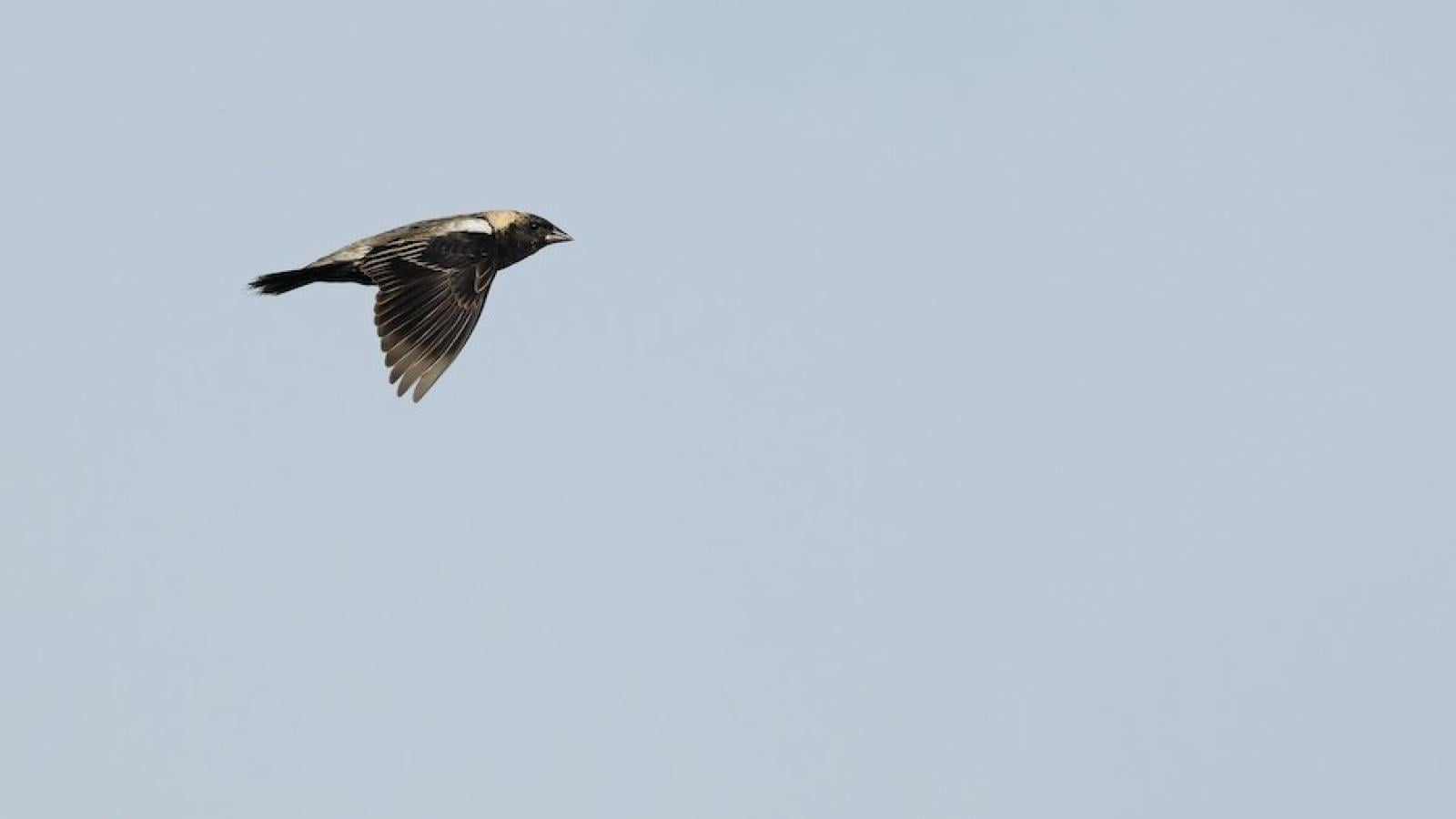
The bobolink in flight, showing its male side. (Cameron Rutt)
There’s still much that remains a mystery about gynandromorphism in general and Black and Tan specifically. But Rutt said everyone involved in observing the bobolink agreed it wasn’t an option to capture the bird to conduct intrusive tests and procedures.
“In order to maximize what you would learn about the bird, you would have to sacrifice the bird, and nobody was interested in pursuing that,” Rutt said.
For Derby Lewis, the presence of such a rare, charismatic bird at Hill ‘N Dale underscores the importance of preserving grassland habitats, which are the most endangered ecosystem in North America.
Hill ‘N Dale has been undergoing restoration since 2022 and its population of bobolinks, which undertake one of the longest avian migrations, is among the largest densities in northern Illinois.
“Last year there were over 80 of them (bobolinks), which is truly, truly bananas,” Derby Lewis said. “And then on top of that to have this incredible new discovery of this trait in a bobolink, it’s just layers and layers of awesomeness.”
Contact Patty Wetli: [email protected]