Politics
Change to Green Card Process Throws Immigration Lawyers, Applicants Into Tailspin
U.S. Citizenship and Immigration Services announced last week that immigrants applying for a green card must do so from outside the U.S.
In what many immigration lawyers say is a dramatic break from longstanding case law and a misreading of the statutes governing green cards, USCIS is now requiring immigrants to apply from the consulate in their home countries.
In a policy memo, USCIS officials wrote that adjustment of status, the process by which immigrants inside the U.S. upgrade their non-permanent status to permanent, is an extraordinary form of relief not meant to be granted frequently.
The memo reads: “...adjustment of status is an extraordinary matter of discretion and administrative grace not designed to supersede the regular consular processing of immigrant visas.”
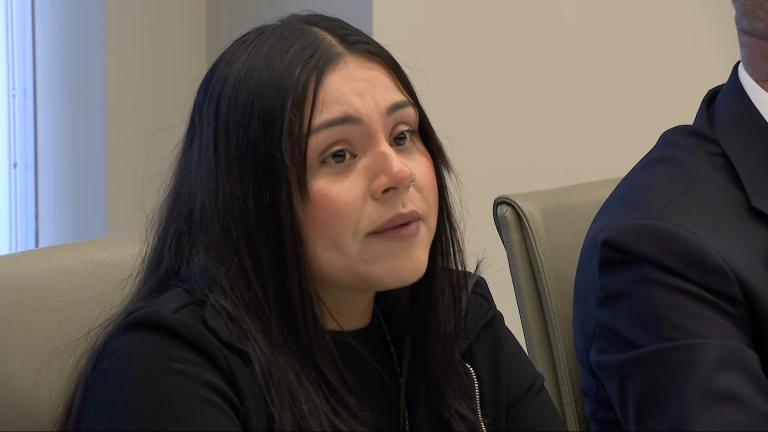
Naiara Testai, a partner at Hughes Socol Piers Resnick & Dym, has been an immigration attorney for 10 years. She said applying for green cards from within the U.S. has been the norm for decades.
“This (change) is upending decades of statutory interpretation, of case law, of practice,” Testai said. “It’s just another way that this administration is going against legal immigration. They don’t want people to be able to stay in the United States lawfully, and they’re trying every path possible to prevent people from staying here with their families.”
The term “green card” refers to the identification card issued by USCIS to immigrants granted lawful permanent resident status. As of Jan. 1, 2024, there were 12.8 million green card holders in the U.S., and millions of immigrants apply for LPR status each year. In fiscal year 2023, USCIS issued nearly 1.2 million green cards.
Shannon Shepherd is a partner at Immigration Lawyers, LLP, and has been a practicing immigration lawyer since 2003. She said hundreds of thousands of applicants could now be at risk.
“In 2024, there were about half a million green cards granted, and the number rose in 2025,” Shepherd said. “Everyone is very confused by the policy. They’re very panicked, they’re worried about being subject to deportation even though they were trying to follow the law.”
Testai said the memo has created widespread confusion as firms scramble to determine which clients could be affected.
“(It’s difficult for) clients who already had their applications in, who understood the law to be a certain way at the time they applied, and they paid their fees,” Testai said, “The rules are just being changed halfway through. It’s really unfair, and it’s creating a lot of uncertainty.”
The Immigration and Nationality Act is the law that governs green cards. Testai said that while the law gives the government discretion in interpreting adjustment-of-status applications, it has long been understood to allow immigrants to apply for permanent residency from within the U.S.
“About 1.1 million individuals have been granted cards in 2023,” Testai said. “Of those, nearly 600,000 did it through adjustment of status stateside and around 500,000 did it through consular processing. The majority of people who are getting green cards have actually done it through the adjustment-of-status process. Calling it a loophole — that people are trying to circumvent the proper way of doing it — is just absolutely absurd.”
In a statement, USCIS spokesperson Zach Kahler said U.S. laws have always required immigrants to apply for green cards from their home country.
“We’re returning to the original intent of the law to ensure aliens navigate our nation’s immigration system properly,” Kahler wrote. “From now on, an alien who is in the U.S. temporarily and wants a Green Card must return to their home country to apply, except in extraordinary circumstances.”
Shepherd said it remains unclear how an applicant meets the bar of “extraordinary circumstances.”
“That’s another thing they failed to define when they issued this memo,” Shepherd said. “We just don’t know yet. It’s really hard to advise our clients as to what kind of thing they should be doing or gathering to avail of this process.”
The shift in green card policy comes at a time when Deferred Action for Childhood Arrivals, or DACA, recipients are experiencing monthslong delays in their renewal requests. The delays have resulted in some “Dreamers” losing their work authorization status and security from deportation.
Shepherd said USCIS’s announcement is another example of a larger attack by the Trump administration on legal immigration pathways.
“There has been a systematic chipping away at the processes that were previously available,” Shepherd said.