Politics
‘Do It Early’: Officials Urge Illinoisans to Submit Mail-In Ballots Well Before Election Day Amid Supreme Court ‘Chaos’
 (WTTW News)
Local and state officials are reassuring Illinoisans about the safety of mail-in voting, while also encouraging them to return their ballots early after a new ruling by the U.S. Supreme Court could cause “chaos” ahead of the November election.
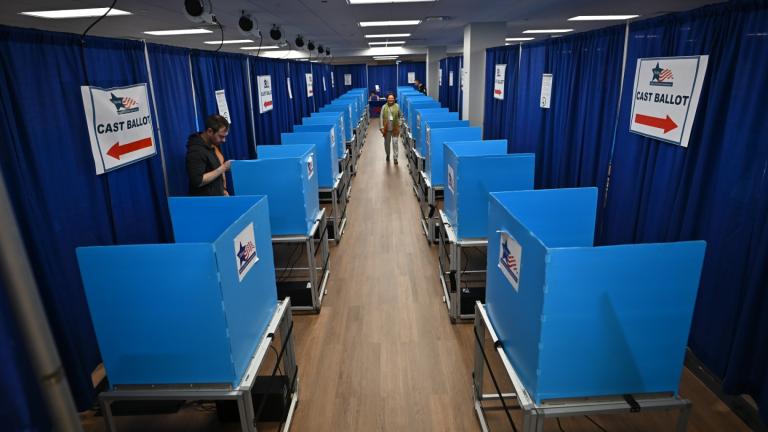
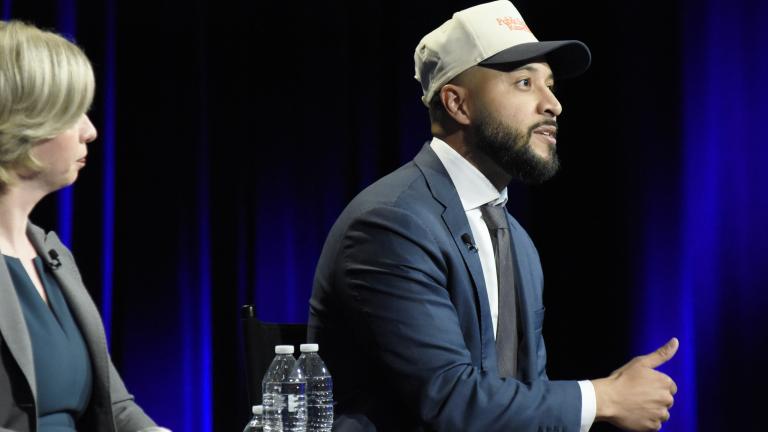
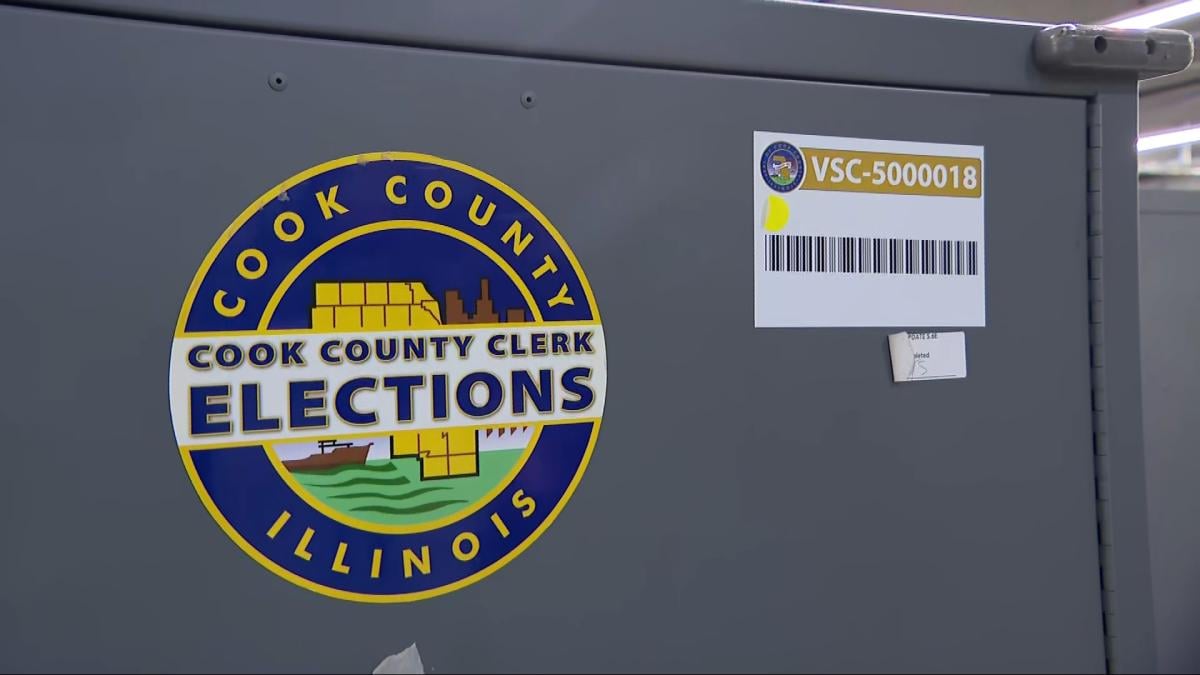
Cook County Clerk Monica Gordon and U.S. Rep. Raja Krishnamoorthi joined voting rights leaders Tuesday for a tour of Cook County’s Election Operations Center, a day after the Supreme Court opened a possible path for President Donald Trump to implement an executive order restricting mail-in voting.
“My advice to voters is that if you want to return your mail ballot through the Postal Service, please do it early,” Gordon said. “Do not wait until Election Day or the final few days before it.”
Trump’s executive order, signed in March, calls on his administration to create lists of eligible voters and orders the U.S. Postal Service to deliver mail ballots only to people on those lists. New requirements released Friday would forbid the Postal Service from sending mail ballots from any state that does not comply with Trump’s order.
The Supreme Court’s decision Monday may not lead to a single election procedure changing during the November midterms, but it has already thrown into uncertainty the method that nearly one-third of the country uses to vote.
In Illinois, mail-in ballots must be postmarked by Election Day and be received no less than two weeks after the election date. But Gordon said the USPS has already made changes to its postmarking process, and ballots mailed close to Election Day may not receive postmarks on the same day they are sent.
Gordon encouraged mail-in voters to submit their ballots early, or drop them into secured drop boxes — equipped with surveillance cameras and enhanced ballot tracking technology — which will be located at all 56 early voting locations across suburban Cook County.
“Know how you plan to vote,” Gordon said, “know where you plan to vote, and if you are voting by mail, give yourself enough time.”
Rather than saying that Trump’s order is legal, the Supreme Court said Monday it was too early for Democratic-run states to challenge it in June, when they convinced a federal judge in Boston to freeze the order for November’s election. That effectively restarts the legal fight over the order in an incredibly compressed timeline, with initial ballots scheduled to be sent to North Carolina’s overseas and military voters in just over a week, on Sept. 4.
A second injunction barring the U.S. Postal Service from making changes to comply with Trump’s directive remains in effect. Still, the administration late Monday filed a motion asking that the second hold be removed, and has posted new regulations from the Postal Service that would go into effect Tuesday if the legal pathway is fully cleared.
That new rule requires specific formatting for envelopes containing mail ballots — which may force some jurisdictions to completely revise theirs — and makes states use an electronic system to identify to the Postal Service who is voting by mail. If states don’t comply with the rule, their mail ballots won’t get sent.
The prospect of such a potential sweeping overhaul in mere days boggled critics’ minds. In her dissent, Justice Ketanji Brown Jackson warned that the decision “needlessly injects chaos and uncertainty into the upcoming midterm elections.”
Krishnamoorthi on Tuesday said a federal district court has already ruled that Congress did not give the USPS authority to decide which voters are given mail-in ballots, and that litigation remains ongoing to fight Trump’s executive order.
“State and local officials administer our elections,” Krishnamoorthi said. “The Postal Service delivers the mail, and that’s it. And that’s what it should continue to only do.”
Krishnamoorthi said he’s also demanding answers from the U.S. Department of Justice amid reports that the Trump administration could deploy up to 1,000 election monitors across the U.S., whom Krishnamoorthi fears could attempt to intimidate voters.
Gordon on Tuesday also acknowledged concerns about the possible presence of federal immigration agents at voting sites, but said her office has “no specific information” that such agents plan to appear at Cook County polling locations.
“Our responsibility is to prepare before something happens, not after,” Gordon said. “Our office will be working with the Cook County Sheriff’s Office, local law enforcement and other partners to make sure polling places remain safe and secure.”
The Associated Press contributed to this report.