Health
CTA Board Approves Slate of Social Service Outreach Efforts Focused on Violence Intervention, Homelessness
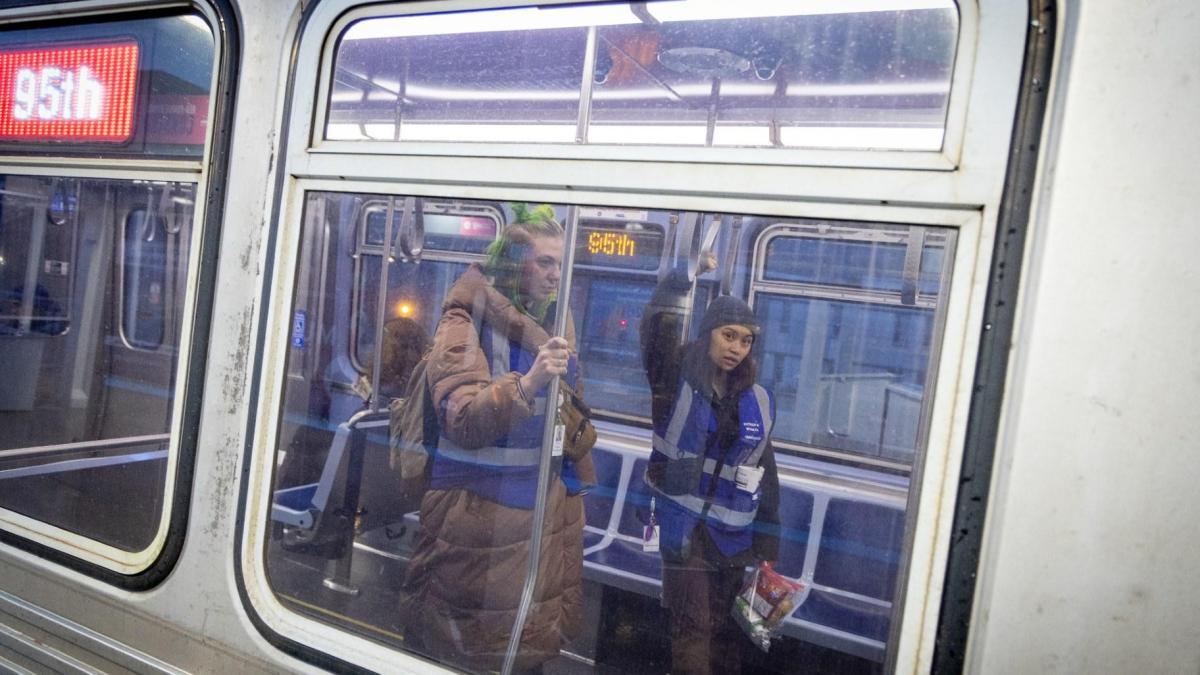 Caseworkers Ell Fabricius (left) and MG Hibionada perform outreach to riders using the CTA as a shelter of last resort in a 2024 file photo. (Kathleen Hinkel / Block Club Chicago)
The Chicago Transit Authority’s board of directors approved an array of new efforts aimed at aiding passengers who need shelter or healthcare, as well as new crisis and community violence intervention programs.
Calling the approvals a “historic moment,” acting CTA President Nora Leerhsen said the agency is positioning itself as a national leader on alternative interventions.
Directors approved pilot programs with four different nonprofits for a total of $9 million. Three of those agencies will be placing crisis intervention teams of at least two workers across the CTA’s Red, Blue, and Green Lines to aid riders experiencing problems including homelessness, substance abuse disorder and mental health issues. Those aid workers will be trained on things like deescalation and trauma-informed care, and have hygiene and care bags that include Narcan. Some of the agencies leading those outreach efforts also have a crisis center or a shelter near the CTA to connect passengers interested in going there.
The fourth agreement is for 20 community violence intervention specialists who will work daily in two shifts on the Red Line between the Roosevelt and Lake stations downtown, both at the stations and on trains. Those workers are intended to interact with people engaging in disruptive behavior with the goal of resolving problems without involving law enforcement.
The board also signed off on two agreements with the city’s Department of Family and Support Services. One measure renews a $4.2 million annual agreement for outreach to ridings using the CTA as a shelter of last resort, which WTTW News and Block Club Chicago previously reported on. The other agreement with DFSS amends an existing pact to funnel an additional $412,500 to specifically fund at least 30 dedicated beds for people riding the CTA in need of shelter, which are set to be available before the winter.
Director Roberto Requejo praised the CTA for taking on the thorny issue of homelessness.
“Most agencies either turn a blind eye and say this is not something we want to talk about, or they have a punitive approach,” Requejo said at Wednesday’s meeting. “CTA is going in the other direction, which is something that makes us all proud.”
But he added that with hundreds of people using the system for shelter, there’s need for more work to be done, including by the incoming board of the Northern Illinois Transit Authority that will be seated on Sept. 1.
That date also marks the expiration of the terms of all the current directors on the CTA, Metra, and Pace boards as part of the transition. CTA Board Chair Lester Barclay, who is set to remain on the board, praised the agency’s staff and leadership for navigating the COVID-19 pandemic and its aftermath.
“The challenges were significant, but so was the commitment to meet them,” Barclay said.