Science & Nature
Restoration of Historic Sears Sunken Garden Underway in North Lawndale, With a Design From Lurie Garden Mastermind
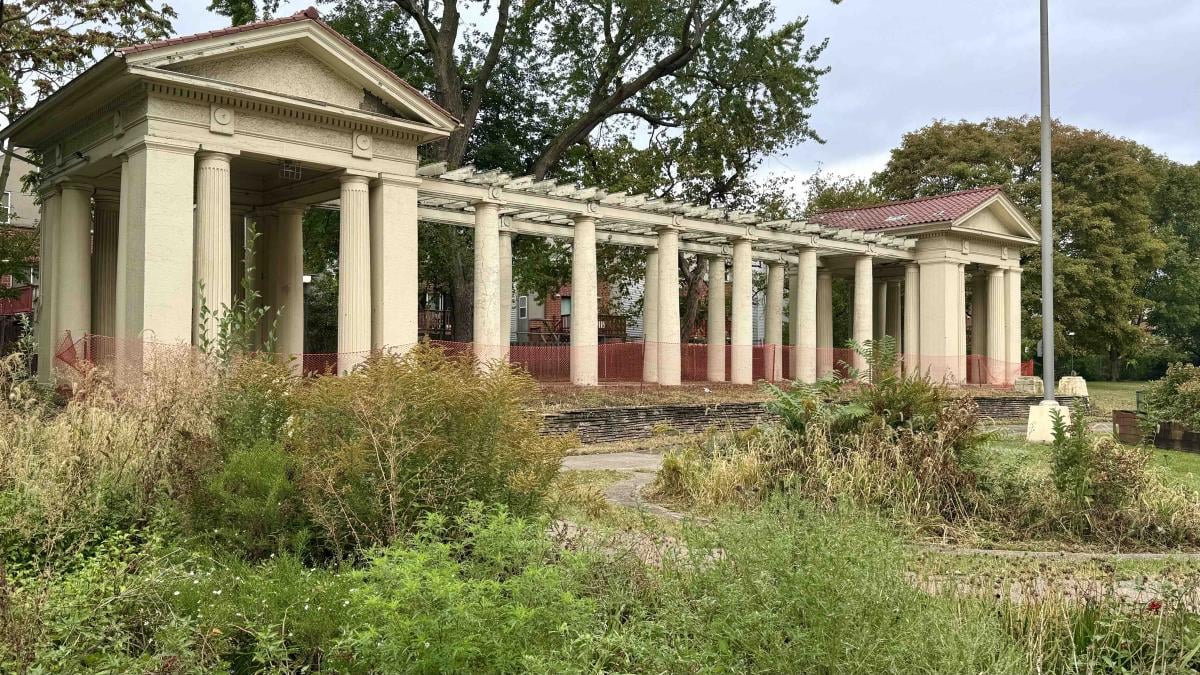 Historic Sears Sunken Garden dates back to 1907 and was designed as a place for Sears employees to take a break and enjoy some fresh air, without ever leaving the company's sprawling campus. (Patty Wetli / WTTW News)
It’s been 50 years since Sears traded in its sprawling headquarters campus on Chicago’s West Side for a tower in the Loop. But the faded retail giant’s legacy still looms large in North Lawndale, where the community that Sears built has, bit by bit, reclaimed remnants of its industrial past and turned the story of abandonment into an opportunity for reinvention.
Sears’ one-time catalog printing building — a block-long brick behemoth — has been converted into housing. The power plant that kept the campus humming is now a high school. And the “original Sears Tower,” a 14-story office building, has been transformed into a hub for nonprofits and rechristened Nichols Tower.
Next up on the restoration agenda: the historic Sears Sunken Garden.
The green space dates back to 1907 and sits opposite the Sears Administration Building on West Arthington Street. It was conceived of as a place where workers employed on the 40-acre campus could take a break and enjoy some fresh air, surrounded by lush landscaping, fountains, a reflecting pool and a picturesque pergola. All without ever leaving the company’s grounds.
“Julius Rosenwald, who was the president of Sears, really had a forward way of thinking about what his employees needed and how to keep them happy and healthy,” said Caroline O’Boyle, Illinois state director of the Trust for Public Land, which is serving as a community liaison for the garden’s revitalization.
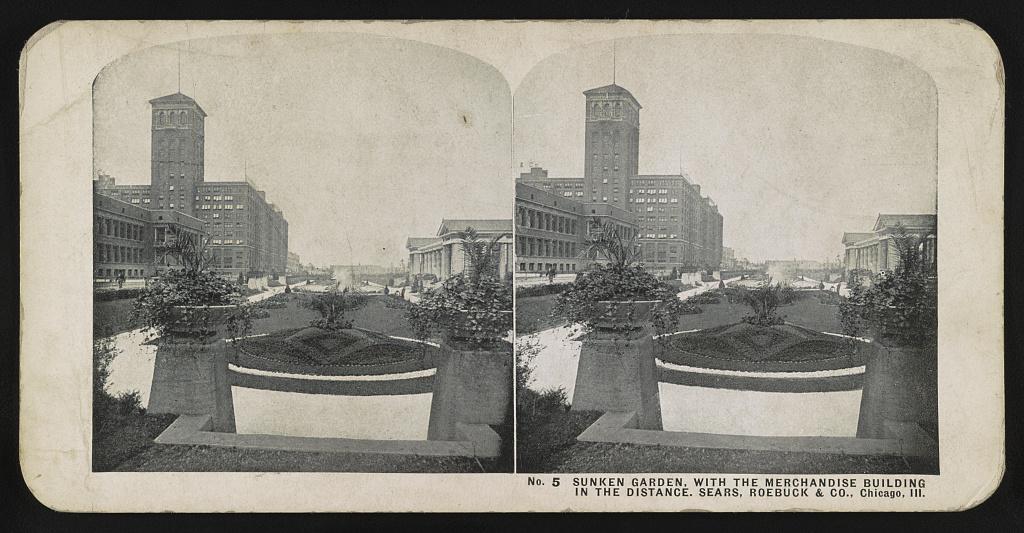 Sears Sunken Garden, with pergola visible to the right. (Sears, Roebuck and Company / Library of Congress)
Long after Sears pulled up stakes, the garden remained a point of neighborhood pride.
“Going past this street as a kid, you’d always be like, ‘Mom, let me go down there.’ The flowers were absolutely beautiful,” recalled Ald. Monique Scott (24th Ward), a lifelong resident.
Countless special occasions and celebrations took place on the grounds, even into the current century.
“Almost 20 years ago, I took my wedding photos here, and it was vibrant and beautiful,” said Reshorna Fitzpatrick, executive pastor of historical Stone Temple Baptist Church and a board member of Friends of Sears Sunken Garden. “As a kid, I lived in this community and this was a place to come to just enjoy beauty.”
But gradually the garden fell into disrepair and today the 1.7-acre jewel is need of some TLC. For the past several years, a coalition of community members and landscape and architecture experts has been marshaling the resources needed to breathe new life into the garden.
In a major coup, they attracted the interest of renowned Dutch garden designer Piet Oudolf, the creative force behind Chicago’s Lurie Garden and Manhattan’s innovative High Line. Oudolf has developed a planting scheme in his “new perennial” style — favoring plants with year-long interest versus annuals that are pulled up seasonally — a vision that will bring the 100-year-old garden into the modern era.
“The same, ‘Aahs’ and ‘Wows’ that I had as a kid, I’ll have as an adult,” Scott said.
To demonstrate what it will look like, the restoration team has installed display beds, which Oudolf himself helped plant during a community event.
“I just love to see how it’s going to be when we get all of this done,” Fitzpatrick said. “Everything around here’s going to be super-amazing.”
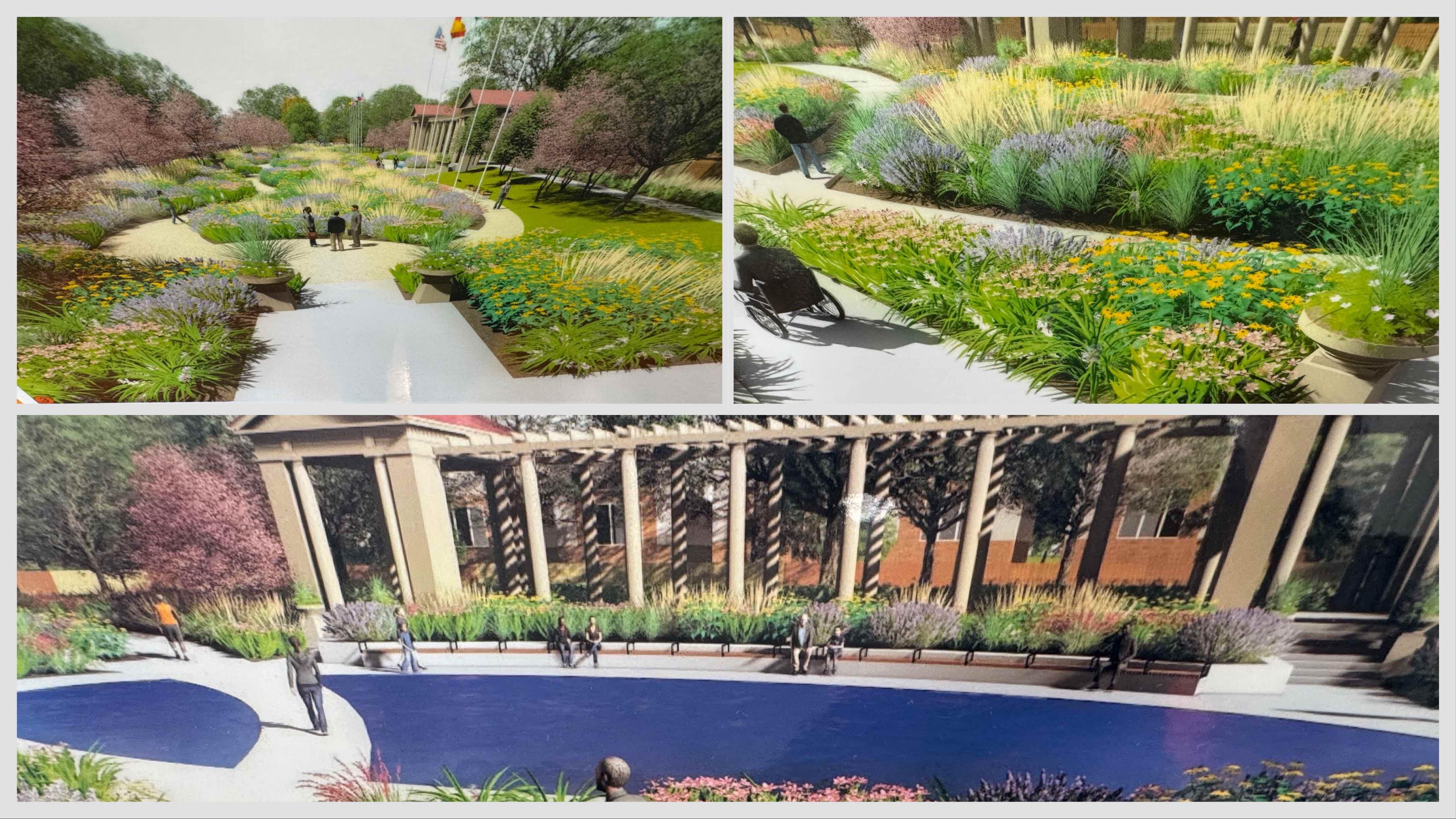 Renderings of plans for a revitalized Sunken Garden, including perennial plantings and accessible paths. (Patty Wetli / WTTW News)
Scott and Fitzpatrick were among the officials and neighbors who gathered to officially kick off the garden revitalization project on a recent overcast morning, when not even the threat of rain could dampen people’s enthusiasm.
Thanks to a $1 million grant from the Driehaus Foundation, funding for Phase One is secure and will pay for refurbishment of the garden’s neoclassical pergola. Work is likely to begin by the end of the year and should be wrapped up by Memorial Day 2026.
The concrete columns will be repaired, the oak beams will be replaced, and new lighting — technically a return to the original lighting scheme — will set off the enhancements.
Arda Design, a Chicago firm known for its work on historic restoration projects, is leading the pergola makeover.
“It doesn’t have a lot of functionality,” Andrea Terry, principal and partner of Arda, said of the structure. “But it’s a real visual anchor that says, ‘This place matters.’ It’s sort of the cherry on top of the decoration of this space.”
Fitzpatrick said the hope is that visible progress on the pergola will build fundraising momentum for Phase Two, which is essentially “everything else”: a water feature, ADA accessible paths, underground stormwater retention, all of the landscaping and an endowment to maintain the plants.
“It’s just a matter of people seeing and believing,” Fitzpatrick said. “We’re looking to raise an additional $6 million to get this done and we know we’re going to get it done…. There’s no doubt. It’s just a matter of time. It shall come to pass.”
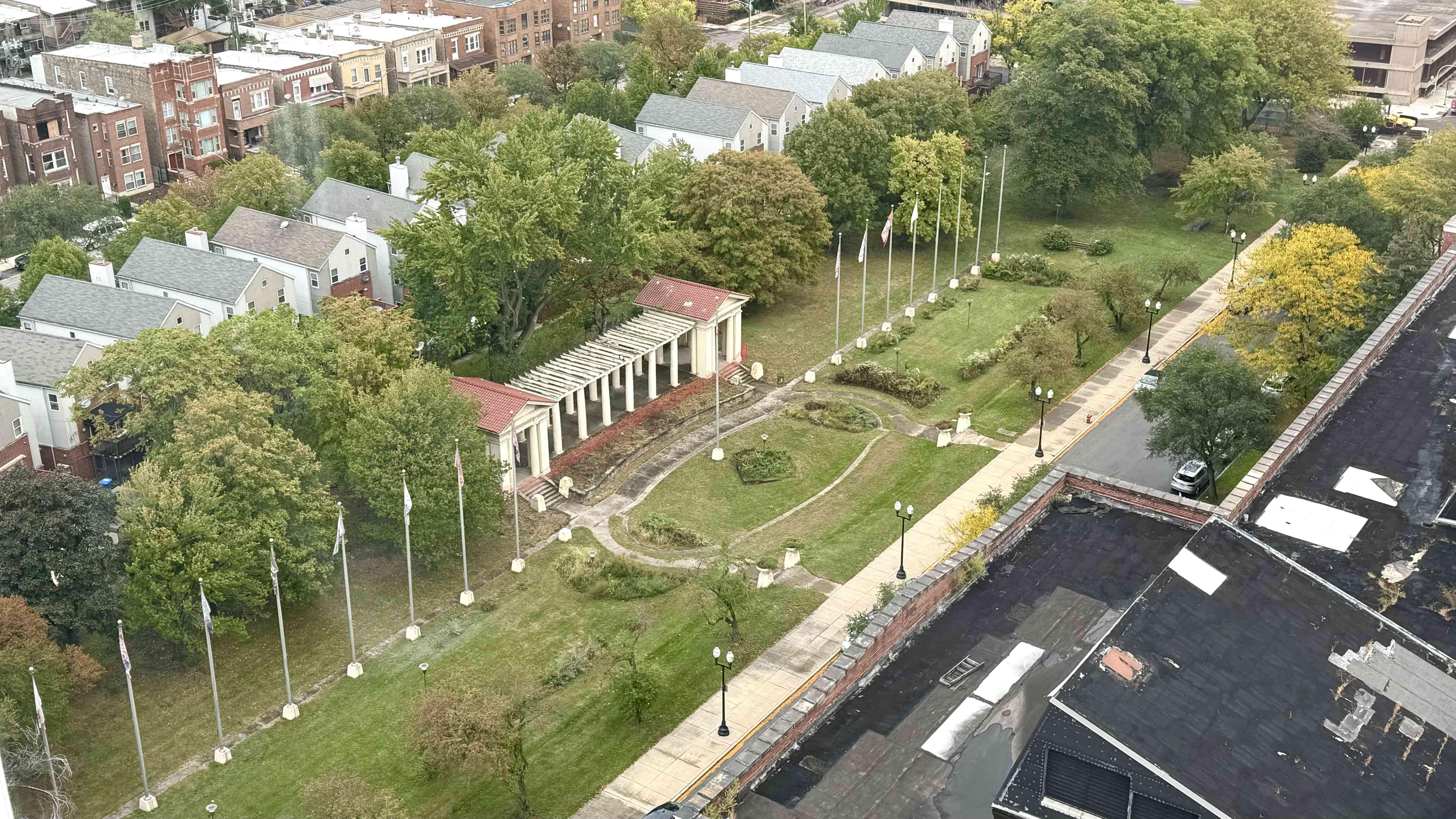 An aerial view of Sears Sunken Garden, as seen from Nichols Tower, aka, the original Sears Tower. (Patty Wetli / WTTW News)
A 2018 “quality of life” plan for North Lawndale identified the development of green and open space as a strategic goal.
The Trust for Public Land, a national nonprofit that works to connect people to the outdoors, was brought on board as an open space champion to help the community define what that goal might mean.
Improving Sears Sunken Garden “quickly surfaced as one project that people could kind of get their arms around,” said O’Boyle.
Though there are a number of large parks in the vicinity — Sunken Garden is nearly equidistant from Douglass Park and Garfield Park — those huge areas serve vastly different purposes than a garden, O’Boyle said.
“Do you need a giant park? Yes you do. Do you need smaller, more intimate spaces? Yes you do. And places that are closer to your home,” she said. “This place (Sunken Garden) can kind of ‘hug’ you in a way that a larger park isn’t going to. Sometimes you need to be held in by the natural open space.”
Video: A view of the Sears campus featuring the Seats Administration Building and the original “Sears Tower” and Sunken Garden. (Patty Wetli / WTTW News)
Where the original garden was built for the community, the restoration is being led by it. Residents have been engaged throughout every step of the planning process and have helped shape the design.
“Basically they wanted a strolling garden, something people could go and stroll in, do some of the things that they remembered historically — family pictures, weddings, quinceañeras,” said Chris Gent, the landscape architect who’s working on the practical aspects of implementing Oudolf’s drawings.
Returning the garden to the condition where it can once again act as a center of community life is more than a beautification project, Terry said.
“Old buildings, old spaces have been parts of the communities for generations, and they mean a lot to people, they mean a lot to the neighbors, even when they don’t mean a lot to Chicago at large,” she said. “To find that revival of connectedness is really great.”
Contact Patty Wetli: [email protected]