Science & Nature
When It Comes to Attracting Monarch Butterflies, Chicago’s Most Successful Urban Gardens Have Something in Common
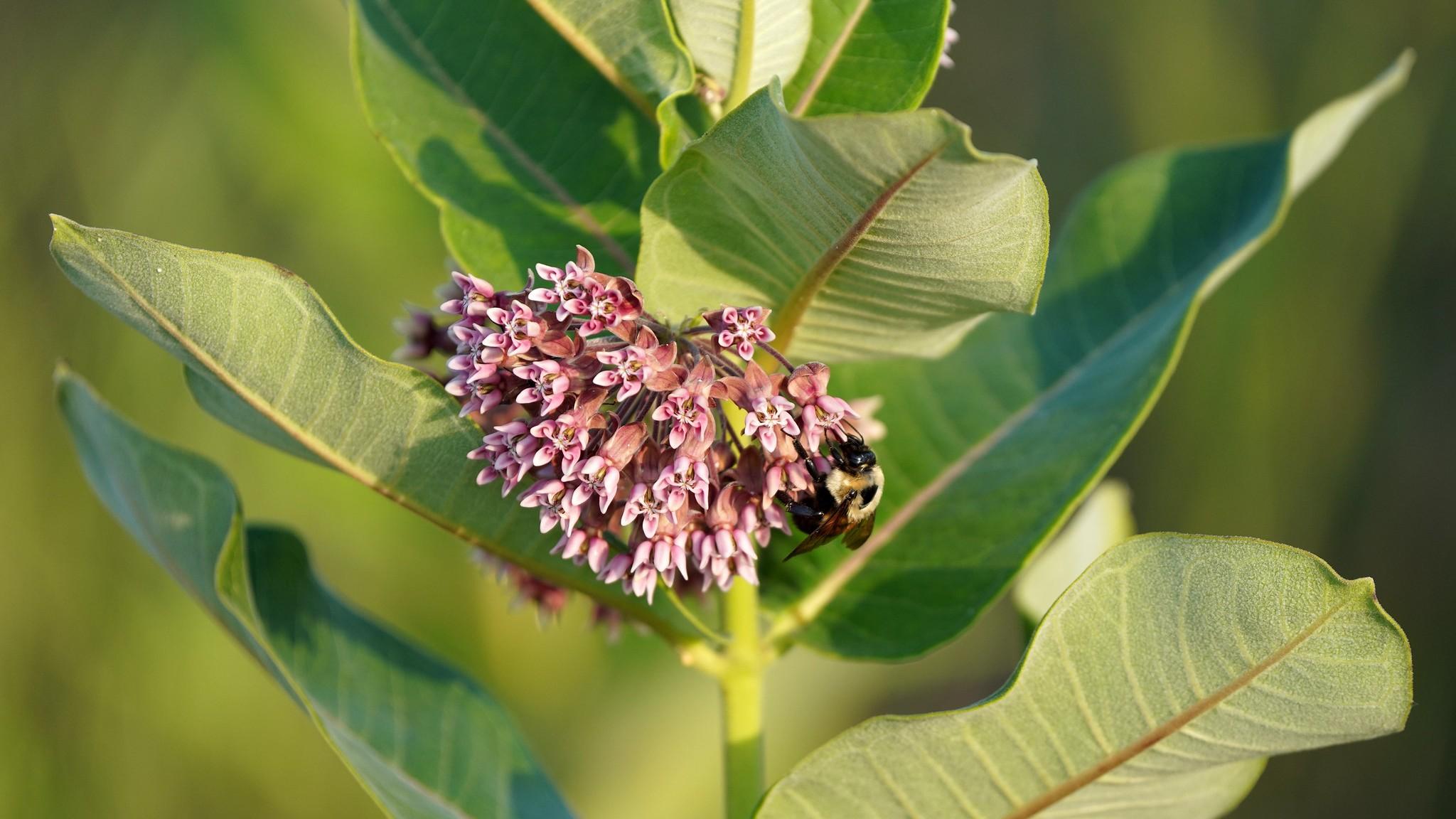 Common milkweed. (U.S. Fish and Wildlife Service / Flickr Creative Commons)
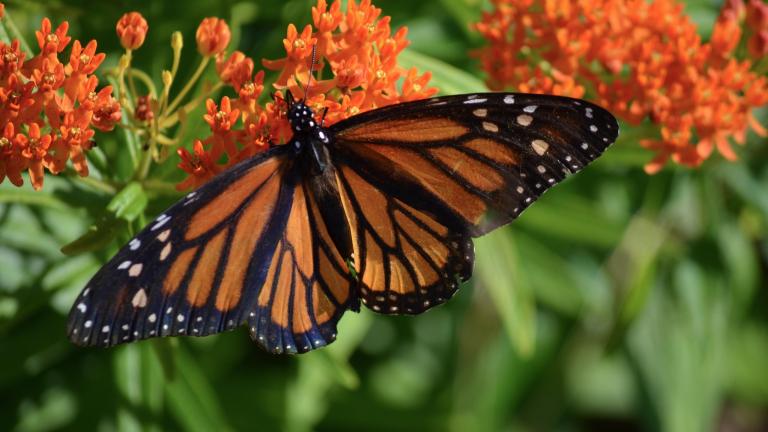
Monarch butterflies are a finicky species, refusing to lay their eggs on any plant other than milkweed. That wasn’t a problem when milkweed was abundant, but the native perennial has largely disappeared from the landscape, in part due to pesticides sprayed across farmland.
During a four-year community science project, researchers at the Field Museum determined that urban milkweed “patches” — be it a large backyard, a sliver of parkway or a lone pot on a condo balcony — can pick up some of the rural slack when it comes to meeting monarch’s reproductive needs.
After digging deeper into data collected between 2020 and 2022 from participants in the Chicago metro area, Field scientists are now sharing, in a just-published paper, which characteristics made urban gardens more appealing to monarchs and increased the likelihood that the butterflies would lay eggs.
Among the key findings: Not all milkweed is created equal.
Combing through reports provided by the people taking part in the project, Field researchers identified the four milkweed species most frequently found in participants’ gardens: common milkweed (Asclepias syriaca), swamp (or rose) milkweed (Asclepias incarnata), butterfly weed (Asclepias tuberosa) and whorled milkweed (Asclepias verticillata).
Of these, monarchs showed a preference for common milkweed: In patches where common milkweed was present, 86% observed monarch eggs, while 60% of patches without common milkweed observed eggs.
Karen Klinger, GIS specialist with the Field Museum’s Keller Science Action Center and lead author of the research paper, theorized that a number of factors work in common milkweed’s favor.
It can grow very tall — up to 6 feet versus 3 feet for other species — “and it’s got these broad leaves on which they (monarchs) can lay their eggs,” Klinger said.
It’s also relatively more prevalent throughout the monarch’s migratory range, meaning the butterflies are more accustomed to it.
“This was the species that was largely around agricultural areas until all of the pesticides came,” said Klinger.
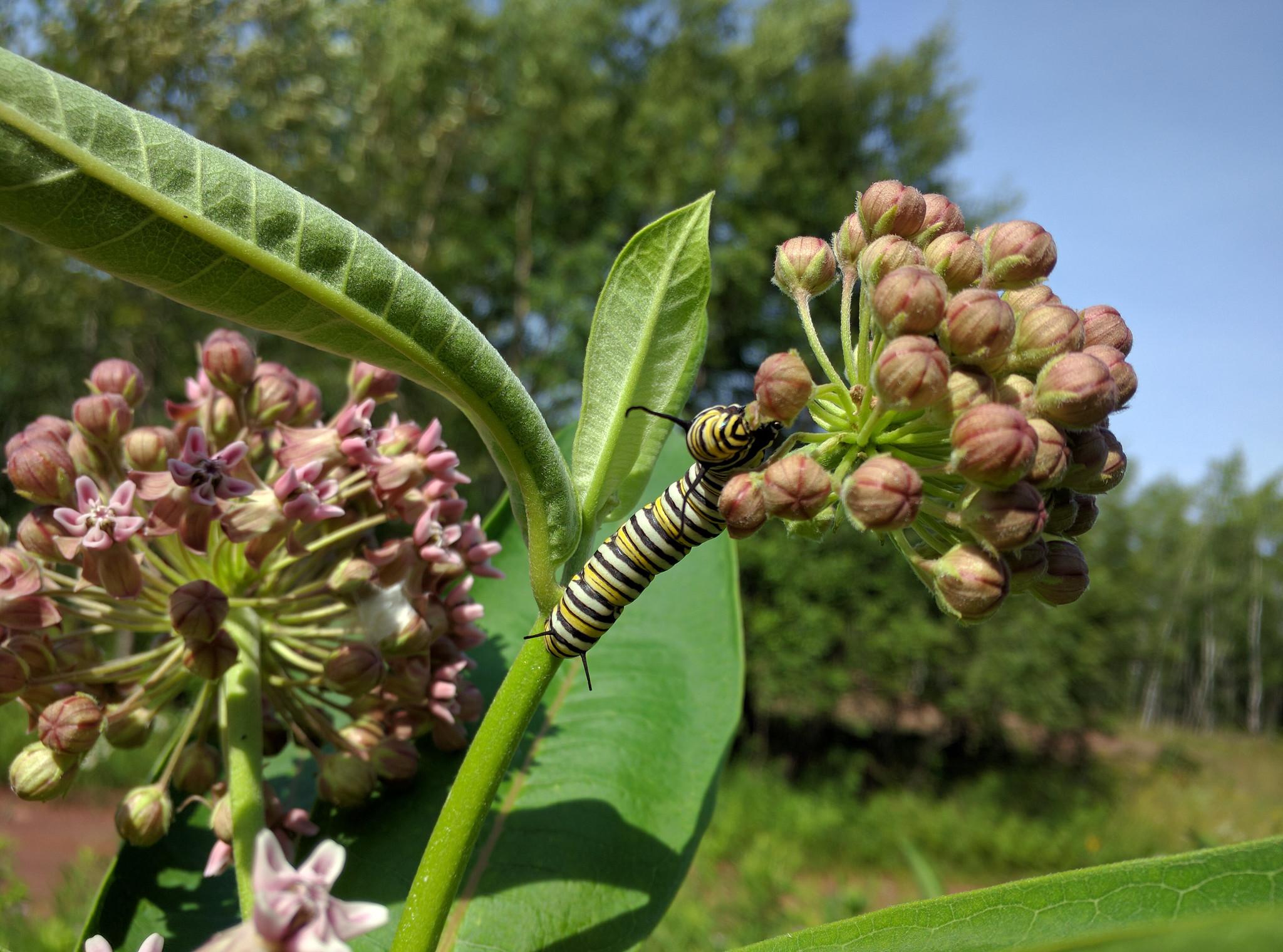 Monarch caterpillar on common milkweed. (U.S. Fish and Wildlife Service / Flickr Creative Commons)
Klinger acknowledged that common milkweed is, in gardening circles, if not exactly controversial, then something of a sensitive subject.
“I note this in the paper — that common milkweed is not the most garden-friendly plant. It spreads aggressively and it can be difficult to control. I’m very careful to say, ‘I’m not going to tell you to plant common milkweed,’” she said.
People should plant the native species of milkweed — native being key (see sidebar below) — that works for their garden. Or if they do opt for common milkweed and it spreads into unwanted places, feel free to pull it from where it’s not welcome, Klinger said.
“You should plant the garden that you’re going to enjoy, as well as the pollinators are going to enjoy,” she said.
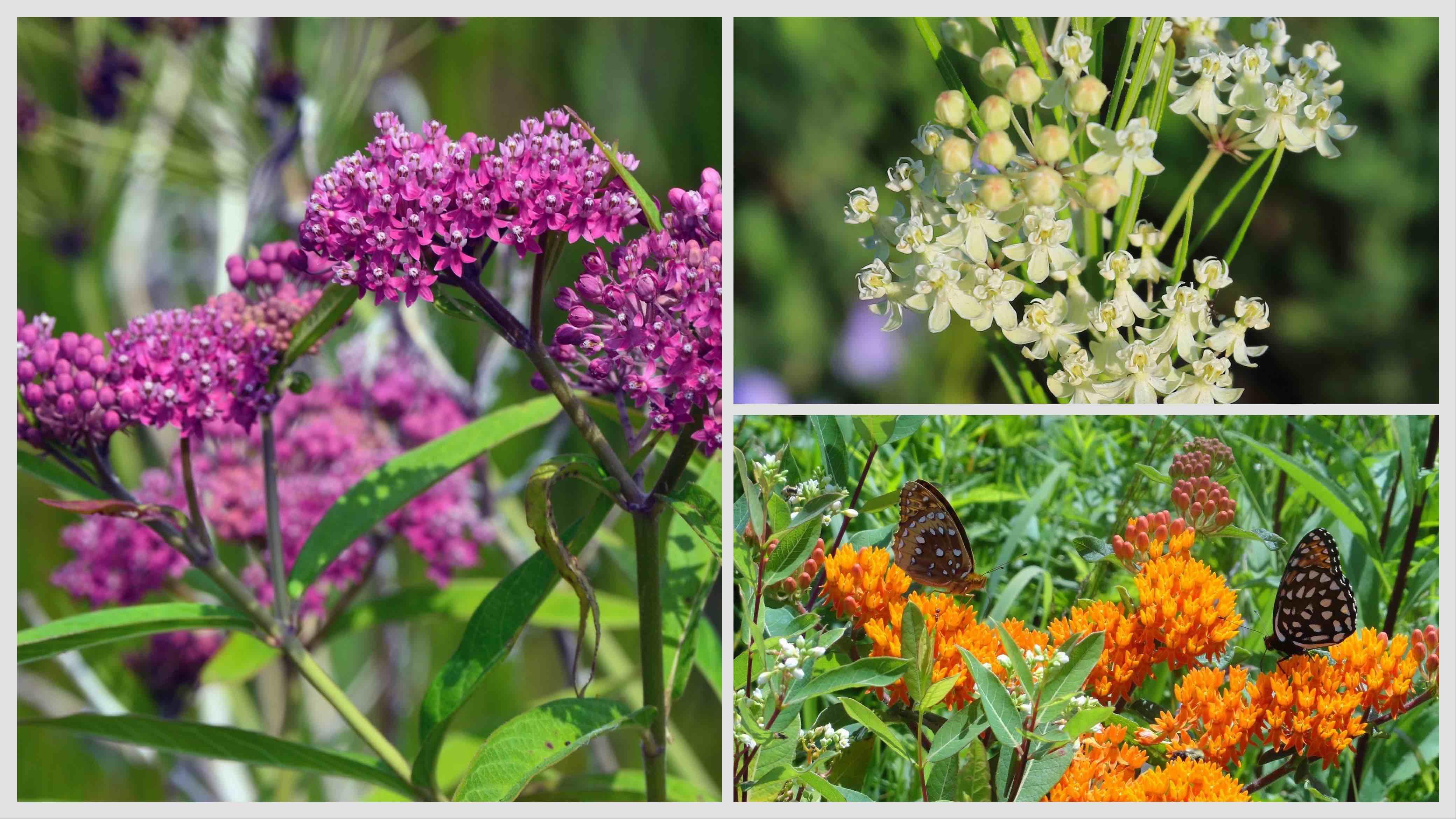 Other milkweed species typically found in Chicago area gardens, clockwise from left: swamp/rose milkweed, whorled milkweed and butterfly milkweed. (Flickr Creative Commons / Public Domain)
Another key finding of the project: It’s important for a garden to have flowering native plants beyond milkweed, blooming throughout the season. Thanks to this steady source of nectar, adult female monarchs might stick around longer and lay more eggs.
“That’s almost as important” as milkweed, Klinger said of having a diversity of blooming plants.
The age of a milkweed patch proved to be another predictor of a garden’s success, according to the Field’s observations.
Of patches that were at least five years of age, 95% contained eggs; for patches in their first season, this value was only 61%. So gardeners should be patient if their patch doesn’t immediately see results.
In terms of the best-case scenario for monarchs, a garden with an abundance of mature common milkweed plants, surrounded by other native bloomers would be the most effective, according to the Field’s data.
But Klinger was quick to note that rather than one perfect solution, there’s a continuum on which people can fall depending on their situation.
“What’s really amazing about this data ... is that every garden looks different, from the size to the number of plants to where it’s located,” she said. “There were thousands of (monarch) eggs that were observed — these little gardens can provide that habitat. Even planters and pots on rooftops can make a difference. It is about encouraging people to plant native gardens for pollinators, including monarch butterflies, and know that they can plant the garden that suits their needs.”
Don’t Get Duped by This Lookalike Milkweed
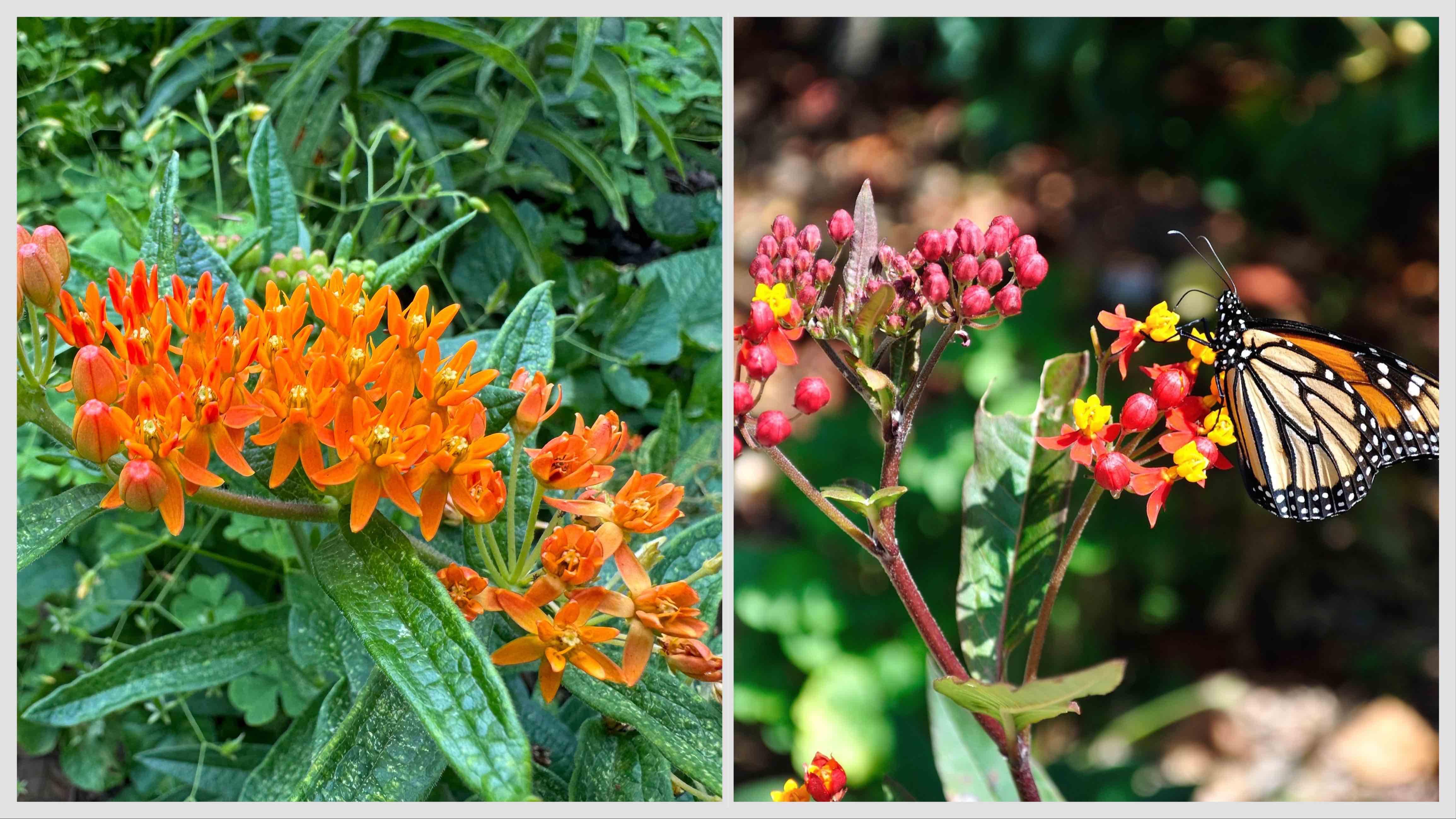 That's native butterfly milkweed on the left and problematic tropical milkweed on the right. (Patty Wetli / WTTW News; Flickr Creative Commons)
Midwestern gardeners looking for a showier, more obedient alternative to common milkweed might be tempted to add tropical milkweed (Asclepias curassavica) to their landscape.
Don’t fall for it.
Tropical milkweed — easily mistaken for butterfly milkweed — is, as its name suggests, not native to the U.S.
The University of Illinois Extension warns that tropical milkweed’s long-lasting blooms are actually an “ecological trap” for monarchs. Because it continues to flower after other milkweed have gone dormant, it tricks monarchs into sticking around when they should be migrating south.
“This reduces overall monarch population numbers since these individuals cannot migrate naturally and wind up unsuccessful in the typical monarch lifecycle, which should include both spring and fall migration,” the Extension said.
To tell the difference between butterfly and tropical milkweed: The flowers of butterfly milkweed are consistent in color (typically orange), where tropical milkweed flowers have red petals and contrasting yellow hoods.
Contact Patty Wetli: @pattywetli | (773) 509-5623 | [email protected]