

Dinosaurs
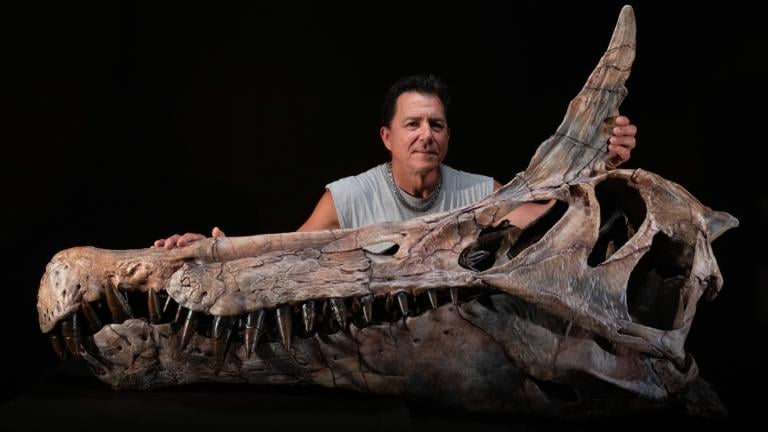
The unique size and shape of the bones from Spinosaurus mirabilis — the first Spinosaurus species discovered in over a century — gives important clues to the history of spinosaurids on Earth.

The bones of Istiorachis macarthurae, named in honor of record-breaking British sailor Ellen MacArthur, were uncovered on the Isle of Wight, a small island just off the south coast of England, where it roamed more than 120 million years ago.
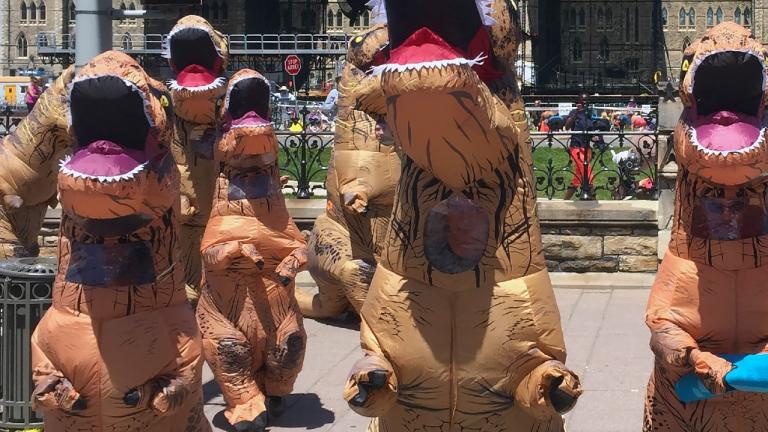
Dino Derby, a foot race featuring competitors wearing inflatable T. Rex costumes, will be the main event during Saturday's Dinopalooza festival at the Field Museum.
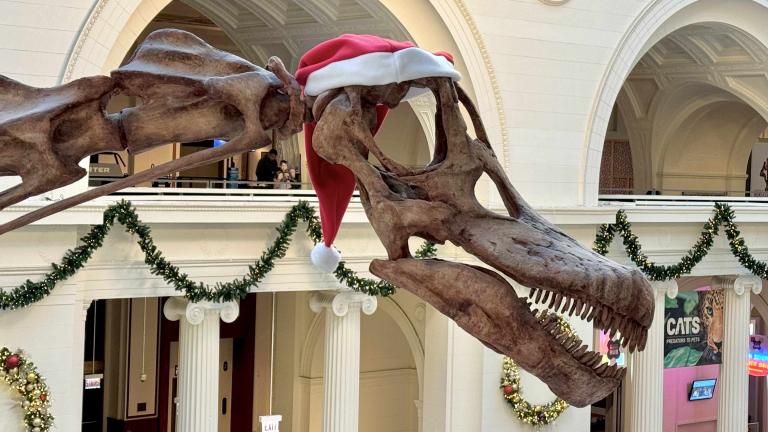
In a first for the Field Museum, the exhibits staff has outfitted four of its dinosaur replicas (OK, three dinosaurs and one pterosaur) in Santa hats to celebrate the festive season.
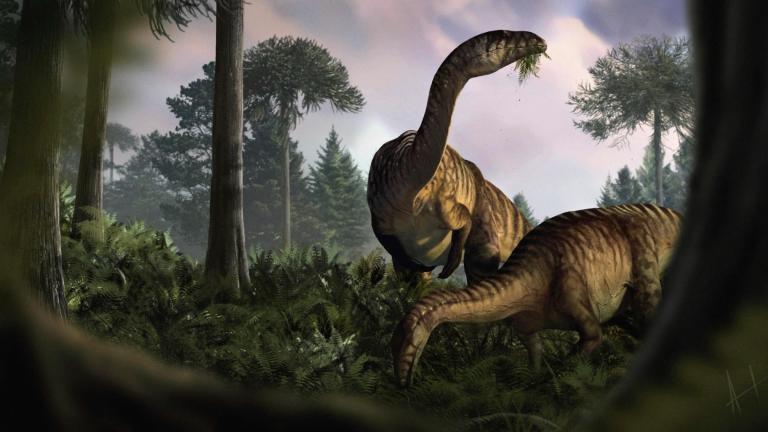
Researchers aren’t sure whether dinosaurs’ rise over the course of 30 million years happened because of luck, skill, climate or some combination. But they came away knowing this: “It was not a sudden thing,” said study co-author Martin Qvarnström from Uppsala University.
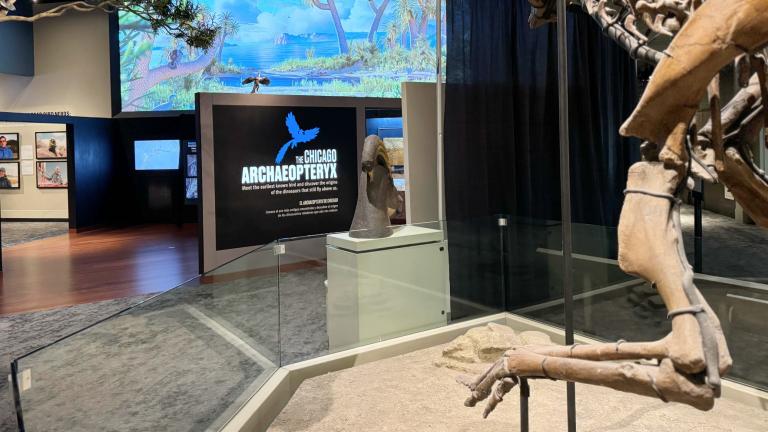
The Chicago Archaeopteryx, unveiled this past May, is one of the most important fossils in the Field Museum's vast collection. It now has a permanent exhibit in the museum's Hall of Dinosaurs.

Paleontologists have found more than 260 dinosaur footprints from the Early Cretaceous Period in Brazil and Cameroon, now more than 3,700 miles apart on opposite sides of the Atlantic Ocean.
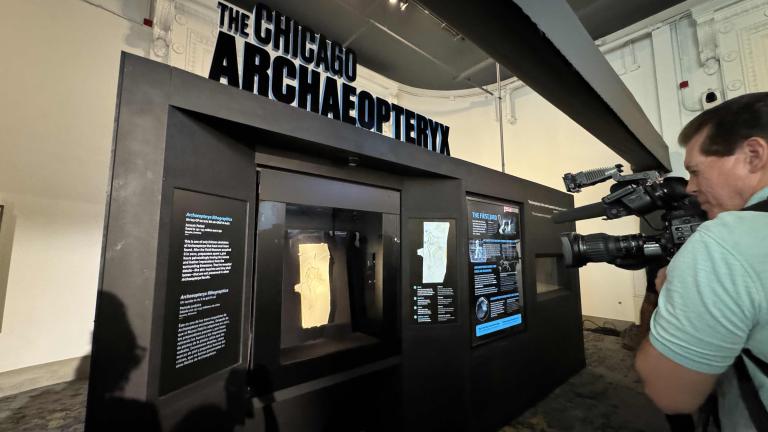
After Saturday, the Field Museum’s newest dinosaur fossil will be off display until fall while staff works on building a permanent exhibit for the Chicago Archaeopteryx.
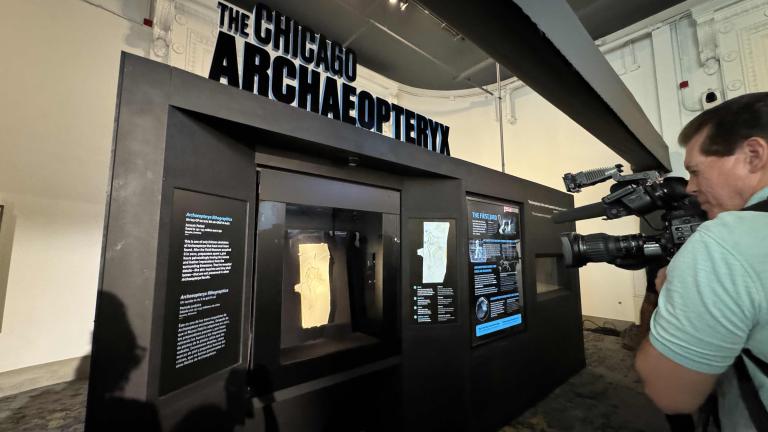

The Field Museum ushered in a new era of scientific exploration with Monday’s unveiling of the Chicago Archaeopteryx.
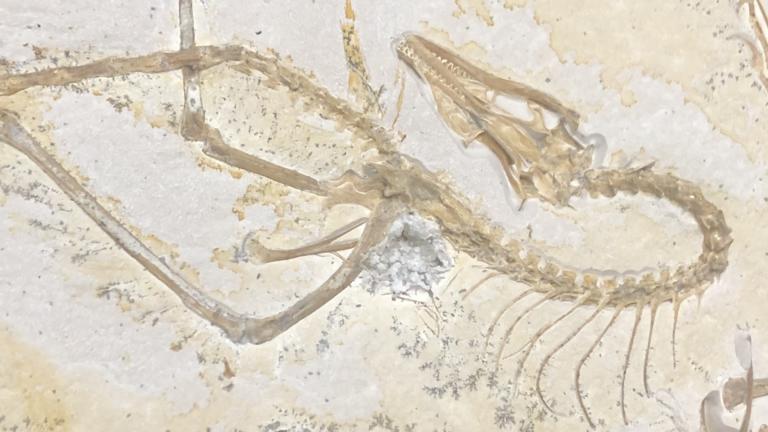
A piece of evolutionary history has made its way to the Field Museum. A remarkably preserved Archaeopteryx fossil has been acquired, offering an astonishing window into the transition between dinosaurs and modern birds. This rare and scientifically significant find sheds new light on the origins of flight and the incredible journey of evolution.

Only 13 specimens of Archaeopteryx — and one special feather — are known to exist since the first Archaeopteryx fossils were discovered in 1860. Most come from the same deposit of Solnhofen Limestone in Bavaria, Germany.
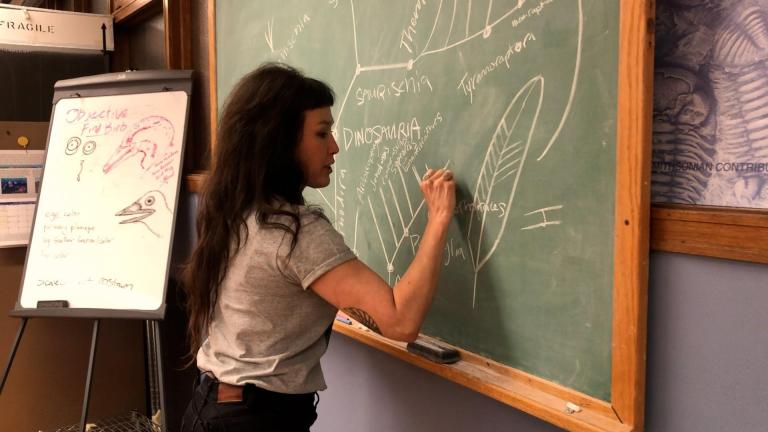
Shake any family tree, and a few skeletons are bound to fall out — that’s as true for birds as it is for people. Except that for birds, the wacky cousin lurking in one of those branches is T. Rex.
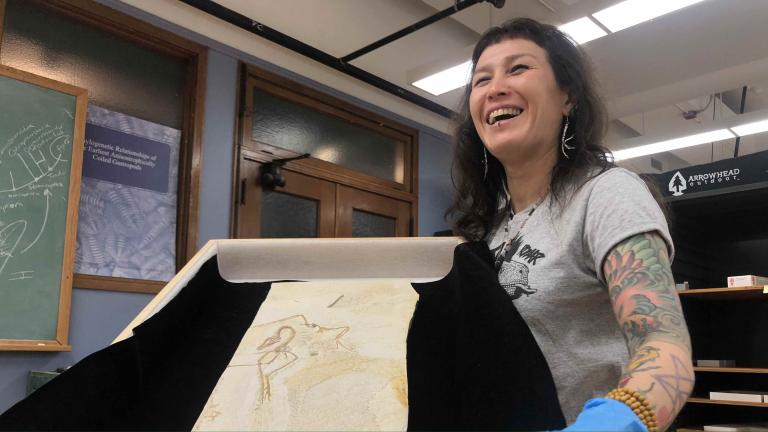
The Field formally announced to the world what had become a not-so-well-kept secret: The museum had acquired just the 13th specimen known to exist of Archaeopteryx, a fossil often described as the “missing link” between dinosaurs and birds.

WTTW News sat down with paleornithologist Jingmai O’Connor and talked about dinosaurs, birds, the Chicago Archaeopteryx, evolution and why studying fossil birds is more important now than ever.
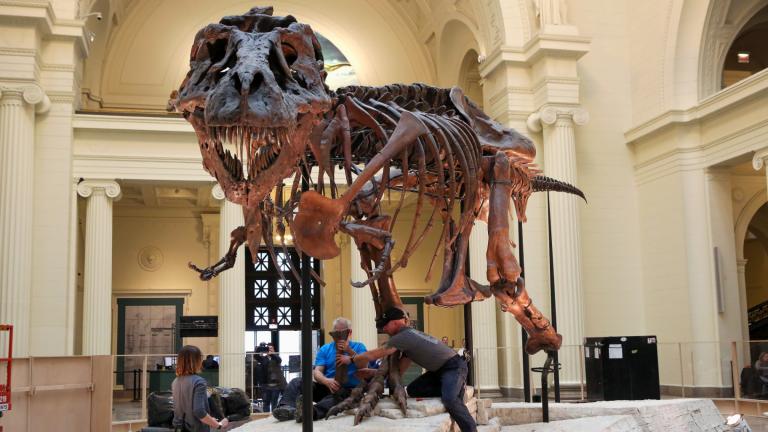
For years, the massive mostly intact dinosaur skeleton that came to be known as Sue the T-rex was at the center of a legal battle. The latest dispute involves who inherits what’s left of the money created by the sale of Sue.
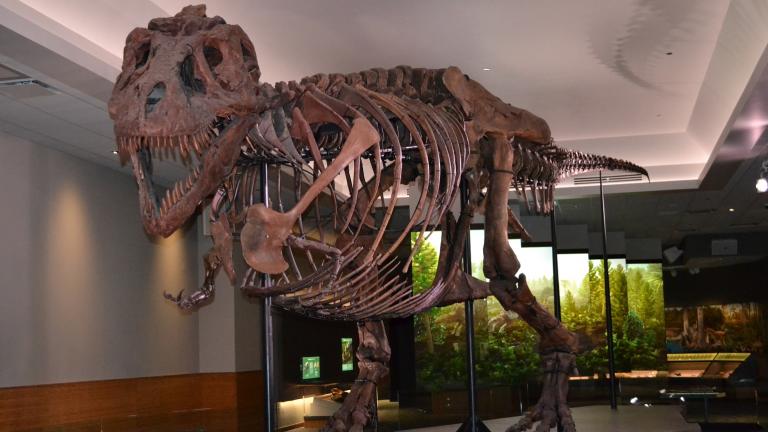
Researchers at the Field Museum are embarking on a project to discover what was the point — if any — of T. rex’s tiny arms.
Trending
Pair of Chicago Elementary Schools Named Top in Illinois in New U.S. News Rankings

Mother-Son Reunions Among Latest Milestones for Shedd’s Rescued Belugas

Migration Mass Casualty With At Least 1,000 Birds Injured or Killed This Weekend in Chicago and on Northwestern’s Campus

Early Voting for November General Election Expands in Chicago, Suburban Cook County

Giannoulias, Quigley, Wilson — But Not Johnson — Among First to File Signatures Ahead of Chicago’s February Mayoral Election

Sign up for the WTTW News newsletter