Investigations
Illinois Prisons Move to Restrict Access to Electronic Tablets for Those in Solitary Confinement
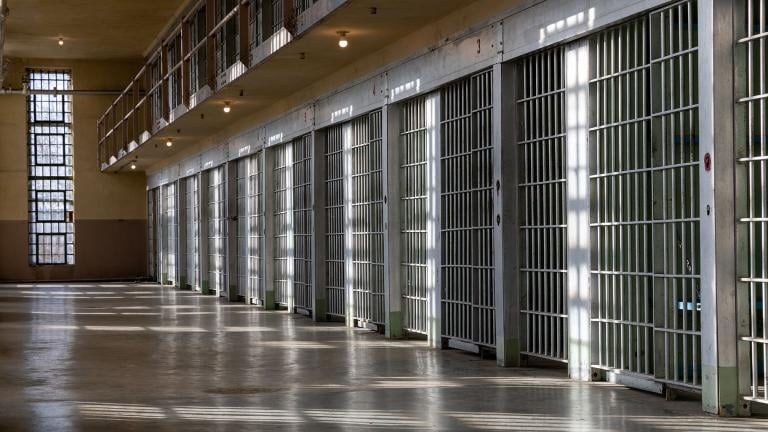
 Menard Correctional Center in Menard, Ill., is pictured on Aug. 24 2026. (Blair Paddock / WTTW News)
Howard “Ken” Ellis moved out of Menard Correctional Center’s restrictive housing unit in mid-August after a six month stint.
While he was under restrictive housing, his department-provided tablet was the “one thing that (kept) him calm and at a place of peace.” He’d talk with his three kids and hear how they’re doing. They would also provide him updates on his case.
“I also like to give insight to my nephews and nieces about the ways of life,” Ellis said. “We are human so we are prone to make mistakes along the way as long as we learn from them.”
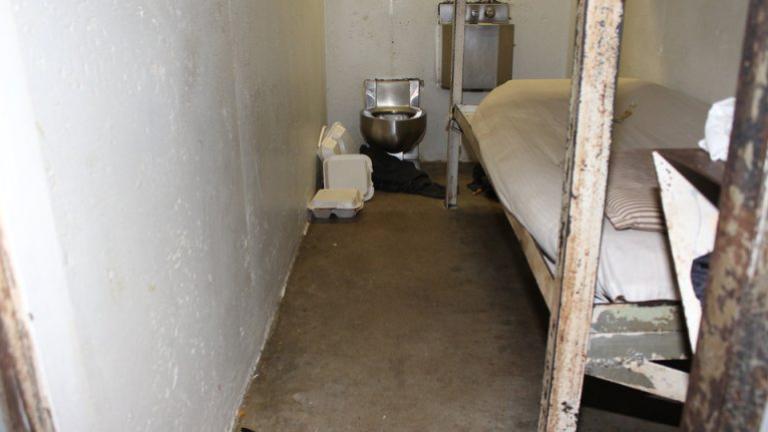
Without tablet access, Ellis said people are stuck “just looking at a wall all day.”
Now, that’ll be the case for those in solitary confinement units across Illinois prisons, who will no longer have access to outside communication, legal materials and educational programming through tablets.
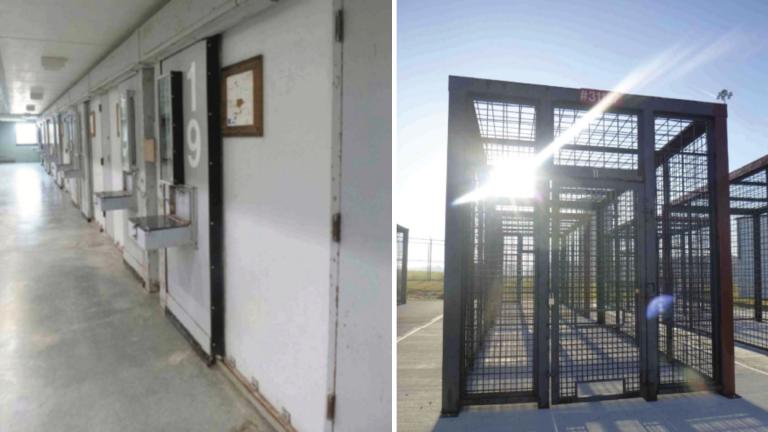
Those in solitary, or what’s officially known as restrictive housing, are ineligible to receive audio-visual privileges, unless a mental health professional states otherwise, according to Illinois law. An individual that’s been in restrictive housing for more than 60 consecutive days can seek restoration of those privileges.
Yet, up until recently, that wasn’t the case for restrictive housing units in all Illinois prisons.
Due to an “error,” as Illinois Department of Corrections Naomi Puzzello said in a statement, when the department provided tablets, men in the unit at Menard Correctional Center were provided the devices. As of last week, men admitted to the prison’s restrictive housing unit do not have access to tablets.
“Individuals who are already in (restrictive housing) at Menard CC will keep their tablets absent receipt of major disciplinary reports,” Puzzello said in a statement. “This approach prioritizes the safety and well-being of individuals in custody and staff members at Menard.”
This change is “deeply concerning” to the prison watchdog group the John Howard Association.
“The more you deny people access to support, the worse they feel, the more behavior devolves,” said Jennifer Vollen-Katz of the John Howard Association.
Tablets started being provided to all in custody in 2025, as the department moved away from distributing paper mail. Now, mail sent to incarcerated people is scanned and uploaded to tablets provided by the department for them to read.
For the past several months, WTTW News has been in contact with nearly 20 men in restrictive housing at Menard Correctional Center to hear about their experiences for a forthcoming story.
But now, reporters’ communication will be shut off with several men.
Hananiah Dukes, currently in restrictive housing in Menard, told WTTW News before the policy change that the tablet is necessary for him to access legal materials. He’s currently working on legal proceedings he filed pro-se, and needs the digital law library on the tablet to continue that work.
“Not having the tablet will disable me tremendously,” Dukes wrote in a message.
The change comes in the wake of a hunger strike undertaken by approximately 25 men at Lawrence Correctional Center over restrictive housing conditions – including the lack of access to tablets.
WTTW News investigative coverage is supported in part by The Richard H. Driehaus Foundation.
Contact Blair Paddock: @blairpaddock.bsky.social | [email protected]