Crime & Law
Illinois Prisons Do Not Provide Equal Phone Access to Incarcerated Deaf People, Lawsuit Alleges
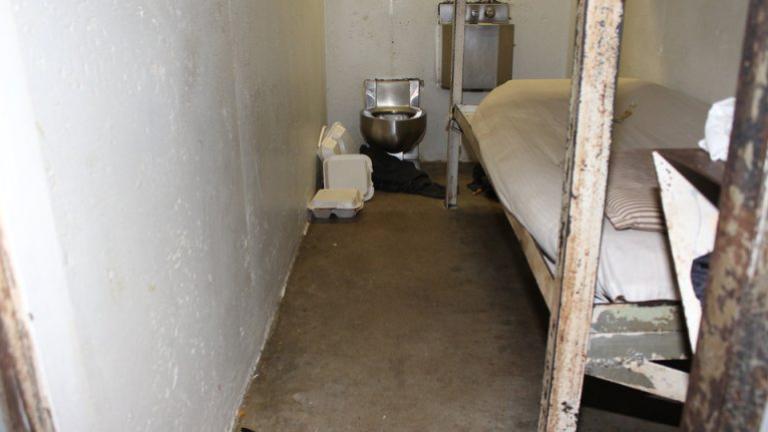
 Prison cells are pictured in a file photo. (txking / iStock)
Thanksgiving, Christmas and New Year’s passed by for Daniel Valenzuela without calls to his family, according to a new federal lawsuit filed Wednesday.
Valenzuela is deaf and incarcerated at Danville Correctional Center in eastern Illinois. And over that 54-day period last holiday season, he alleges that the only accessible device for outside communication, a videophone, was not functioning.
“I have six kids, four grandkids, and one of my sons is in the military. I cherish and love my
family so much,” Valenzuela said in a statement.
According to Valenzuela, he and other incarcerated deaf people do not have equal access to the prison’s phone program compared to non-disabled people. The lawsuit was filed against Latoya Hughes, the director of the Illinois Department of Corrections.
The suit, filed by the law firms Disability Rights Advocates, Equip for Equality and Much Shelist, alleges that IDOC’s practices violated the Americans With Disabilities Act and the Rehabilitation Act. Valenzuela is seeking a court order requiring the department to provide telephone access equal to that provided to non-disabled people in custody.
“The ability to communicate with family is not a luxury — it is a lifeline,” said Steven Blonder, principal at Much Shelist, in a statement.
A spokesperson for IDOC said the department respectfully declined to comment due to pending litigation.
As the department moved away from distributing paper mail in 2025, individual tablets were handed out to everyone in Illinois prisons. Individuals can place up to 15 telephone calls every day on those devices, from early morning to midnight, hypothetically without leaving their cell and without relying on IDOC staff.
But Valenzuela alleges that’s not true for him and other deaf people.
He communicates primarily using American Sign Language and uses videophones to place phone calls. The IDOC-issued tablets are equipped with videophone capability, but the lawsuit alleges that the department blocks that feature on the devices.
Without that feature, officers must take Valenzuela outside of his unit to a different building to access a videophone to place calls.
As a result, he and other incarcerated deaf people have phone access for a fraction of the time permitted to others, and only during restricted hours when staff are available and willing and institutional conditions permit, the lawsuit alleges.
On several occasions, the department denied Valenzuela access to the videophone due to lockdowns, the suit alleges.
Valenzuela missed scheduled calls with his caseworker because the sole videophone for non-legal calls was down, according to the suit.
And as the videophone is located outside of his unit, he alleges that on several occasions he had to walk through pouring rain without proper rain gear to be able to access the phone.
Valenzuela states that he’s advocated for equitable telephone access to officials — sending letters to both the Danville and statewide ADA coordinators, as well as a grievance. That grievance was denied, the lawsuit states.
Without regular, consistent and equitable access to this communication, Valenzuela alleges he has suffered great stress and increased symptoms of anxiety, including chest tightness and shortness of breath, and depression, especially when he had no access around the holidays to talk to his family.
“IDOC already has the technology that can make communication possible, so deaf individuals in custody can stay connected with their loved ones just like everyone else around them,” Sophia Lau, attorney at Equip for Equality, said in a statement. “This case asks only that IDOC stop blocking deaf people from using it, following the lead of other correctional systems across the country.”
Contact Blair Paddock: @blairpaddock.bsky.social | [email protected]