Business
As Prediction Markets Grow, Lawmakers and the Public Race to Keep Up
How warm will it be in Chicago tomorrow? Will U.S. forces enter Iran next month? How many tweets will Elon Musk post this week?
For people who think they know the answers, prediction markets like Polymarket and Kalshi will let them put their money where their mouth is.
Once a niche interest, prediction markets have broken through to a wider audience. Now, the public — and lawmakers — are trying to adapt to a world where people can bet on almost anything.
“The idea is to capitalize on the wisdom of the crowds,” said M. Todd Henderson, a law professor at the University of Chicago. “If you poll a large number of people, you can get surprising accuracy on complicated things.”
In prediction markets, users trade contracts that cover the outcome of future events. In theory, the trading prices correspond to the likelihood of an event happening.
Take an election market. If a contract saying a specific politician will win is trading at $0.52 before an election, with a payout of $1.00 if it becomes true, the idea is that the politician has about a 52% chance of actually winning.
The Iowa Electronic Markets have used prediction markets to forecast U.S. presidential elections since 1988. And in the 1990s, Hewlett-Packard used an internal prediction market to estimate how many printers the company would sell.
In both cases, researchers found that putting money on the line tended to improve the accuracy of forecasts.
Today’s prediction markets work a lot like these older examples, but they differ in size and scope.
The Commodity Futures Trading Commission (CFTC), which oversees prediction markets in the U.S., proposed a rule during the Biden administration that would ban prediction markets related to sports or elections. Kalshi tested the waters by allowing election contracts, and won the court battle in the lead-up to the 2024 presidential election.
A few months later, Kalshi added Super Bowl contracts to its platform. According to Karl Lockhart, a law professor at DePaul University, this effectively legalized sports betting across the country.
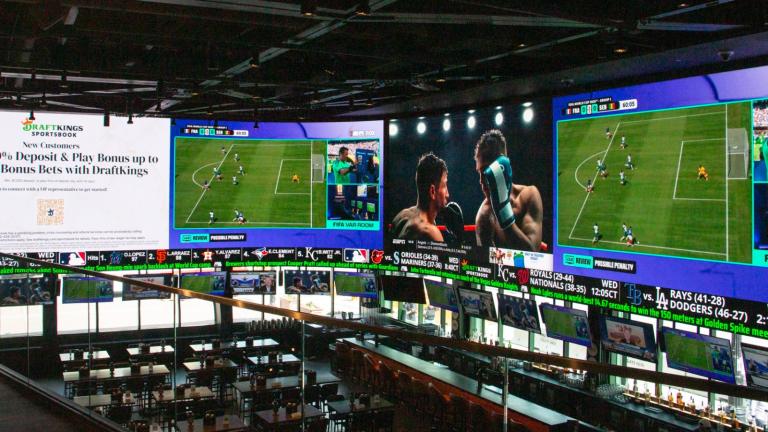
“I’m originally from Texas,” Lockhart said. “Texas has no sports gambling allowed in it at all. But if you’re 18 or older, now you can use Kalshi or Polymarket to place bets on sporting events.”
Just this year, a series of peculiarly timed bets have drawn scrutiny as potential insider trading. These include hundreds of thousands of dollars bet within hours of the ouster of Venezuelan President Nicolas Maduro and the U.S.-Israel attacks on Iran.
“If people begin to see these markets as completely dominated by insiders, they’re not going to want to place money on them,” Lockhart said. By this logic, Polymarket and Kalshi have incentives to weed out insider trading.
But according to Henderson, leveraging inside information may be a feature, and not a bug, of prediction markets.
“If we really want to know whether an event is going to happen, it’s the insiders who have the information about that event who we want to encourage to reveal that information,” Henderson said.
The regulatory landscape surrounding prediction markets is rapidly evolving.
In Illinois, a bill in the House would set age limits; ban trading on sports, deaths and political events; and seek to limit fraud and insider trading.
Meanwhile, a separate bill in the state Senate would license and tax prediction market platforms similar to gambling platforms.
The current CFTC chairman, Michael Selig, has spoken out against state-level attempts to regulate prediction markets. While states oversee their own gambling laws, Selig reasserted CFTC control over prediction markets in a Wall Street Journal op-ed in February.
“The CFTC will no longer sit idly by while overzealous state governments undermine the agency’s exclusive jurisdiction over these markets by seeking to establish statewide prohibitions on these exciting products,” Selig wrote.
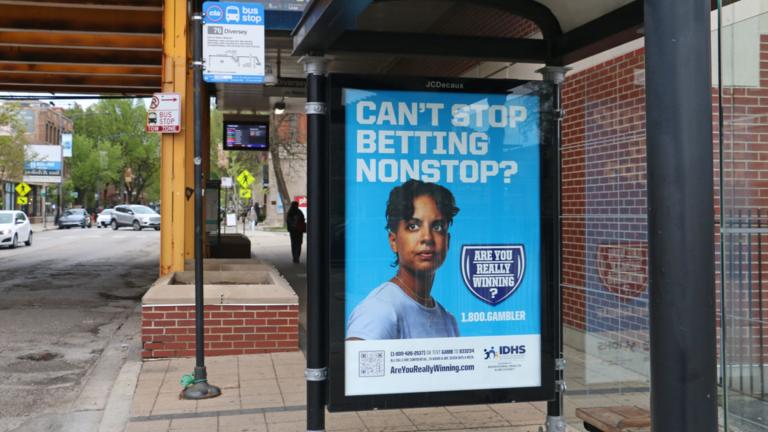
While the legal debate continues over whether “gambling” and “predicting” are the same action, the public health effects of the two aren’t too different.
“The way that (prediction markets) affect your brain is pretty much the exact same” as gambling, said Dr. Zain Nayani, an addiction specialist at Rush University.
And although the focus tends to fall on individuals who have won massive amounts of money, the risks go beyond these cases.
“It’s not the actual act of winning or losing — it’s the thrill, and the reward-seeking mechanisms in the brain that are activated,” Nayani said.
This is particularly concerning for younger participants, Nayani said, and regulations that limit access based on age might mitigate that risk.
Henderson sees this as an area where regulations can protect public health while still getting the most from the value he sees in prediction markets.
“We want (prediction markets) to predict the future based on people who have actual information,” Henderson said. “18-year-olds don’t have great information.”