Arts & Entertainment
An Extraordinary Young Violinist Lights Up the Stage With the CSO: Review
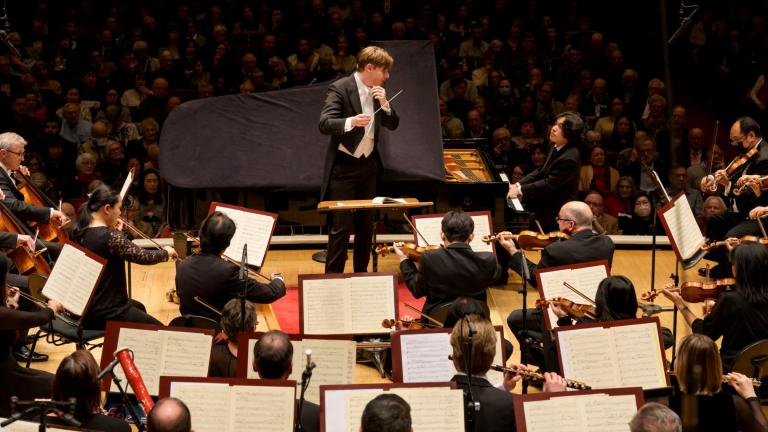
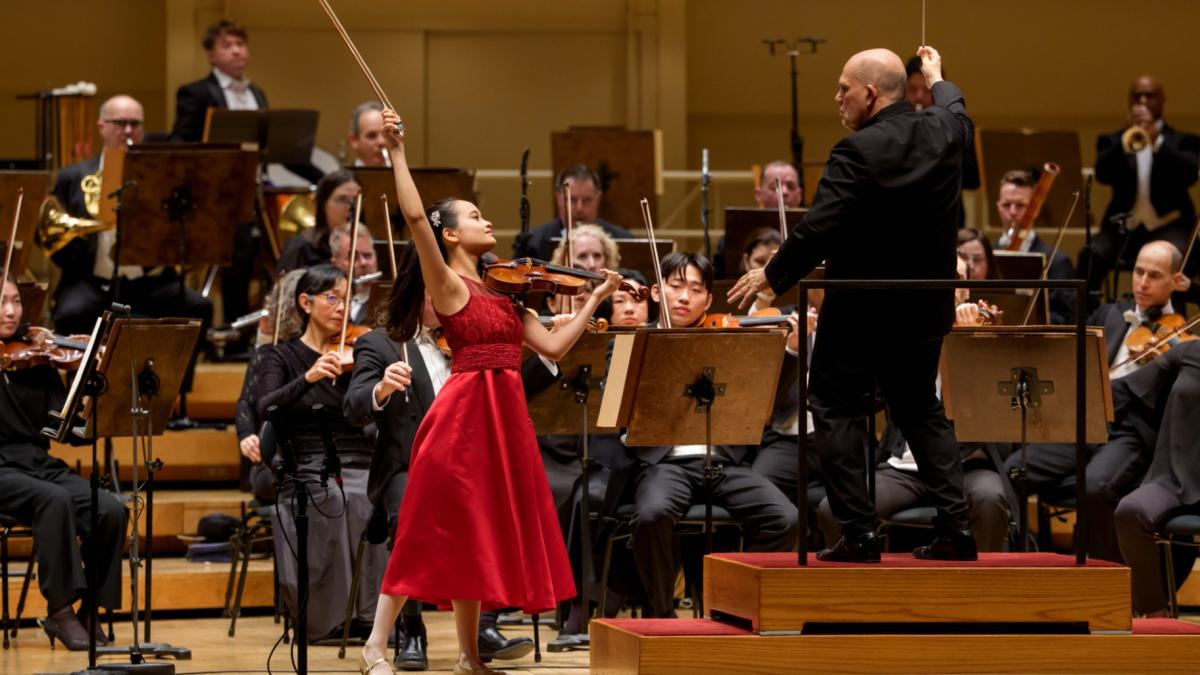 Violinist Himari in a performance of Bruch’s “Violin Concerto No. 1” with conductor Jaap van Zweden and the Chicago Symphony Orchestra. (Todd Rosenberg Photography)
The four audiences in mid-February who were able to see guest artist Himari perform with the Chicago Symphony Orchestra could not have been more lucky. The immensely gifted 14-year-old violinist was born in Japan, began playing at the age of 3 and was performing with a professional orchestra by the age of 6. She became the youngest student admitted to the Curtis Institute of Music in Philadelphia in 2022 and is also the youngest female artist to sign with Decca Classics records.
Himari’s performance of the “Violin Concerto No. 1 in G Minor,” a work that was composed in the mid-1860s by the German-born Max Bruch, was superb. Following the lyrical opening by the orchestra came her beautiful, warmly emotional solo that was marked by her richly dramatic sensibility. She was simply phenomenal in another solo section of the work, too — one that was marked by a beautiful, gently emotional sound from the string musicians seated behind her. And throughout Himari made the violin sing — shifting from a certain calm to high energy and speed, alternately lyrical and intensely strong.
Opening the concert — expertly conducted by Jaap van Zweden — was a very different piece of music: “To See the Sky: an exegesis for orchestra,” composed in 2023 by Joel Thompson. The Bahamian-born son of Jamaican parents is now the resident composer for the Houston Grand Opera, as well as a doctoral candidate in composition at Yale University.
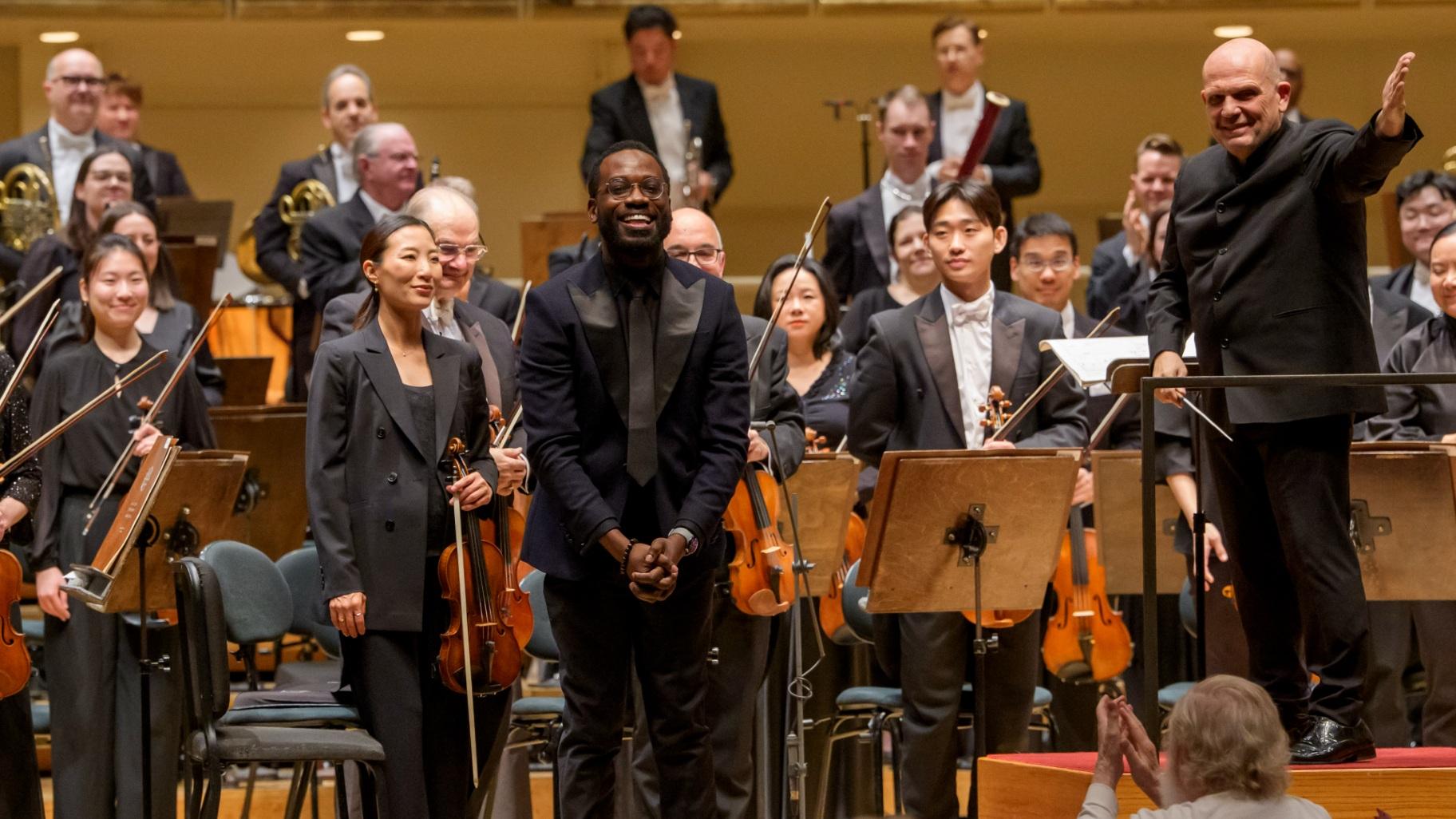 Composer Joel Thompson acknowledges audience applause and standing ovations following the Chicago Symphony Orchestra’s first performance of his piece “To See the Sky.” (Todd Rosenberg Photography)
Thompson wrote he is “prone to melancholy” and has been “documenting his internal and external reality as a Black man in our country” — but said he is also “trying to do less documenting, and to dream a little more.”
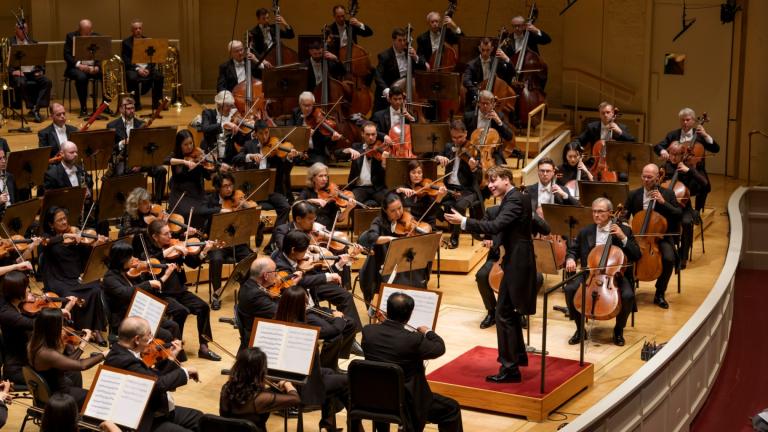
The second half of this concert was devoted to Mozart’s “Symphony No. 41 in C Major“ (“Jupiter”), marked by its opening lyrical beauty followed by the intensity of a blast of drums, brass, winds and strings that was full of speed and mood shifts. The second movement opened with the strings and winds speaking gently, with more mood shifts, a palpable delicacy and a lyrical quality that led to a calm ending.
The third movement was initially light and energetic and then grew into more mood shifts that alternated between intensity and lightness, with a riff from the winds, and then the drums. And then the fourth movement shifted into a strong burst of sound and high energy that left me wishing a choreographer would someday grab hold of those bursts of sound and high speed.
The strong and ideally expressive style of conductor van Zweden, who was born in Amsterdam and studied at the Juilliard School, has led to a richly international career. And it should be noted that along with his wife he established the Papageno Foundation that supports the development of autistic children and young adults.
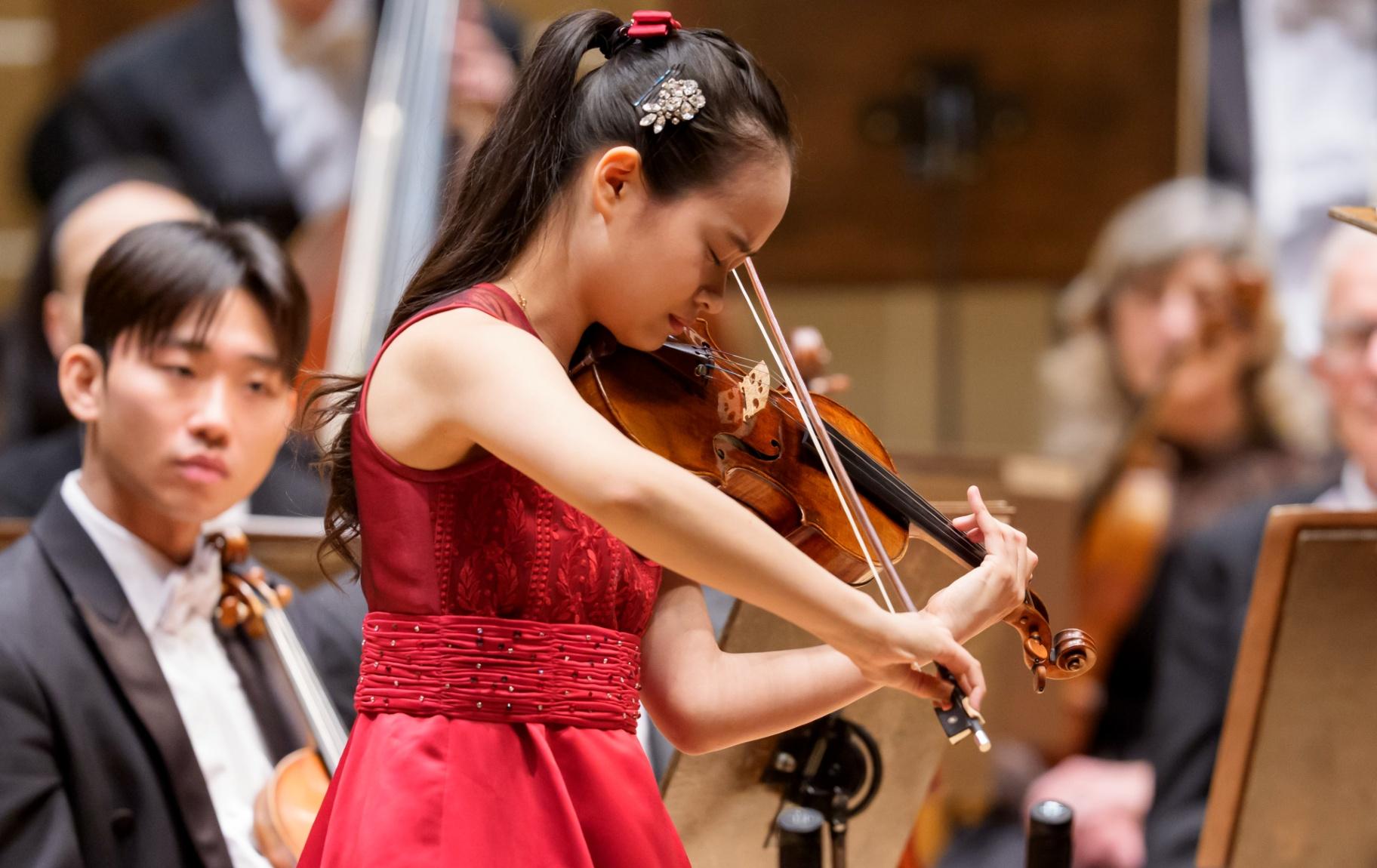 Violinist Himari in an encore performance of Kreisler’s “Recitativo and Scherzo-Caprice, Op. 6.” (Todd Rosenberg Photography)
Last but not least — and superbly performed by Himari in her exuberant return to the stage — was Fritz Kreisler’s “Recitativo and Scherzo-Caprice, Op. 6.” Without doubt, she is a truly remarkable young musician (who looked beautiful in her red gown). She is sure to return to the CSO in coming seasons.
Follow Hedy Weiss: @HedyWeissCritic
WTTW News arts coverage is supported by the JCS Arts, Health & Education Fund of the DuPage Foundation.