Hedy Weiss: Theater Reviews
Review: A Glorious Concert Celebrating Hector Berlioz by the Chicago Symphony Orchestra
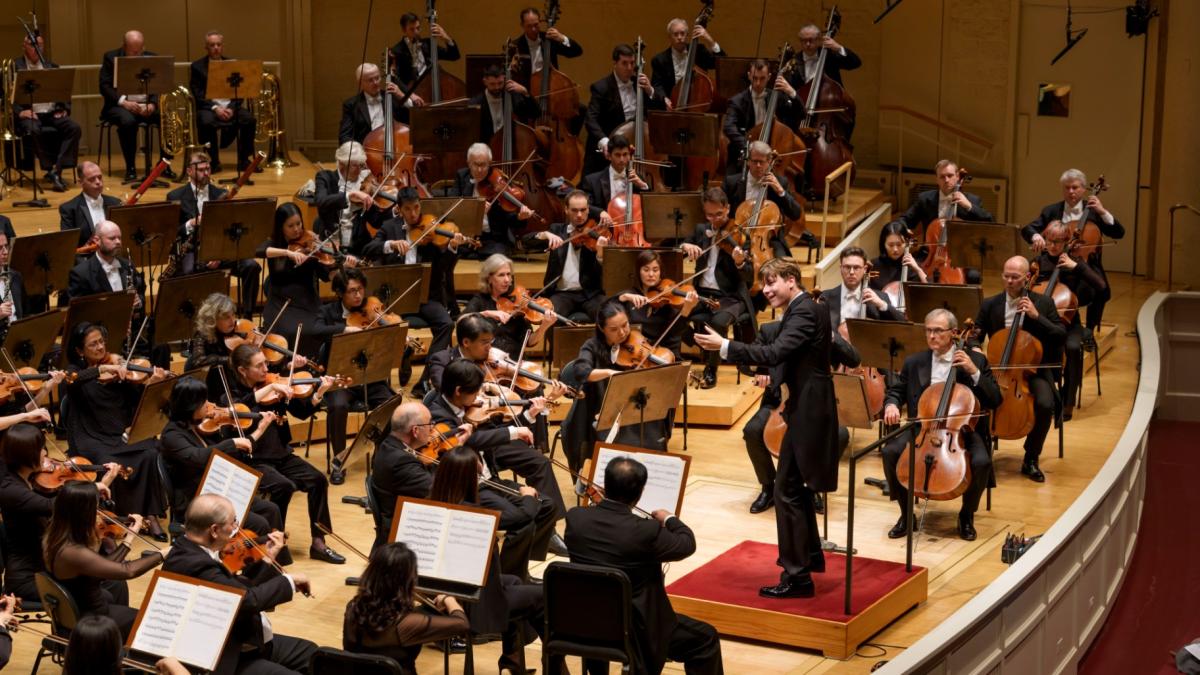 Zell Music Director Designate Klaus Mäkelä leads the Chicago Symphony Orchestra in a performance of Berlioz’s "Symphonie fantastique." (Todd Rosenberg Photography)
It was an absolutely brilliant evening at Chicago Symphony Hall Oct. 16 as a full audience of about 2,500 people was clearly enthralled by two major works by the superb French composer Hector Berlioz (1803-1869), a composer whose greatest original fan was no less than Niccolò Paganini.
Capturing the glory of these two works was the ever superb musicians of the Chicago Symphony Orchestra, as well as the exceptional conductor Klaus Makela (the Zell Music Director Designate who will become Music Director of the CSO in September 2027, and who notably dances to the music he leads from the podium). And as for the superb “star” of the first half of the concert, there was the stunning performance by Antoine Tamestit, the renowned French-born guest violist who plays on the “formally loaned” first viola made by Antonio Stradivarius in 1672.
That opening work, “Harold in Italy, Op. 16,” (aptly described as “a symphony of four orchestral parts with solo viola”) was composed by Berlioz in 1834 especially for Paganini, who, for a number of reasons, never performed it himself. But to be sure it was winningly performed in an unusually staged way by Tamestit, who walked gracefully throughout the many different sections of the orchestra as the four different parts of the piece captured different moods, as did the “voice” of the viola.
It was a most unusual staging that found the graceful Tamestit standing beside the harpists at one moment, moving to the front of the stage near the conductor at another, capturing the work’s shifting moods whether he was next to the timpani, or the cellists, or the winds, or the brass, or behind the vast string section, or even briefly out of sight.
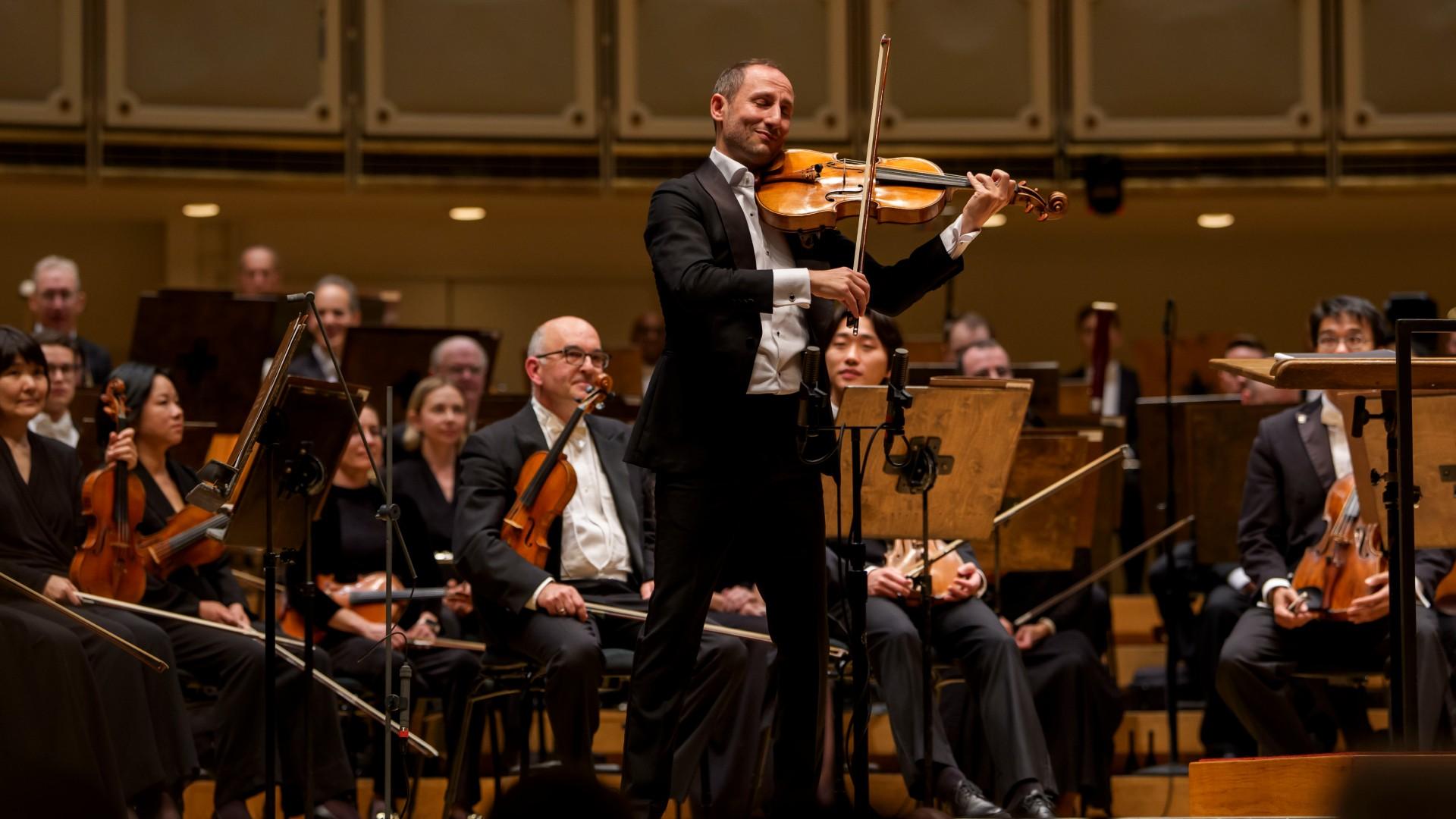 Violist Antoine Tamestit in an encore performance of the prelude from Bach’s Suite No. 1 in G Major. (Todd Rosenberg Photography)
Those mood-shifting sections included “In the Mountains: Scenes of Melancholy, Happiness and Joy,” “March of the Pilgrims Singing the Evening Hymn,” “Serenade of an Abruzzi Mountaineer to His Sweetheart,” and “Orgy of the Brigands.” All in all, a most intriguing piece of music.
The second half of the concert was devoted to Berlioz’s intriguing “Symphonie Fantastique,” a five part work bearing the titles “Dreams - Passions,” “A Ball,” “A Scene in the Country,” “March to the Scaffold,” and “Dream of a Witch’s Sabbath.” And as I listened I thought: This piece would be wonderful if actors and dancers, inspired by the music, could play the roles described in the program notes and captured in the music.
The first section suggests that a young musician has fallen desperately in love with a woman and moves through a great number of different emotions. Then, in the second section, he experiences the excitement of a party, and the many different “beauties of nature.” And it disturbs his mind.
The third section finds him in a different environment — the calming world of the countryside. And there is his hope to get beyond loneliness, although he fears the woman in his life might deceive him. A sense of “thunder, loneliness and silence” then grab hold. And that leads him into the fourth scene, when he poisons himself with opium and has horrible nightmares, including one suggesting the loss of the woman he has loved.
The final scene takes the form of a witchs’ sabbath during which the woman he loved has returned. And it is a wild mix of great bursts of exciting sound (watch the musicians at work on timpani and giant drums), with a suggestion of a “devilish orgy” and an immense final blast.
The response to both pieces performed at this concert had the fully packed audience on its feet, with long segments of exuberant applause. Well earned!
Note: Upcoming performances of the Chicago Symphony Center, 230 S. Michigan Ave., can be found at cso.org.
Follow Hedy Weiss: @HedyWeissCritic
WTTW News arts coverage is supported by the JCS Arts, Health & Education Fund of the DuPage Foundation.