Hedy Weiss: Theater Reviews
Review: Chicago Symphony Orchestra in Grand Form as 2025 Draws to a Close
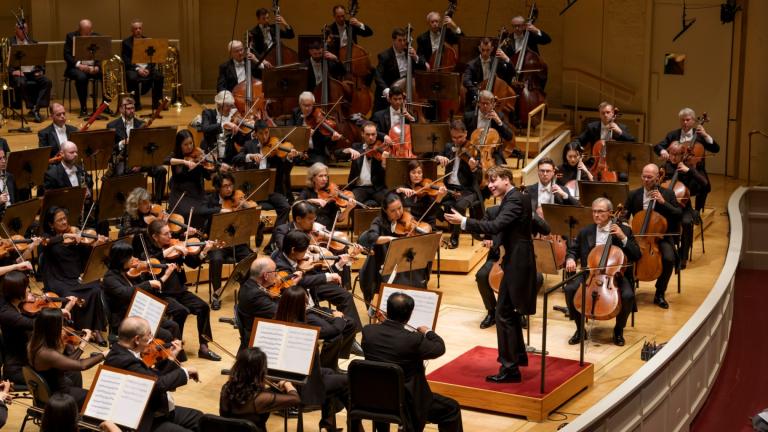
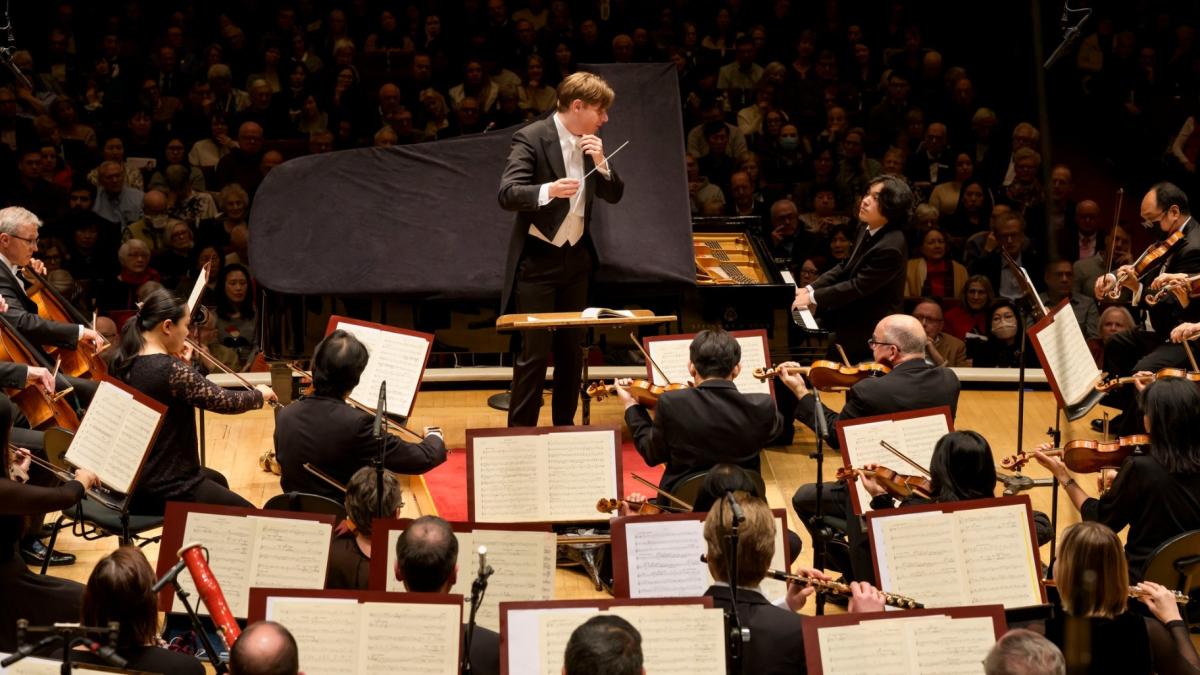 Klaus Mäkelä directs the Chicago Symphony Orchestra on Dec. 18, 2025. (Todd Rosenberg)
A Dec. 18 concert by the ever-superb Chicago Symphony Orchestra was a stunner, with Klaus Mäkelä (the Zell Music Director Designate who moves like a dancer, and who will begin his five-year tenure as the orchestra’s director in 2027) in top form.
The program featured guest pianist Yunchan Lim who flew over the keyboard in Robert Schumann’s “Piano Concerto in A Minor.” There were two brief but fascinating pieces by contemporary composers Unsuk Chin and Jörg Widmann. And finally, a superb performance of Beethoven’s powerful “Symphony No. 7 in A Major.”
Opening the concert was Chin’s five-minute work, “subito con forza,” a brief riff on the music of Beethoven that she also wove in with what was described as “a large modern-day battery of percussion instruments and the sound of a piano.” The piece began with low strings but then grew wild and featured many dramatic shifts.
Next came Lim’s performance of the Schumann “Concerto,” with its dramatic opening, a fluid piano solo that began with a lyrical mood, gained strength, drew on the orchestra’s string section and winds, and moved from full orchestra to stormy piano solo with dramatic mood shifts and lyrical riffs from the strings along the way. Then came the sound of the big orchestra.
Lim’s speed on the keyboard was backed by an interplay with the strings, winds and brass of the orchestra. And following great applause Lim returned to the stage with Chopin’s “Waltz No. 3 in A Minor,” a work full of lyrical beauty and its own fluid mood shifts.
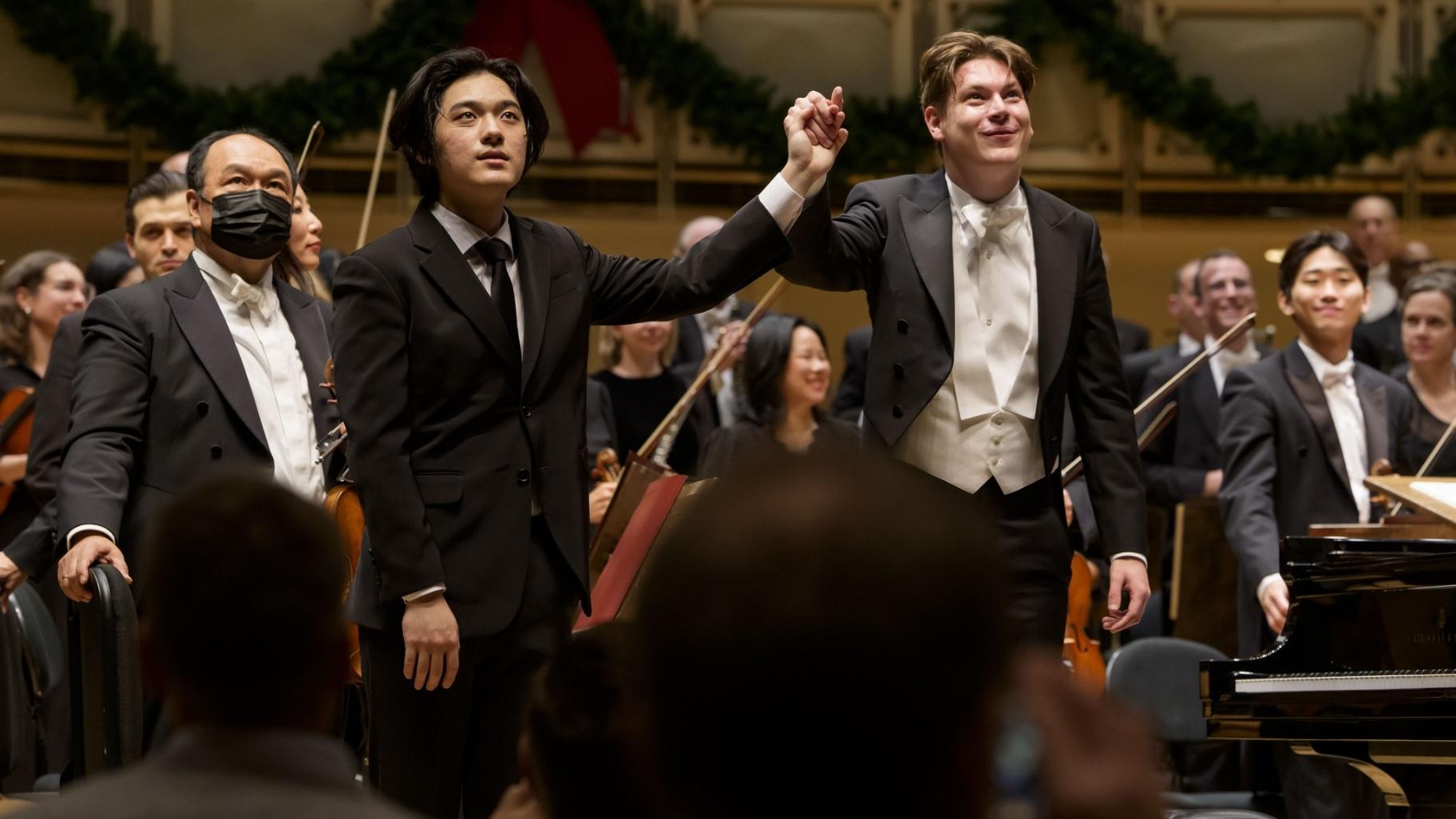 Conductor Klaus Mäkelä, right, and pianist Yunchan Lim during a concert with the Chicago Symphony Orchestra on Dec. 18, 2025. (Todd Rosenberg)
The second half of the concert opened with “Con brio, Concert Overture for Orchestra,” a 12-minute work by the contemporary German composer Widmann that draws on drums, strings, winds and brass and creates a fascinating mix of sounds and mood shifts that even left me wondering how it was notated. (It set Mäkelä dancing.)
Closing the evening in grand style was Beethoven’s magnificent “Symphony No. 7 in A Major” — a grand work that also had Mäkelä moving in his unique way on the podium. He clearly drew on the work’s high energy, and its continuing mood shifts from wild to lyrical, all rich in emotion.
The low strings then set a subtle, soulful mood, with more lyrical beauty followed by a notable build to a great burst of sound and speed as Beethoven made the most of many different orchestral voices. And Mäkelä has a wonderful gift for capturing the shifting moods and rhythms with which Beethoven’s music is so richly driven.
This concert was repeated on Dec. 19 and Dec. 20.
Mäkelä will return to conduct different concerts at 7:30 p.m. on Feb. 19, 20 and 21, 2026, with works by Sibelius and Strauss, and on March 5 and 6 with works by Milhaud, Gershwin and Stravinsky. For more information, visit cso.org.
WTTW News arts coverage is supported by the JCS Arts, Health & Education Fund of the DuPage Foundation.
Follow Hedy Weiss: @HedyWeissCritic