Education
Illinois Residents Oppose ICE Activity at Schools, Support Pay Raises for Educators: New Teachers Union Study Finds
 (WTTW News)
A majority of Illinois residents oppose federal education cuts and immigration enforcement activity near school properties and believe educators should receive increases in pay, according to a new statewide study.
The Illinois Education Association on Monday published its annual State of Education report, which offers a glimpse into residents’ feelings on all aspects of the state’s public education system. The IEA is the state’s largest education union, representing more than 135,000 employees.
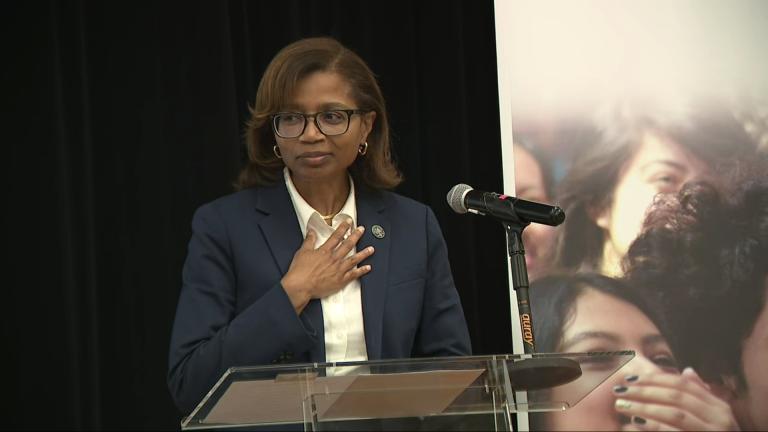
IEA President Karl Goeke said this year’s report found three main themes — respondents see education as a top priority, reject the presence of Immigration and Customs Enforcement operations near schools and believe all students have a right to a public education.
“I know that students do better when they’re free from fear,” Goeke said during a press conference Monday. “So ensuring that every child, every single child, has the ability to learn in an environment that is free from fear is important to us. It’s one of our values. Students should not be afraid when they are in school.”
According to the report, 57% of respondents said they were worried about ICE detaining themselves, a child or school employees at their school in their local community, compared to 38% of respondents who said they were not worried.
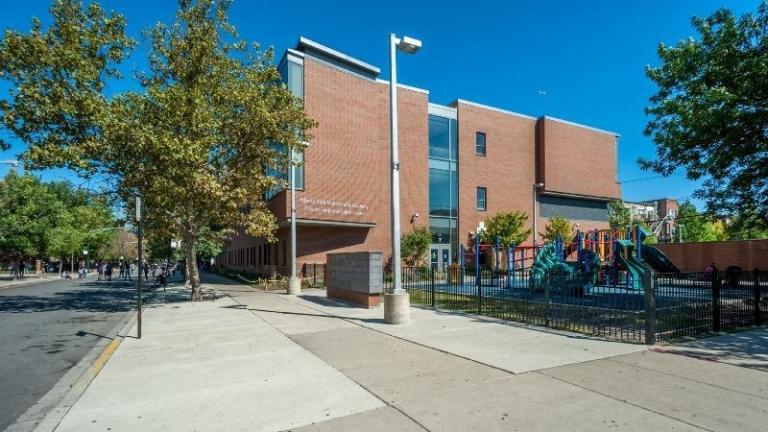
In Chicago, groups of parents and community members regularly gathered outside schools to watch for immigration agents amid ICE’s increased presence in the city during the Trump administration’s “Operation Midway Blitz” enforcement efforts last fall.
Even so, federal authorities did make some arrests outside of school buildings. Chicago Public Schools does not allow ICE or any other federal agents into its facilities unless they have a criminal judicial warrant signed by a federal judge.
“When students are concerned and when parents are concerned about sending their students to school because they’re scared about what could happen to them, students don’t learn as well,” Goeke said.
Polling for the State of Education report was conducted between Jan. 26-29 and included 1,000 adults statewide.
Beyond the ICE activity results, the study also found that a majority of Illinois residents (58%) remain pessimistic about the direction of public education in the state, a finding that is largely similar to recent years.
Nearly two-thirds of respondents oppose the Trump administration’s massive cuts to the U.S. Department of Education and separate cuts to SNAP and Medicaid benefits in Illinois.
Eighty-five percent of those polled said they either somewhat or fully believe that every student in Illinois has a right to an education at a public school, and 53% feel Illinois teachers are paid too little (compared to 15% who feel they are paid too much).
Similarly, 52% of respondents said paraprofessionals are paid too little and 55% said education funding in Illinois should increase.
The study also found that only about one-third of respondents (32%) are aware of statewide teacher shortages, but 84% of those who are aware said they are worried about those shortages.
“One thing is for sure,” Goeke said, “the public wants more funding for their schools and stronger benefits for their teachers, staff and professors.”