Politics
Mayor Brandon Johnson Will Not Veto $16.6B Budget Plan Passed Over His Objections
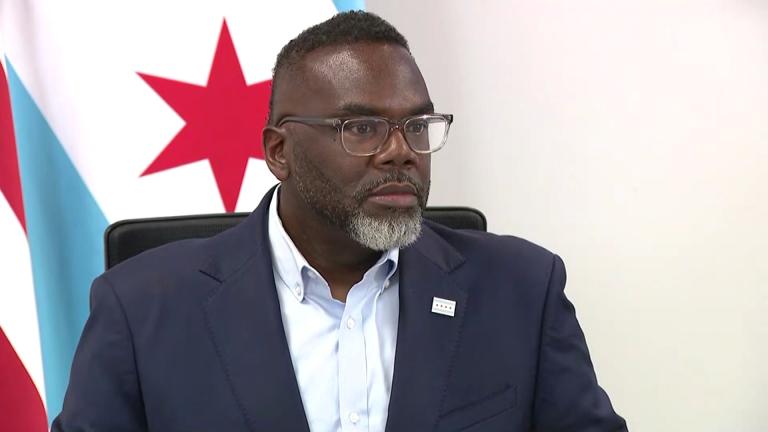
Video: Mayor Brandon Johnson appears on “Chicago Tonight” on Dec. 23, 2025. (Produced by Heather Cherone and Joel Ortiz)
Mayor Brandon Johnson said Tuesday he would allow Chicago’s $16.6 billion 2026 budget — which does not impose a per-employee tax on large firms — to take effect Jan. 1, over his objections.
Johnson’s decision not to sign the budget — but also not to veto the budget — he called “morally bankrupt” immediately averts what could have been the city’s most severe fiscal crisis in more than 40 years.
“In this moment I will not add the risk and speculation of a government shutdown to the profound worries Chicagoans face,” Johnson said.
But Johnson and the city’s top financial officials contend the budget that is now law — beating the deadline by just seven days — leaves the city with a deficit of more than $163 million and in danger of not being able to pay its January bills.
“The budget is not balanced,” Johnson told WTTW News’ “Chicago Tonight,” warning that the City Council may have to make emergency cuts to make up for revenue that does not materialize.
Johnson signed two executive orders that amounted to an attempt to strike parts of the spending plan. One prohibits the sale of city medical debt to private firms and sets “clear standards for transparent and stable debt collection practices” while the other puts new restrictions on the amount the Chicago Police Department can spend on overtime.
The decision to allow the budget to take effect was “pretty straightforward” because it makes “critical investments” that will benefit the people of Chicago without crossing any of what he called “his red lines” — no significant property tax increase, no grocery tax and no increase in garbage fees, Johnson said.
With the budget’s passage, Johnson’s last, best chance to fulfill his central campaign promise and levy hundreds of millions in new taxes on the wealthiest Chicagoans to fund new investments designed to boost working class Chicagoans, particularly on the West and South sides, likely evaporated.
The City Council voted 29-19 on Friday to raise the necessary revenue for the city’s 2026 spending plan, and 30-18 to allow the city to spend those funds.
Johnson, and all 50 members of the City Council, are set to face Chicago voters in 15 months.
Before the Saturday vote, Johnson touted what the spending plan approved by the City Council has in common with the budget he proposed and boasted of beating back efforts to cut 5,000 jobs from the city’s summer youth program and hike the garbage tax.
“We may not have the majority of the City Council but we do have the people,” Johnson said.
The budget legalizes video poker and slot machines in every Chicago bar or restaurant with a liquor license.
Shoppers who fail to bring their own bags will also pay 15 cents for every paper or plastic sack, up from 10 cents, starting Jan. 1.
The budget also imposes a 1.5% increase in the taxes on beer, wine and liquor sold at stores for consumption elsewhere. The city’s budget director and chief financial officer say that change will actually cost the city millions of dollars.
In addition, Chicagoans will pay more for all Uber and Lyft rides to and from an expanded area downtown under the spending plan.
Debate Over Debt Collection
The newly approved budget calls for more than $473 million in new taxes and relies on $35 million in revenue from advertising on city light poles and in other public spaces to close a $1.19 budget gap.
The budget also calls for the city to collect an additional $89 million from Chicagoans who owe the city ambulance payments, utility bills and red-light camera tickets by selling that debt to a private company.
The executive order signed by Johnson Tuesday aims to exclude the $800 million in medical debt owed to the city from that sale.
The additional revenue from the debt collection push replaces the $82 million that would be generated by Johnson’s proposal to levy a $33 per month per employee tax on companies with 500 or more employees in order to fund violence prevention and youth employment programs.
Johnson said those firms would target the poorest residents, including Black and Brown residents, and significant revenue was unlikely to materialize.
The budget also calls for the city to collect $113 million more in city debt, as originally proposed by Johnson, along with a detailed plan to ensure that new revenue materializes, officials said.
The spending plan counts on $176.6 million in revenue that was not included in the mayor’s plan. But those changes will actually result in an $8.3 million loss to the city, officials said.
Chicago’s finances have long been out of whack, pinched by soaring pension costs, spiraling personnel costs and a massive amount of debt. Officials are staring into a financial abyss after hitting the so-called “fiscal cliff,” with Chicago’s federal COVID-19 relief funds exhausted and tax revenues lagging after a period of high inflation.
The budget sets aside $139.9 million to make an additional payment into the city’s woefully underfunded pension funds in an effort to avert a second consecutive credit rating downgrade.
Johnson had initially proposed paying just $120.8 million more to the city’s four pension funds, citing the city’s financial woes.
The spending plan passed by the City Council does not require the Chicago Police Department to publicly request more funds from the City Council if it exhausts its $200 million budget for overtime.
The mayor’s executive order would require Chicago Police Supt. Larry Snelling to ask the City Council to amend the annual appropriations ordinance — after getting Johnson’s approval — if it needs to spend more than $200 million.
Through the end of November, CPD has spent $251 million on overtime, despite the fact that its budget was $100 million, according to records published by the inspector general.
Three members of the Progressive Caucus voted for the spending plan opposed by the mayor: Ald. Desmon Yancy (5th Ward), Ald. Ronnie Mosley (21st Ward) and Ald. Ruth Cruz (31st Ward). All three alderpeople are in their first terms.
Four members of the City Council’s Black Caucus — each handpicked by Johnson to serve as committee chairs — voted for the plan opposed by the mayor: Ald. Pat Dowell (3rd Ward), Ald. Gregory Mitchell (7th Ward), Ald. Michelle Harris (8th Ward) and Ald. Emma Mitts (37th Ward).
The City Council approved a plan backed by Johnson to borrow $1.8 billion.
That includes $166 million to cover the cost of raises for firefighters who worked without a contract for four years, $283 million to cover the escalating cost of police misconduct settlements and fund the city’s infrastructure program for 2026 and 2027, which includes $144.6 million to repair bridges and viaducts, $174 million for street resurfacing and $173 million to replace lead service lines.
Chicago had $10.6 billion in outstanding debt backed by the city’s property tax and sales tax receipts at the end of 2024, according to the city’s 2024 Annual Comprehensive Financial Report.
In addition, the City Council approved a measure that would allow city officials to refinance $1 billion of the city’s debt during 2026.
New Revenue
The budget also hikes Chicagoans’ property taxes by $9.1 million to boost the budget for the Chicago Public Library, which had been set to see 69 vacant positions eliminated in next year’s budget.
Johnson had vowed to veto any budget that raises property taxes.
The largest tax hike included in the budget boosts the tax levied on software licenses, cloud services and other digital goods from 11% to 15% to generate $415.2 million. The mayor has touted that as a tax hike on “big tech.”
In addition, both budget plans declare $1 billion in property taxes earmarked to fight blight to be “surplus,” sending more than $550 million to Chicago Public Schools.
The budget also includes a plan to generate $31 million by taxing social media companies with a tax of 50 cents per month for every active user after the first 100,000 users, under the city’s amusement tax authority, officials said.
That money would be used to fund the city’s public mental health clinics and crisis response program, if it withstands an all-but-certain legal challenge.
Contact Heather Cherone: @HeatherCherone | (773) 569-1863 | [email protected]