Education
State Lawmakers Talk Political Will for CPS Funding, Evidence-Based Funding Formula
State lawmakers will have a new item on their agenda when they convene for the fall veto session in November — finding an extra $150 million for Chicago Public Schools.
The Chicago Board of Education last week approved a budget that assumes additional state funding to avoid around 1,000 layoffs of teachers and school support personnel.
Board members aligned with the Chicago Teachers Union cited a social media video in which House Speaker Emanuel “Chris” Welch said he was “committed” to finding additional funding for CPS as justification for including the assumption in the budget.
But securing additional money for Chicago schools looks to be an uphill battle in Springfield, as suburban and downstate lawmakers point out that CPS isn’t the only district in financial trouble.
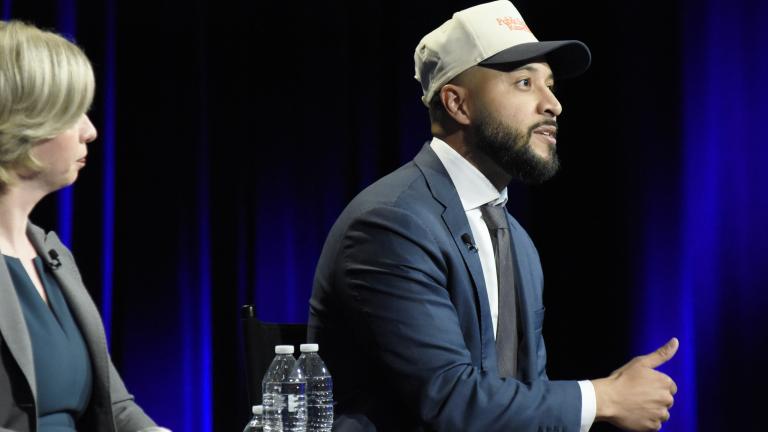
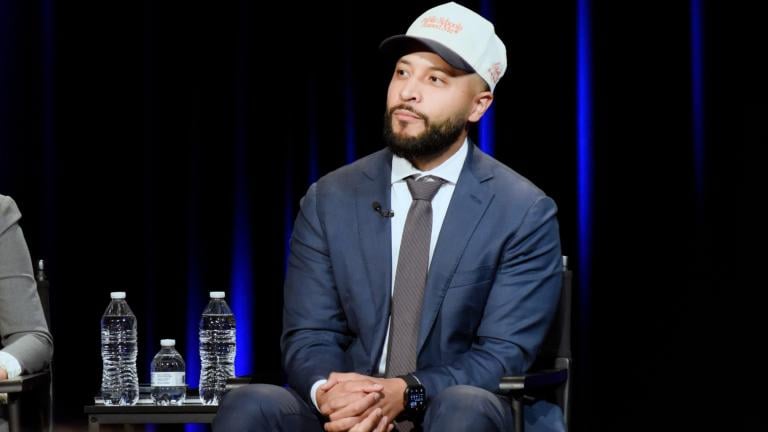
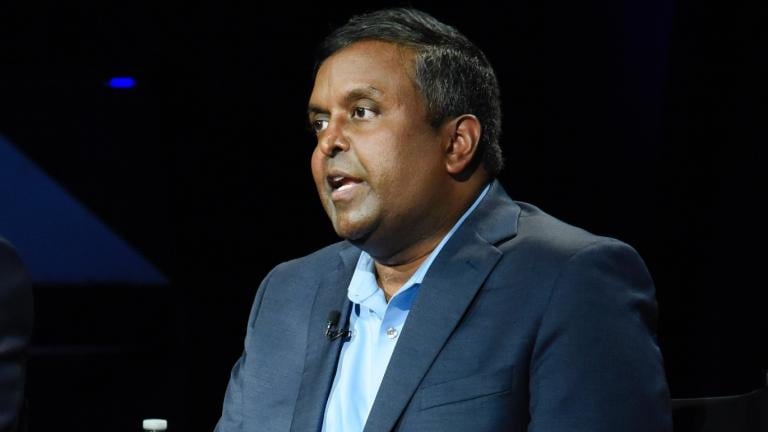
State Sen. Dave Syverson (R-Rockford) and state Rep. Will Davis (D-East Hazel Crest) joined “Chicago Tonight” to discuss how Illinois lawmakers will try to fund CPS.
Is there the political will in Springfield to secure additional CPS funding?
In addition to Welch, a spokesperson for Senate President Don Harmon (D-Oak Park) said, “The Senate President looks forward to working with our allies and partners to identify resources.”
Talking to reporters, Gov. JB Pritzker said, “I want to do more, and we’re not yet where we need to be. I want to do more, and at the same time, I’m a big believer in — and I think you’ve seen this — balanced budgets.”
Davis said the political will to direct funding only toward CPS isn’t there.
“I don’t know specifically if there’s the political will to address just the CPS problem,” Davis said. “My position has been that we need to look at using the education funding formula that we have to not only address funding needs for CPS but also funding needs for school districts throughout the state.”
Any changes to the state’s spending plan that will reach CPS in time to avoid midyear cuts will require a three-fifths supermajority in both chambers, a high bar for any legislation.
Syverson said any legislation sending funds to just CPS would start an “uproar” among downstate and suburban school districts.
“If we change the evidence-based funding formula that we have in place, that is going to start an uproar from suburban school districts … all the way to downstate,” Syverson said. “Chicago is going to have to make the tough decisions, like every other school district has had to do over the past few years.”
Will other Illinois districts receive funding?
Syverson said any additional education funding approved in the veto session should be funneled through the evidence-based funding (EBF) formula and distributed across Illinois.
But he added that finding additional funding for each school district that sits below its EBF adequacy level would be difficult.
“Well, certainly right now the state can’t find that kind of money,” Syverson said. “They’re facing a significant budget shortfall going into this next year already. Finding those kinds of dollars would really be an issue.”
Lawmakers created the EBF formula in 2017 to increase state education funding and distribute it more equitably, directing more dollars to under-resourced schools.
Since the law’s creation, Illinois has increased spending on public schools by more than $3 billion, but 63% of districts are still funded at less than 90% of their adequacy target.
Davis said lawmakers could find the money to get all schools up to funding adequacy if they pursue progressive revenues.
“If we continue down the road of progressive revenue, as we have done in the past budget year, and put more on the table, then we can get to the amount of resources that’s necessary to help all school districts,” Davis said.
Davis said lawmakers left some revenue options on the table during the last budget cycle.
“Digital ad tax could possibly bring $1.2 billion in revenue to the state of Illinois,” Davis said. “There are things that we can consider.”
Calls for increased state funding for CPS come just months after state lawmakers bridged a $2 billion budget deficit largely with hundreds of millions in new taxes.
Syverson said raising taxes can’t always be the answer to underfunded schools.
“That was the answer a few years ago,” Syverson said. “We’ve raised taxes and we’re back in the same problem that we’re in. Raising taxes may solve a short problem for a year or two, but if you don’t get a handle on spending, if you don’t go through the common sense reforms that other districts have done, we’re gonna be right back in the same position, except then we’re gonna have more taxes.”
State lawmakers will return for the fall veto session Nov. 17.
WTTW News education reporting is supported, in part, by Press Forward Chicago.