Politics
Late Property Tax Bills Delaying Additional Pension Payment, Chicago Officials Say
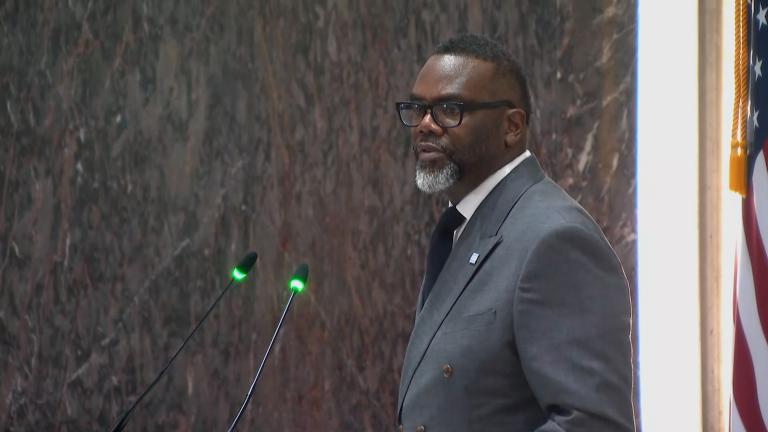
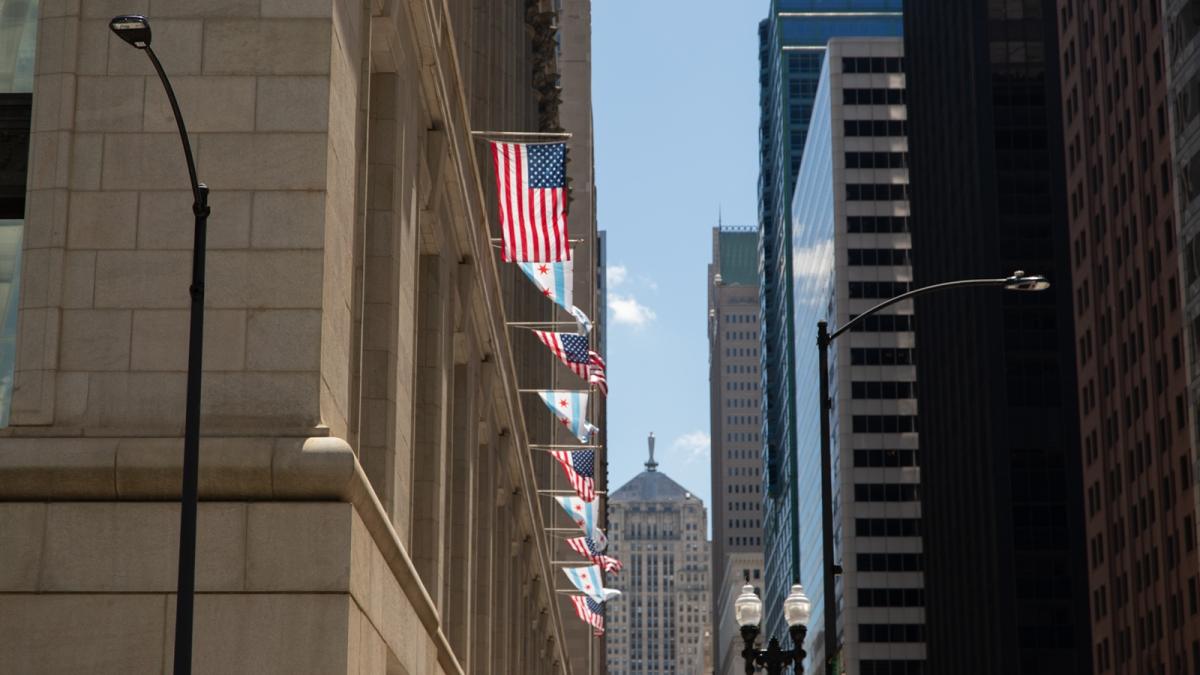 (Michael Izquierdo / WTTW News)
Chicago officials delayed an additional payment into the city’s four underfunded pension funds after Cook County officials announced the second installment of 2025 property tax bills would be at least two months late, acting Chief Financial Officer Steven Mahr told members of the Chicago City Council on Thursday.
An analysis is ongoing to determine when — and how much — Chicago can afford to send to its pension funds in addition to the $2.85 billion that state law requires the city to contribute to the funds that pay pensions to retired city employees this year, Mahr said.
Pressed by Ald. Matt O’Shea (19th Ward), Mahr declined to commit to making the additional payment to the city’s pension plans as required by the city’s 2026 budget, which was approved by the City Council over Mayor Brandon Johnson’s objections.
Officials must make sure they have enough cash on hand to allow the pension funds to pay required benefits to retirees without having to sell stock or redeem other investments — a move that will significantly worsen the funds’ already precarious finances, Mahr said.
The city’s 2026 spending plan called for officials to send a total of $259.6 million in extra cash to the city’s pension funds in an effort to reassure the Wall Street ratings agencies that Chicago was committed to staunching the flow of red ink engulfing the city’s pension funds.
The Johnson administration made just a partial payment of $130 million in January with Mahr, Budget Director Annette Guzman and Comptroller Michael Belsky telling alderpeople the city simply couldn’t afford to make the payment because Cook County was months late in sending hundreds of millions in property tax revenue to the city from the first installment of 2025 property tax bills.
The decision to split the city’s advance pension payment drew intense pushback from alderpeople concerned it would lead to a second consecutive credit rating downgrade, making it more expensive for the city to borrow the funds it needs to operate.
Johnson’s initial spending plan for 2026 called for the city to pay just $120.8 million more than required to the city’s four pension funds in 2026, citing the city’s financial woes. A majority of the City Council said the city should pay nearly double that amount, despite Johnson’s warning that the city could not afford to do so.
In all, Chicago owes $36.4 billion to its four employee pension funds representing police officers, firefighters, municipal employees and laborers, according to the 2025 Annual Comprehensive Financial Report.
The fund designed to pay pensions to Chicago’s police officers is just 25.5% funded, while the fund that pays the pensions of the city’s firefighters is 25.2% funded, according to the city’s annual financial report.
The laborers’ fund has the highest funded level, at 44.1%, while the fund that pays pensions to municipal workers is 28.2% funded, according to the report.
By comparison, public pension funds in other large cities have average funding levels of about 70%.
Since 2023, the city has paid approximately $689 million more into its four pension funds than required by state law, according to the city’s annual reports. In 2025, the city paid approximately $228 million more than required into its pension funds, according to the annual financial report.
The city faces a record-setting $3 billion pension bill in 2027, according to city records, in order to comply with a state law that requires two of Chicago’s funds be funded at a 90% level by 2055 and the other two by 2058, ensuring they can pay benefits to employees as they retire, according to an estimate from August 2025.
Chicago’s finances have long been out of whack, pinched by soaring pension costs, spiraling personnel costs and a massive amount of debt.
Chicago faces a likely deficit of $1.16 billion in 2027, according to the city’s most recent budget forecast, released in August 2025. An updated report is due in a month.
“The financial headwinds facing the city are substantial,” Guzman warned alderpeople Thursday.
Johnson said earlier this month that the city was facing a $130 million shortfall after revenue baked into the city’s 2026 spending plan over his objection failed to materialize.
Because officials have done a better job than expected in reducing costs and some revenue sources are bringing in more money than expected, the city is on track to end the year approximately $89.3 million in the hole, according to updated information presented to alderpeople by Guzman.
That gap is nearly entirely due to the fact the city has been unable to sell $1 billion in debt as the spending plan demands, records show.
While Bank of America reached an agreement with the city to purchase the rights to collect that debt, that deal fell apart, Belsky told alderpeople. One other firm indicated it is interested in purchasing that debt, and negotiations are ongoing, he added.
In addition, only a handful of firms expressed interest in selling advertising spots on 3,000 city light poles, city vehicles and bridge houses, officials said. The city’s budget counted on $29.3 million from that proposal.
A new request for proposals is set to be released in August in an effort to ink a deal, Mahr said.
Nor have firms jumped at the chance to create an “augmented reality” advertising licensing program that would allow companies to impose videos and other content on city properties like Millennium Park or the Riverwalk that can be seen through a smartphone, virtual reality glasses or tablet. That proposal was expected to bring in $6 million, according to the city’s budget.
Video gambling in Chicago bars and restaurants has also failed to bring in any revenue, with state officials issuing just six licenses for video poker and slot machines. City officials have yet to green light the video gaming terminals, which were to have brought in $6.8 million this year.
Johnson’s critics have repeatedly accused his administration of “slow-walking” those programs in an effort to score political points and shift the blame for the city’s financial woes.
Guzman, Mahr and Belsky repeatedly told alderpeople Thursday that was false and attempted to show them exactly what they had done to implement the spending plan.
“We are working enormously hard to enact the budget that was passed by the City Council,” Guzman said.
But few members of the City Council appeared to believe Johnson’s finance team, an indication that Johnson’s relations with the City Council remain fraught.
Ald. Brendan Reilly (42nd Ward) said he was deeply frustrated that none of the revenue baked into the budget by the mayor’s critics had materialized, and skeptical that the mayor’s team had actually done their best to implement a plan the mayor repeatedly denigrated.
“We’re equally frustrated,” Guzman said.
The continuing back-and-forth between the administration and the mayor’s critics on the City Council signals the beginning of another tough debate over the city’s finances. Efforts to craft a spending plan for 2027 will be complicated by the fact that all 50 alderpeople — and the mayor — face reelection in less than a year.
Ald. Maria Hadden (49th Ward) called on her colleagues to take a new approach to budget negotiations this year — and for the mayor to deal with the City Council “honestly.”
“Are we looking to pass a good budget for the people of Chicago? Or are we looking to embarrass the mayor?” Hadden said. “There is a deficit of trust on both sides.”
Contact Heather Cherone: @HeatherCherone | (773) 569-1863 | [email protected]