Politics
Rival Budget Proposal Based on Bad Data, Faulty Assumptions: Chicago Financial Officials
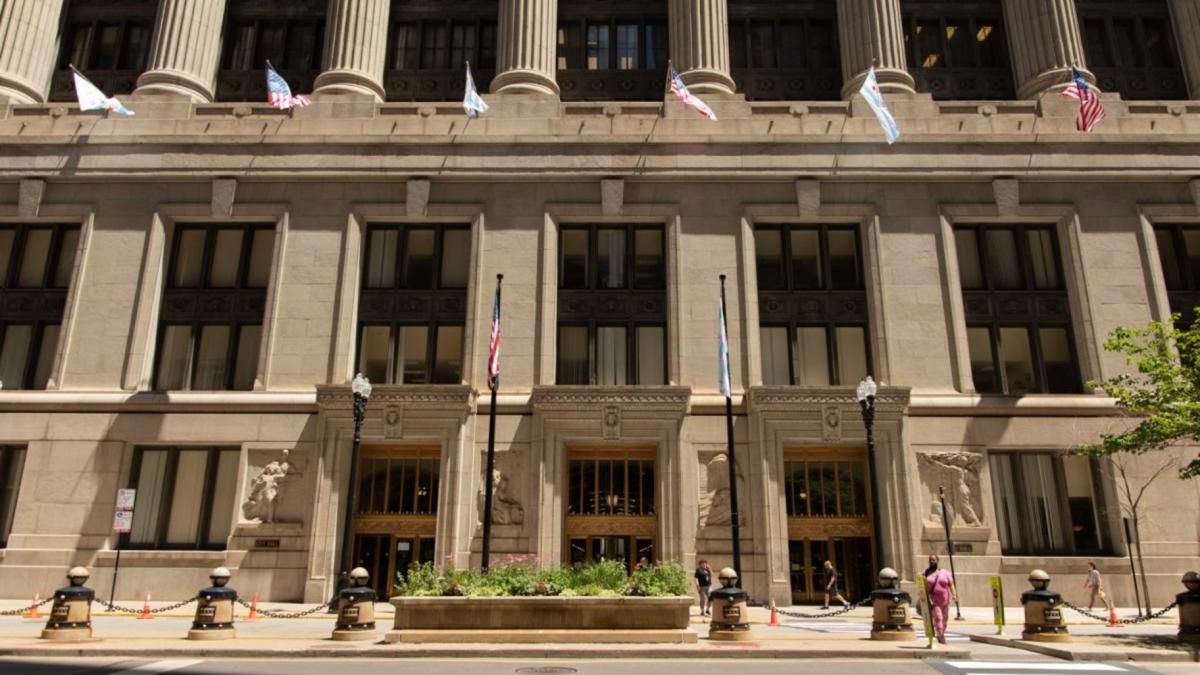 (Michael Izquierdo / WTTW News)
A plan to bridge Chicago’s $1.19 billion budget gap without hiking taxes on large firms endorsed by 26 members of the City Council is based on bad data and faulty assumptions that could “jeopardize the city’s financial position,” according to Chicago’s top financial officials.
While Mayor Brandon Johnson flatly rejected the plan even before it was publicly released because it would nearly double garbage fees, Chief Financial Officer Jill Jaworski, Budget Director Annette Guzman and Comptroller Michael Belsky sent a detailed 18-page response to the members of the City Council on Thursday, questioning the plan’s assumptions and defending the mayor’s plan to impose a $21 per month per employee tax on companies with more than 100 employees.
The latest back-and-forth between the mayor’s office and Johnson’s critics leaves no clear path to a deal with just 26 days left before the deadline to avoid an unprecedented shutdown of city government.
Meetings of the Budget and Finance committees that had been scheduled for Monday were canceled Thursday, another sign an agreement remains out of reach.
While the letter pledges to keep negotiating over the mayor’s proposed $16.6 billion spending plan, there appears to be no common ground between the two spending plans.
A spokesperson for Ald. Nicole Lee (11th Ward), who is the lead sponsor of the alternative budget plan, did not immediately respond to a request for comment.
Read the full alternative plan.
Much of the debate over Johnson’s 2026 budget, which would impose $623 million in new taxes on the wealthiest Chicagoans and largest firms, has centered on his call to reimpose the head tax to generate $100 million to fund violence prevention and youth employment programs.
While Johnson and his allies have defended the head tax as the best way to continue funding the programs they credit with reducing Chicago’s homicide rate by approximately 29% and the city’s overall violent crime rate by more than 22%, opponents contend the tax will kill jobs and stifle economic growth.
While Chicago homeowners now pay $9.50 per month to have their trash and recyclables picked up once a week, it costs the city $37.50 per month to haul away each home’s garbage, according to a task force report. The alternative budget plan would have the city reduce that subsidy.
Most Chicagoans would see their annual garbage fee rise from $114 to $216 under the proposal that Johnson has promised to veto, according to the letter. It would take 34 alderpeople to override that veto.
Senior Chicagoans would be charged $9 per month, an increase from the current fee of $4.50 per month for those homeowners who also get a break on their property taxes because they are older than 65, according to the letter.
The alternative proposal would not extend discounts offered to low-income Chicagoans for other utilities, including water, to garbage, according to the letter.
That would impose “another major cost escalation” on Chicagoans “least able to absorb it,” according to the letter.
Guzman, Jaworski and Belsky also defended Johnson’s proposal to borrow $166 million to pay Chicago firefighters and paramedics what they are owed after working without a contract for four years. That debt will be paid off over three years and cost the city $30 million in interest, officials said.
Even though the city set aside money in the 2025 budget to cover the cost of paying firefighters retroactively, which totals $340 million, the cost of the contract unanimously approved by the City Council exceeded the city’s original projections, officials said.
The rival budget proposal also eliminated the $10 million Johnson’s budget expected from a new plan to regulate and tax the sale of intoxicating hemp, even though that provision was removed from the spending plan presented to alderpeople on Nov. 14.
The federal government is set to ban the sale of those products as of November 2026.
Guzman, Jaworski and Belsky told the alderpeople who endorsed the rival proposal that they were perplexed by their plan to cut $6.2 million from the budget for the city’s youth summer jobs program, a key priority for the mayor, while demanding that funding be restored for two specific programs, Becoming a Man and Working on Womanhood.
The agency that runs those groups is “currently under monitoring with several performance improvement plans,” according to the letter.
City rules designed to stop corruption prohibit taxpayer funds from being awarded directly to specific groups, as the rival budget plan calls for, according to the letter.
Proposals from 116 firms to perform similar work that replicates the most effective city programs are being reviewed by city officials, according to the letter.
The cuts proposed in the alternative budget plan would result in the elimination of 5,100 summer jobs in 2026, according to the letter.
The alternative plan’s proposal for the city to collect $150 million more in debt from residents than the mayor’s plan projects “does not reflect how municipal debt collection functions in practice or under current law,” according to the letter.
In addition, a plan to generate $24 million by hiking taxes on beer, wine and liquor sold at stores for consumption elsewhere would likely be struck down by the courts, according to the letter.
The alternative plan also makes $90 million in cuts identified by consulting firm Ernst & Young in a report designed to help Chicago officials root out inefficiencies. However, the authors of the report acknowledge that at least $26.5 million of those cuts would either take time to materialize or would require the unions representing 90% of city employees to agree to benefit reductions for their members.
“Responsible budgeting requires that savings included in the budget be achievable and grounded in operational reality; incorporating unverified or highly uncertain savings would create fiscal risk, rather than reduce it,” according to the letter.
The alternative plan also relies on $26 million from an “augmented reality” advertising licensing program that would allow companies to impose videos and other content on city properties like Millennium Park or the Riverwalk that can be seen through a smartphone, virtual reality glasses or tablet.
That proposal “lacks transparency regarding the assumptions and methodology behind this projection, making it impossible to validate,” according to the letter. “Without a clear evidentiary basis, the city cannot responsibly rely on these figures for fiscal planning.”
The rival budget plan also urges the city to increase its estimates on tax revenue collection by $31.6 million, saying the mayor’s plan is too conservative.
Guzman, Jaworski and Belsky defended those projections, saying their approach ensures “long-term stability and helps protect against uncollected revenue that could otherwise jeopardize the city’s financial position.”
Contact Heather Cherone: @HeatherCherone | (773) 569-1863 | [email protected]