Business
Chicago Fire FC Has Committed to a Bird-Friendly Stadium. Will It Spark a Trend?
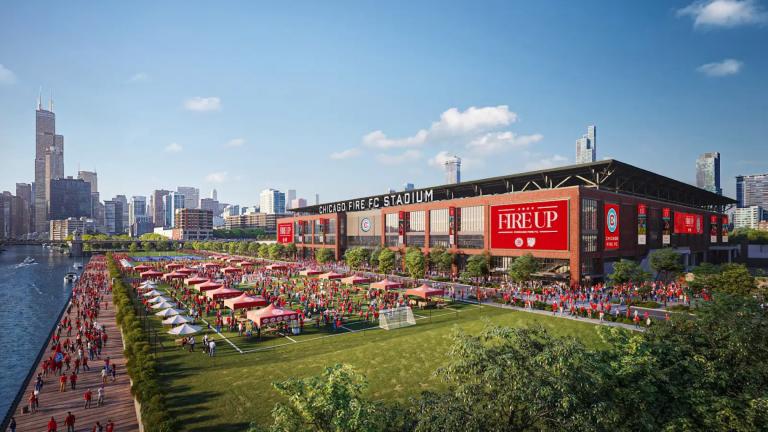
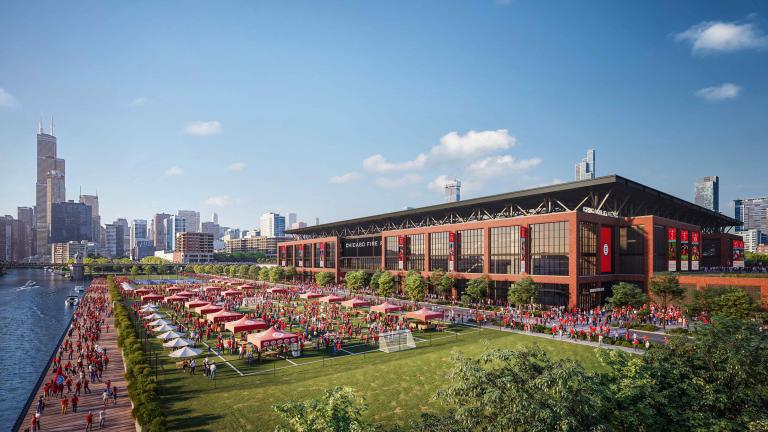
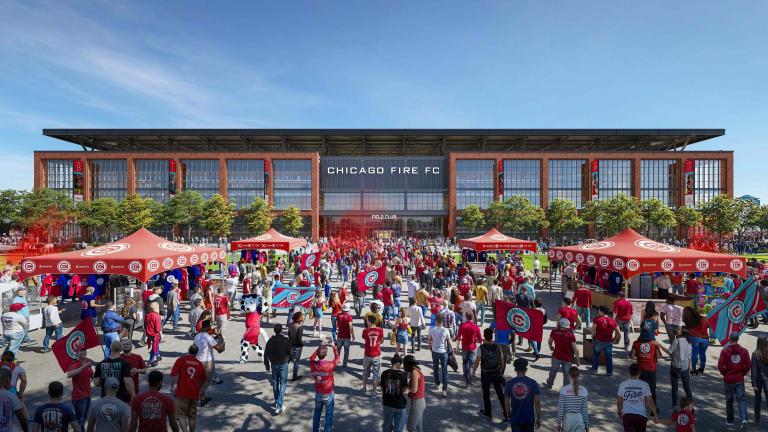
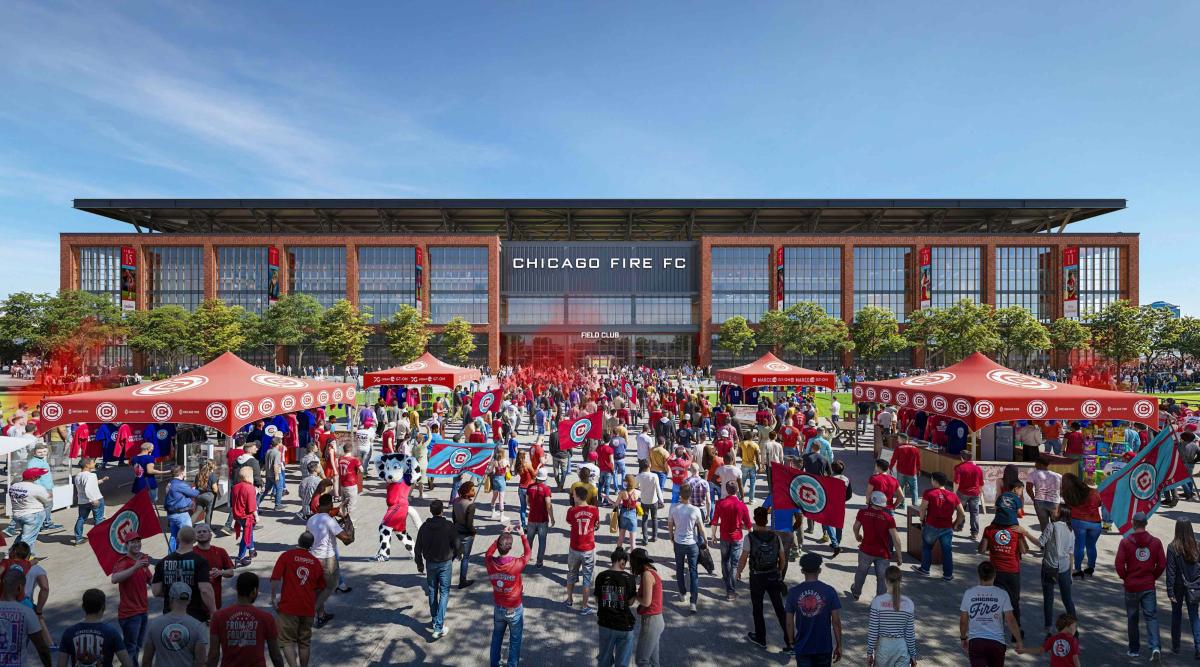 A rendering of the proposed Chicago Fire stadium, which is being planned as an anchor of The 78, Related Midwest’s 62-acre development of a former rail yard on the South Branch of the Chicago River. (Courtesy Chicago Fire FC and Gensler)
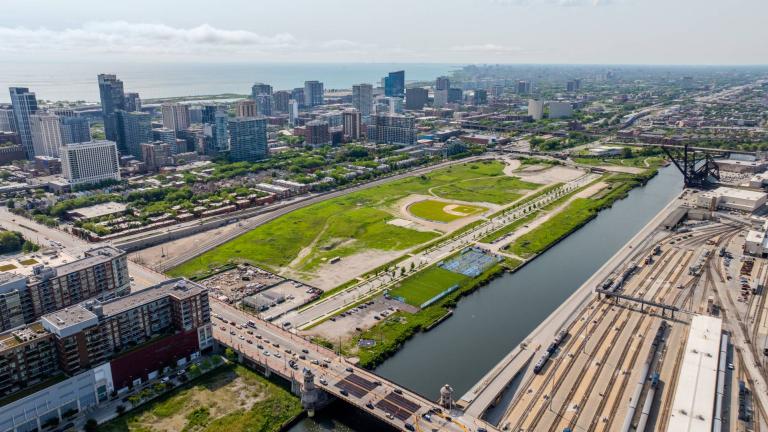
The Chicago Fire FC’s proposed stadium at The 78 is expected to spur development at the long vacant 62-acre site in the South Loop along the South Branch of the Chicago River.
Environmentalists are hopeful the stadium will serve as a different kind of catalyst.
Tucked into the Fire’s presentation to the Chicago Plan Commission back in September was a commitment to “enhanced bird protections” — a set of building guidelines adopted in 2024 as part of updates to the city’s Sustainable Development Policy.
“Key features will include bird-friendly glass and other protective design elements aimed at safeguarding local wildlife,” a Chicago Fire spokesperson told WTTW News via email.
The win was a surprise victory for the Bird Friendly Chicago coalition, which has spent years protesting construction practices that lead to untold thousands of bird deaths per year due to building collisions. The Fire stadium’s location on the Chicago River — a known magnet for birds — makes it a particularly sensitive site.
“They had said, ‘Oh yeah, we’re going to do some bird protections,’ but unless they follow the sustainability guidelines that the city set forth, it doesn’t mean anything,” said Audrey Vicks of Bird Friendly Chicago. “By the time the (commission) meeting rolled around … (the Fire’s) plan was not showing they were going to use bird-friendly.”
Vicks is among a small group of Bird Friendly Chicago volunteers that has been monitoring Plan Commission meetings for the past year, ever since the new enhanced bird protections went into effect.
These protections are part of a suite of sustainability options developers can select from to reach a target required of certain projects. According to city officials, roughly half of all projects subject to the policy are choosing bird-friendly mitigations, with the Fire stadium being the highest profile building to do so to date.
"When they (the Fire) set that example, when they chose to do the right thing,” Vicks said, “it makes a stronger case. And now when the commissioners see that developments are able to choose bird-friendly and it’s not going to cost them a fortune and it’s not going to derail their project, they are now holding these developers to a higher standard.”
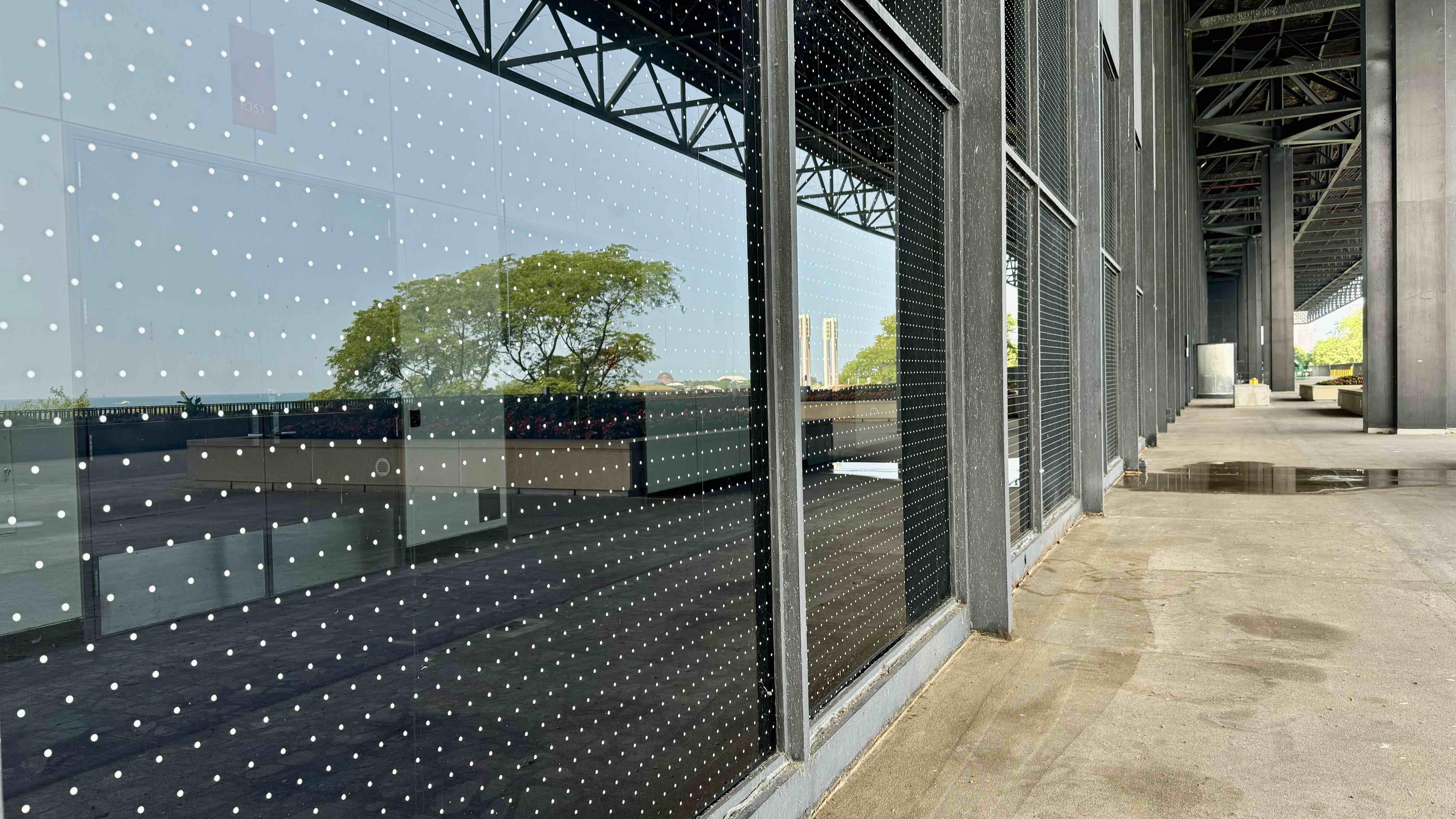 McCormick Place Lakeside was one of Chicago’s deadliest buildings for birds. After a retrofit of a bird-friendly window film, strikes have fallen more than 90%. (Patty Wetli / WTTW News)
The repercussions were already in evidence at the Plan Commission’s October meeting. Of two projects that Bird Friendly Chicago opposed, one flipped mid-meeting and agreed to adopt bird-friendly protections.
Vicks was watching the meeting’s livestream from her home. “I literally ran out to my husband in the kitchen and jumped up and down because I was so excited that after one year, exactly one year, something happened and they actually did the right thing,” she said.
The second project — a two-story high-end luxury retail shop proposed for Oak Street, with an all-glass facade — was described as “irresponsible and inhumane” by Elaine Carlson, representing Bird Friendly Chicago at the meeting.
Asked by commissioners for a response, the project’s architect said bird-safe glass — be it a dotted pattern or a UV coating — would compromise the retailer’s window displays and devalue the property. The windowpanes that had been chosen for the building, per the architect, were being procured at great expense precisely because of their high level of transparency in order to showcase the retailer’s merchandise.
In this instance, commissioners requested a deferral and asked the applicant to explore compromises.
“That was the first time in a year that had happened,” Vicks said.
The Oak Street project is back on the agenda for the November Plan Commission meeting, with bird-friendly glass now added to the proposal.
So do these recent decisions suggest a tipping point has been reached when it comes to bird-friendly construction?
Not according to Vicks.
Only a small fraction of projects come before the Plan Commission, she said, and even at that, it’s taxing for Bird Friendly Chicago to educate commissioners and mount campaigns to convince every one of those developers to adopt bird-friendly strategies.
“We can’t keep going building by building,” Vicks said. “It’s impossible in a city this size, when we have limited volunteer resources and we’re all spread so thin, it’s impossible to keep track of all of this. It’s an overwhelming task for a small group of people.”
Bird Friendly Chicago continues to press for City Council to pass an ordinance that would make bird-friendly construction mandatory for all new buildings (leaving the discussion of existing “killer” buildings for the future).
Ald. Maria Hadden (49th Ward) convened a subject matter hearing on the topic back in July but there’s been no movement since on an ordinance.
In the absence of such legislation, volunteers will continue to, pardon the pun, bird-dog projects that come before the Plan Commission and push for them to choose enhanced bird protections.
“Finally we are actually making a difference,” Vicks said.
What About the Riverfront?
 The 78 boasts an extensive riverfront, and Friends of the Chicago River would like to see less hardscape along the water and a more nature-based design. (Courtesy Chicago Fire FC and Gensler)
If the Fire stadium represents a win for bird advocates, the overall plan for The 78, particularly its approach to the riverfront, has otherwise underwhelmed at least one conservation organization.
Friends of the Chicago River said conceptual plans shared by Related Midwest, The 78’s developer, “still lack the bold, nature-based vision” that river advocates have “worked so hard to advance.” (The Fire will be the anchor occupant of The 78.)
In a statement sent to WTTW News, Friends of the Chicago River criticized the “lifeless seawalls and hardscape trails” depicted in design renderings, saying they “do not add color or life.”
Additionally, a soccer field, pickleball courts and a rideshare lot are all shown positioned along the river, as opposed to the “natural, accessible river edges” called for by Friends of the Chicago River.
“We have seen time and again how bold dreams and big ideas about the Chicago River’s potential bring substantial economic, community and environmental value to the city,” the group said. “This site is particularly important, due to its enormous scale — longer than the downtown riverwalk — and the tens of thousands of visitors who will come to the site.”
The organization pointed to plans for Foundry Park, a development taking shape on the north end of what was the Lincoln Yards site, as an example of nature-based, riverfront design done right.
“Concepts include multilayered native vegetation, naturally sloped riverbanks, restored habitat zones” and more, according to Friends of the Chicago River.
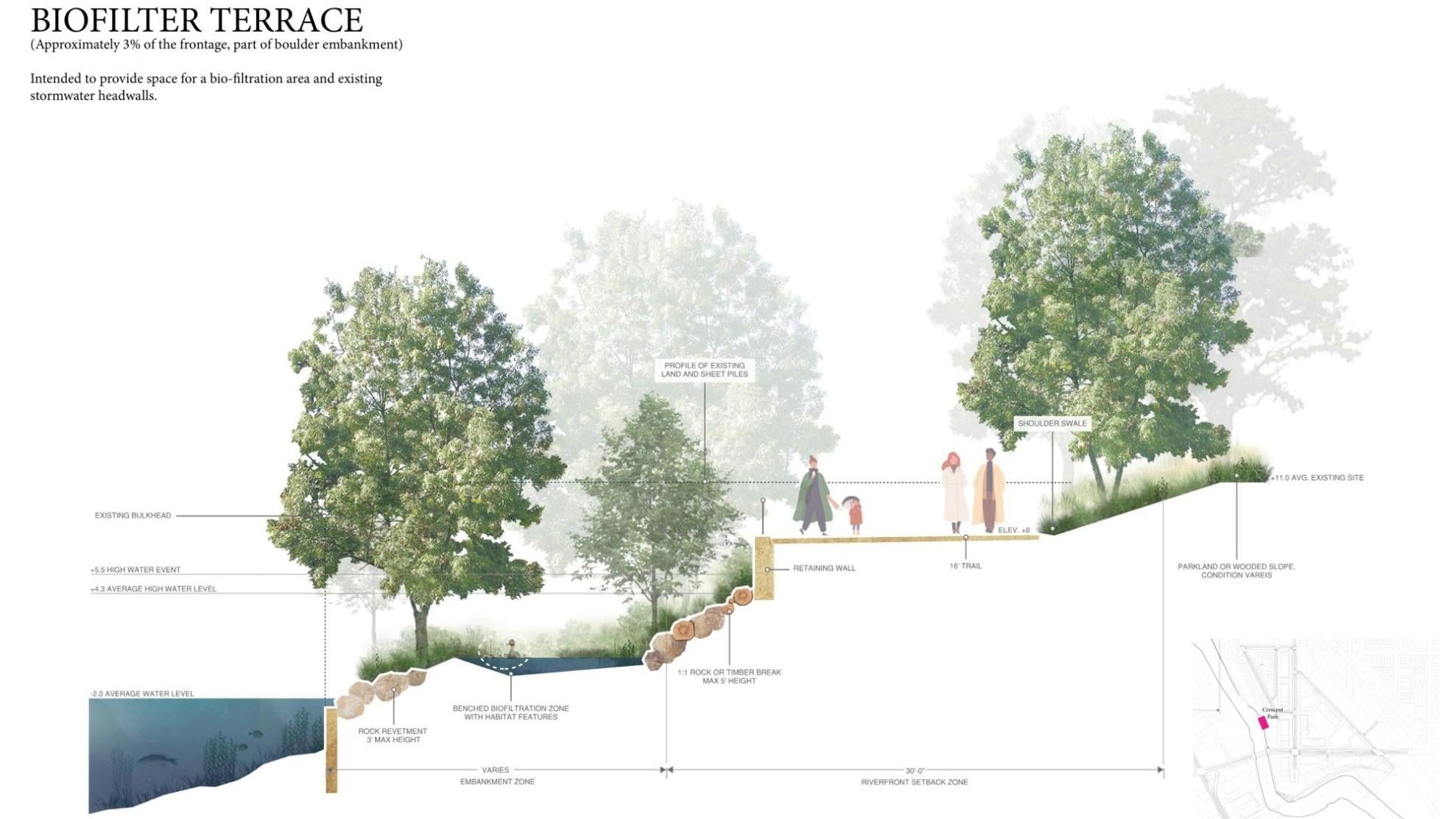 A rendering of one of the proposed river edge treatments at Foundry Park, on the North Branch of the Chicago River. (Courtesy of Hartshorne Plunkard Architecture / Nudge Design)
A spokesperson for Related Midwest said details of the design at The 78 “are still being finalized,” but added that the riverfront “will support ecology and promote accessibility.”
The vision is for the riverfront to evolve from an urban setting on the northern end to a lush landscape on the southern end.
The firm has experience with riverfront properties, the spokesperson noted, specifically on the North Branch at Lathrop and at 400 Lake Shore, currently under construction, where Lake Michigan meets the river. Part of the deal for the latter property includes development of the decades-in-the-making DuSable Park.
“We understand how to create activated environments that respect their natural surroundings,” the spokesperson said. “From the beginning, our plan for The 78 has prioritized environmental stewardship and thoughtful integration with one of our city’s greatest natural assets: the Chicago River.”
Contact Patty Wetli: [email protected]