Politics
Key City Panel Gives Green Light to $425M Subsidy for Chicago Fire Stadium Site
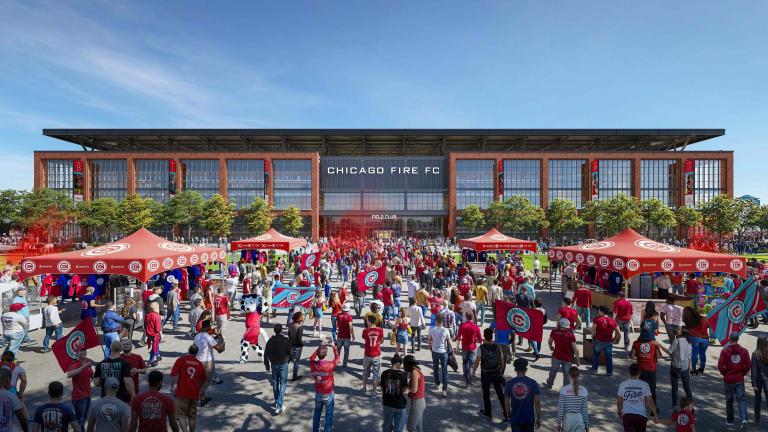
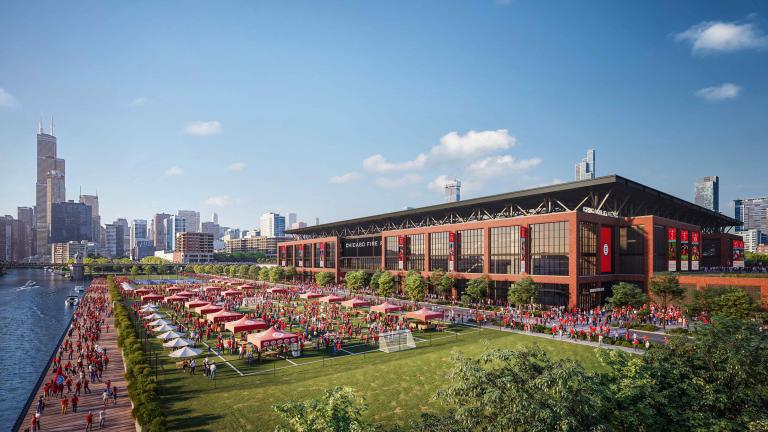
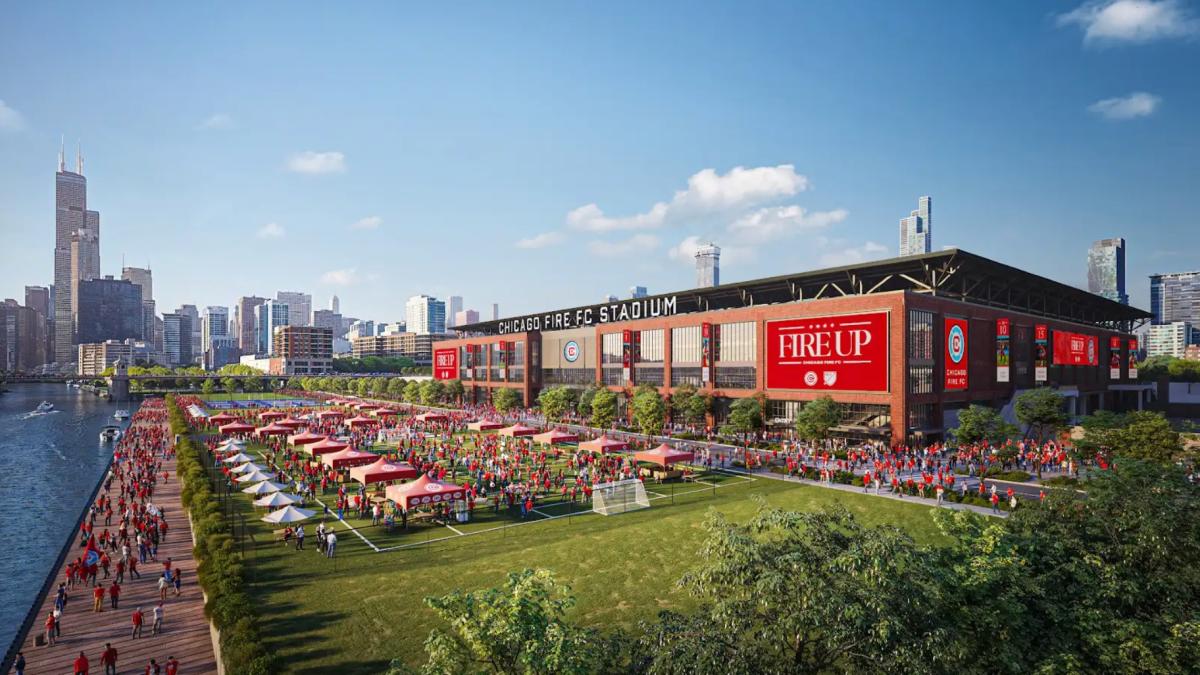 A rendering of the Chicago Fire stadium in the South Loop. (Courtesy Chicago Fire FC)
Efforts to build a 22,000-seat stadium for the Chicago Fire soccer team advanced Monday with a vote by a key city panel to use $425 million from the area’s Tax Increment Financing districts to subsidize the project.
The subsidy will make it possible for the team’s owner — Joe Mansueto, the billionaire founder of financial services firm Morningstar — to build a new $750 million stadium south of the Loop. The soccer club is privately financing the stadium, even though it would not be reachable unless the city agrees to use taxpayer dollars to build the necessary infrastructure.
Ald. Byron Sigcho Lopez (25th Ward) was the only alderperson to vote against both parts of the massive subsidy, while Ald. Bill Conway (34th Ward), Ald. Brian Hopkins (2nd Ward) and Ald. Daniel La Spata (1st Ward) voted against the portion of the subsidy that will be used to build a city-owned parking garage.
A final vote by the full City Council is set for Wednesday.
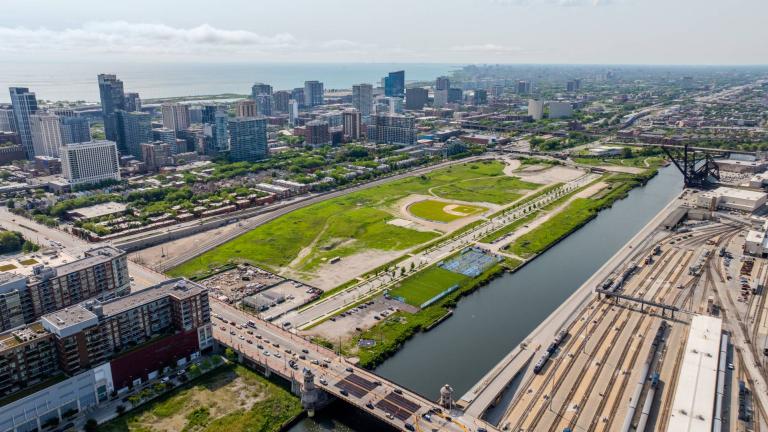
Mayor Brandon Johnson told reporters June 17 he supports the infusion of taxpayer money to help breathe new life into a part of the city along the Chicago River north of Chinatown that has been vacant for 50 years.
“This neighborhood has sat dormant through multiple administrations, I activated it, and the type of impact it’s going to have, not just in the South Loop, but Bronzeville, Chinatown, this is exactly what the people of Chicago elected me to do, was to invest in them, create jobs and opportunities, generate revenue so that we can continue to make those critical investments,” Johnson said.
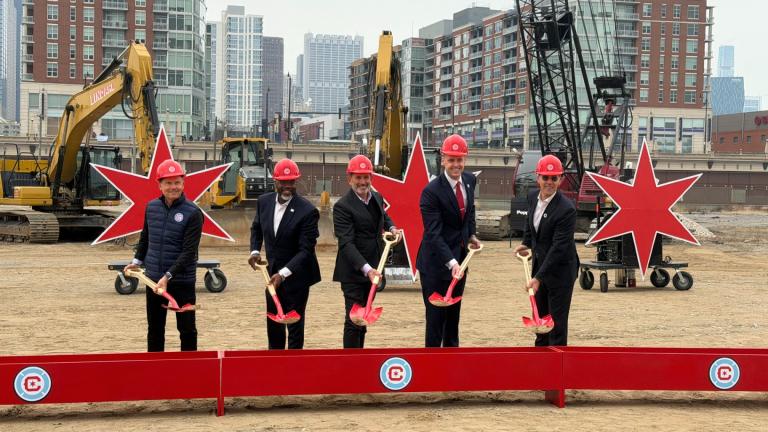
The City Council gave the stadium itself a green light in September, and Johnson celebrated the start of construction in March, indicating the City Council’s approval of the subsidy was a forgone conclusion.
The funds will be used to connect the stadium to the city’s street grid, repair the river wall and improve the Metra tracks that run through the site. The money will also be used to fund a 1,200-space underground parking garage that the Fire will lease on game days, officials said.
A public plaza will be built on top of the garage, and six acres of parkland will be open to the public, according to the plans.
Plans to build a new CTA Red Line station on the southwest corner of 15th and Clark streets have been dropped, records show, drawing the ire of advocates for public transit, who urged the committee to reject the subsidy.
In 2019, the City Council approved a $700 million TIF subsidy to transform the entire 141-acre vacant plot of land into a new Chicago community area, with 10,000 apartments and condominiums as part of a $7 billion project. Because of the subsidy, 20% of those units must be set aside for low- and moderate- income Chicagoans, according to city rules.
Those plans set aside a $450 million subsidy for the part of the land now set to become the Chicago Fire’s new home.
Amid the pandemic, the project dubbed The 78 by Related Midwest never got off the ground, frustrating city officials who wanted to develop one of the last large undeveloped parts of Chicago.
Mansueto told reporters at the groundbreaking that the stadium will serve as the new neighborhood’s anchor, spurring the development of as many as 10,000 new homes.
Tax Increment Financing, or TIF, districts capture all growth in the property tax base in a designated area for 23 years in an effort to spur redevelopment and eradicate blight.
Critics say they have instead exacerbated growing inequality in Chicago.
Conway said he discovered just days before Monday’s hearing that $287 million of the subsidy would come from a TIF district that is mostly located within his ward. The stadium is in the 3rd Ward, represented by Ald. Pat Dowell, the chair of the Finance Committee.
“This is a bad deal,” Conway said, urging his colleagues to reject the plans to build the parking garage and plaza.
No projects within Conway’s ward will be halted if funds the TIF district collected are used for the infrastructure around the under-construction soccer stadium.
Jeff Cohen, a deputy commissioner in the Department of Planning and Development, told alderpeople that the plaza and the parking garage were necessary to make it possible to bridge the 40-foot gap between Roosevelt Road and the stretch of road that connects Wentworth Avenue and Wells Street, where the river was widened to make it possible for its flow to be reversed.
A coalition of community organizations has pressed Johnson, the Fire and Related Midwest to agree to a community benefit agreement designed to blunt the impact of gentrification the stadium will cause.
Johnson has taken no position on that demand, while telling reporters that the project will benefit all Chicagoans by building more affordable homes, improving the city’s transportation system and creating at least 12,000 new construction jobs.
Contact Heather Cherone: @HeatherCherone | (773) 569-1863 | [email protected]