Arts & Entertainment
Approval of New Chicago Fire Stadium at The 78 Has Some Community Members Concerned
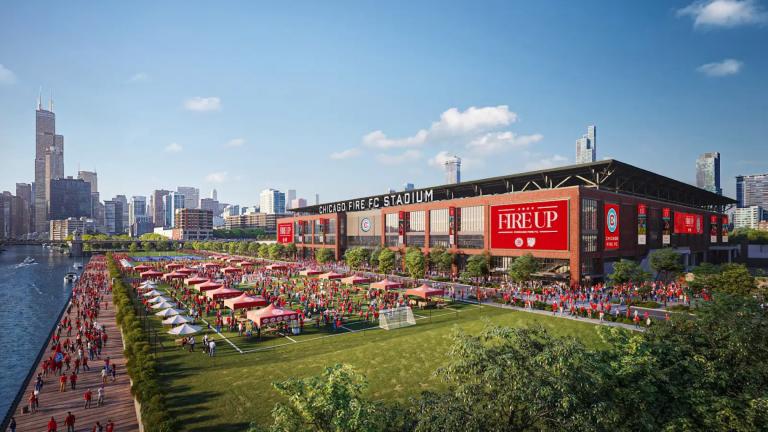
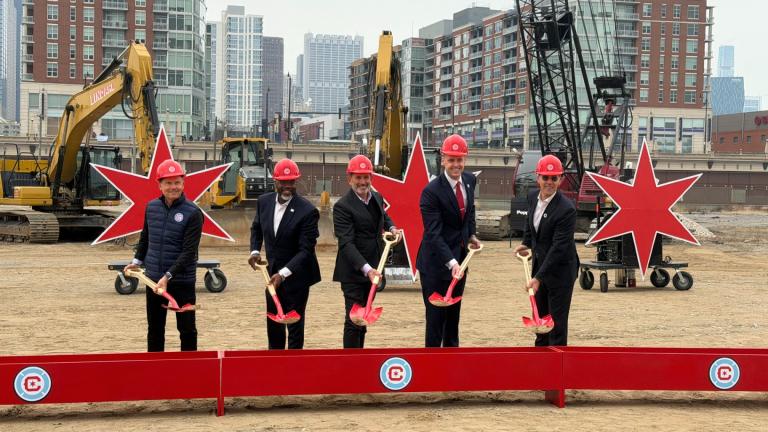
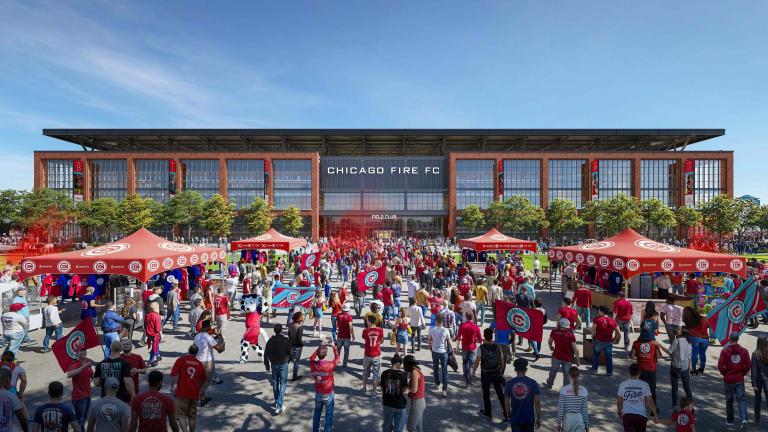
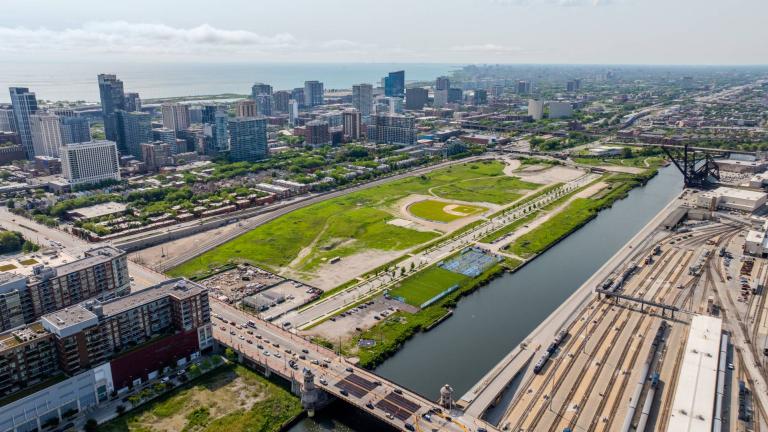
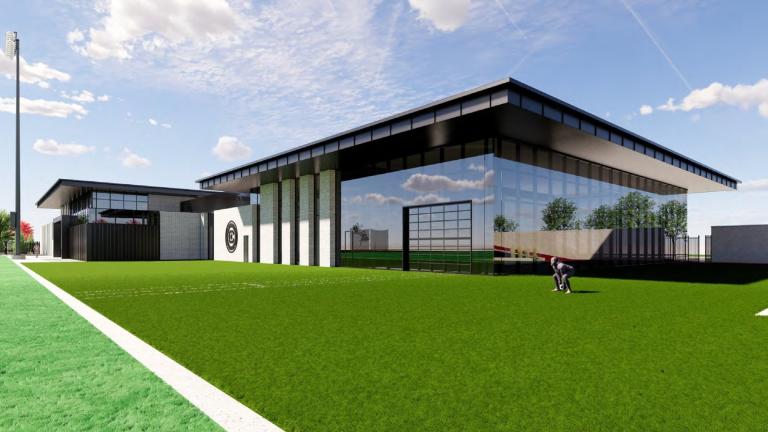
Chicago billionaire Joe Mansueto is offering up $750 million of his own money to build a new Chicago Fire FC stadium at The 78, a 62-acre site in the South Loop. The stadium is set to hold 22,000 fans and is expected to break ground in early 2026 with hopes of it being ready in time for the 2028 season.
The project is being led by Related Midwest, which has owned the rights to develop the land for the past several years. Chicago Fire FC President Dave Baldwin said he was excited about their partnership.
“It is the first time that they (Related Midwest) really had an anchor tenant that is the catalyst that’s been able to move forward,” Baldwin said. “The site hasn’t been developed in five decades. … We’re really excited to be the catalyst; we’re going to bring thousands of jobs to the city.”
Related Midwest and the Fire still need to agree with the city on how much money will come from taxpayers. Although stadium construction will be financed by Mansueto, tax-increment financing, or TIF, funds will still need to be allocated toward infrastructure around the stadium, including walkways and roads.
Read More:
- Chicago Fire Announces ‘Transformative’ Privately Financed $650M Soccer Stadium for The 78
- Chicago Fire Shares First Look at Design of Proposed $650M ‘Fortress’ Planned for The 78 on Chicago River
In a vote last week, the Chicago City Council approved construction. Constantin Carrigan of the 3rd Ward office said the Chicago Fire stadium will be different from other proposed developments on the site.
“Nothing has had as concrete of a vision for this development,” Carrigan said.
The 78 lot was once owned by power broker Tony Rezko and his partner, Iraqi British billionaire Nadhmi Auchi, who was once convicted by a French court of fraud in an oil scandal; his sentence was later suspended. Rezko in 2012 was sentenced to 10 ½ years in prison for corruption.
The 78 had been potentially sought out for Amazon’s second world headquarters, a corporate headquarters for United Airlines, the home of JPMorganChase and a casino that will instead be built in the River West neighborhood. The Chicago White Sox also wanted to use the land for a new stadium.
Despite previous failures to develop at The 78, Ald. Pat Dowell (3rd Ward) and the Chicago Fire remain excited about what the new stadium will mean for the community and Chicago as a whole.
“It brings some investment in an area where we need investment,” Dowell said.
After having several meetings with constituents alongside the Fire’s president, Dowell is excited by the feedback she received.
“Those conversations didn’t end when the City Council approved the amendment,” Dowell said. “Those conversations will continue. I have made a commitment to continue those conversations, and in fact, I have a meeting on Oct. 14 to continue that discussion.”
Baldwin said that since its inception the Chicago Fire Foundation has donated $10 million to underserved communities. He also said roughly 95% of the children the Fire works with through the P.L.A.Y.S. program were children of color living below the poverty line.
“I think the Fire have a really rich history of trying to be a good neighbor in caring about the larger city impact,” Baldwin said.
The southern end of The 78 development sits on 15th Street just north of Chinatown.
A recent joint survey from People Matter, The Lugenia Burns Hope Center and the Coalition for a Better Chinese American Community found that out of 400 residents, a large percentage were not aware of the stadium plans.
Consuela Hendricks, co-president and co-founder of People Matter, found the lack of awareness around the new stadium troubling. She said it raises concerns about community involvement on the stadium project.
“Displacement is one of our bigger issues, and one of the things we want is a racial equity impact assessment done,” Hendricks said. The assessment would show how the project could impact surrounding communities.
Hendricks noted that the population of Black residents in Chicago has decreased by 80% between 1950 and 2017. She also said Pilsen has seen a decrease of the Latiné population between 2000 and 2020, and that she has concerns about gentrification in Chinatown.
In a joint letter to Laura Flores, chair of the Chicago Plan Commission, several local community groups voiced concerns over the impact of the new stadium.
The letter lists gentrification, increased traffic in local communities and the displacement of low-income residents as just some of the community’s concerns. The groups demanded a displacement impact study; that would be conducted by a neutral third party that is agreed upon by a planning development committee that includes residents.
The study would help examine the impact the stadium could have on residents of Chinatown, Pilsen and Bronzeville — with the ultimate goal of mitigating displacement and encouraging more community involvement.
The groups also said stadium construction should include input from Friends of the Chicago River in hopes of including native plants and building a healthy ecological riverfront.
Among the letter’s signers was Ping Tom Advisory Council President Debbie Liu. She has attended various meetings to raise concerns about the surrounding infrastructure being built at The 78 site.
City Council recently passed an ordinance designed to protect South Shore community members from gentrification related to the Obama Presidential Center, something Liu praises as a potential way to curb displacement.
“I do think there are some models worth exploring,” Liu said. “I think some of it just requires capital and political will. … The idea of, like, a community benefits agreement as in like, OK, let’s actually shape what we want this community to look like.”
Despite her concerns, Liu said she believes there is an opportunity for the Chicago Fire to become what she calls a good neighbor.
“I think one way to look at it is: We’re neighbors at the end of the day, and a good neighbor shows up in times of need,” Liu said. “Or you know, helps each other — supports each other, you know, and I think that’s something that I would love the Chicago Fire and Related (Midwest) to embrace.”
The amendment approved in City Hall gave way for the Chicago Fire and Related Midwest to begin on Phase 1 of construction. As for the surrounding infrastructure and the additional phases of construction at The 78, those proposals still need to be approved by the City Plan Commission and City Council.
As for now, Dowell said, “I believe that there has been significant involvement and discussion among community members, which actually helps shape changes in the whole plan. And we will continue to have those conversations.”