Politics
Lawyers Ask Judge to Expand Lawsuit Accusing CPD of Targeting Black, Latino Chicagoans With Traffic Stops to Include All Black, Latino Drivers
 (WTTW News)
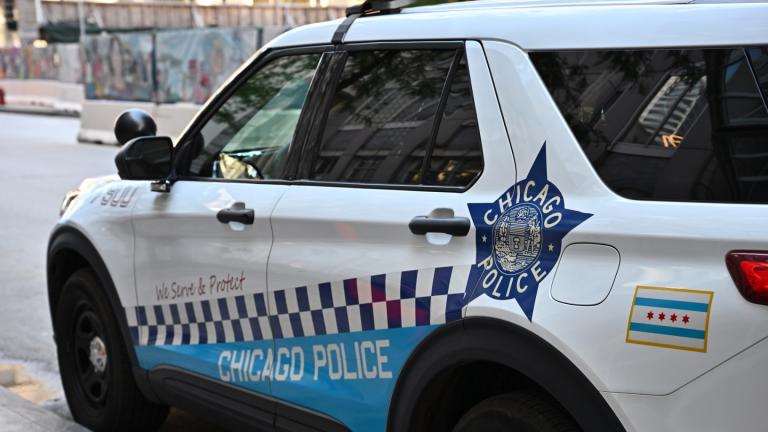
The lawsuit accusing the Chicago Police Department of targeting Black and Latino drivers with a massive campaign of traffic stops should be expanded to include all Black and Latino Chicagoans who have ever been pulled over — or could be in the future, lawyers asked a federal judge in court records filed Tuesday.
Two years ago, the American Civil Liberties Union of Illinois sued the city on behalf of five Black and Latino Chicagoans who had been repeatedly stopped while driving — both before and after they filed suit, calling it the latest chapter in the department’s “long and sordid history” of racist discrimination.
If U.S. District Court Judge Mary Rowland agrees to certify the lawsuit as a class action, it will sharply raise the stakes in the case and increase the pressure on city officials to reach a settlement to reduce the costs to taxpayers.
Rowland has already ruled there is enough evidence that the city intentionally discriminated against Black and Latino drivers because of their race, and that the mass traffic stop program unlawfully burdens Black and Latino drivers disproportionately, for the lawsuit to proceed, court records show.
Chicago taxpayers have already paid $1.46 million to defend the lawsuit that accuses the CPD of making more than 1.5 million traffic stops between 2016 and 2023 based on dubious evidence of minor violations that took direct aim at Black and Latino Chicagoans but spared White Chicagoans, according to records obtained by WTTW News.
“It is alarming to see that the traffic stops I – and other Black and Latino drivers – have experienced were part of an intentional strategy to target the folks who live in neighborhoods like mine in Roseland,” said Eric Wilkins, the lead plaintiff in the case. “It is clear that city leadership has been working for years to flood neighborhoods where mostly Black and Latino people live with pretextual traffic stops.”
The last class-action lawsuit resolved by the city, which alleged Chicagoans’ civil rights were violated when CPD officers stopped and frisked them, ended with a $5 million settlement after an eight-year legal battle.
CPD officers reported making 293,000 traffic stops to state officials in 2024. Officers made as many as 210,622 additional traffic stops last year that they did not report to state officials. A high-ranking Chicago Police Department official told a key city panel last month that officials were working to “fix” the “discrepancy.”
The request to certify the lawsuit as a class action relies on two new studies of CPD’s use of traffic stops that found they disproportionately targeted Black and Latino Chicagoans.
The first study, from Dean Knox, the co-leader of the Research on Policing Reform and Accountability research group at Princeton University, found that Black and Latino drivers are stopped at approximately twice the rate of White drivers for moving violations. CPD stops Black drivers at about 3-3.5 times the rate of White drivers for non-moving violations citywide and also stops Black drivers disproportionately for non-moving violations in neighborhoods with predominantly White residents, according to Knox’s analysis.
In addition, CPD officers are more likely to search Black and Latino drivers and their cars, even though they are more likely to find contraband when they search White drivers, according to Knox’s analysis.
Chris Burbank, of the Center for Policing Equity and a former chief of the Salt Lake City Police Department, said he found evidence that official CPD policy “involves flooding areas where most residents are Black and Latino with pretextual traffic stops and maintaining activity goals or quotas demanding that officers make and report more traffic stops.”
CPD’s draft traffic stop policy defines pretextual traffic stops as those based on minor registration or equipment violations that are designed to find evidence of “unrelated” crimes.
A spokesperson for the city’s Law Department declined to comment on the request to certify the case as a class action when contacted by WTTW News, citing the city’s policy of not discussing pending litigation.
Traffic stops have been a flashpoint in the half-dozen serious efforts to reform the Chicago Police Department, since they put officers in close contact with Chicagoans, often under tense circumstances.
The number of traffic stops conducted by Chicago police officers surged 600% between 2015 and 2022, after department officials agreed to curtail the use of stop-and-frisk as part of an agreement with the ACLU after the civil rights organization released a report in March 2015 that found officers stopped Black Chicagoans at a far higher rate than Latino or White Chicagoans.
The lawsuit cites a June 2023 report by the team overseeing court-ordered reforms of the Chicago Police Department that found evidence to suggest a direct correlation between the significant increase in the rate of reported traffic stops by police officers and a nearly equal drop in the number of pedestrian stops.
The ACLU contends that the Chicago Police Department has simply used traffic stops to replace stop-and-frisk when that policy fell into disrepute and was curtailed.
WTTW News coverage of policing and police reform is supported by The Joyce Foundation.
Contact Heather Cherone: @HeatherCherone | (773) 569-1863 | [email protected]