Crime & Law
Ex-Top Cop Snelling Must Answer Questions Under Oath About Traffic Stops, Federal Judge Rules
 (Capitol News Illinois)
Former Chicago Police Supt. Larry Snelling must answer questions under oath about whether the Chicago Police Department targeted Black and Latino drivers with a massive campaign of traffic stops, a federal judge ruled Wednesday.
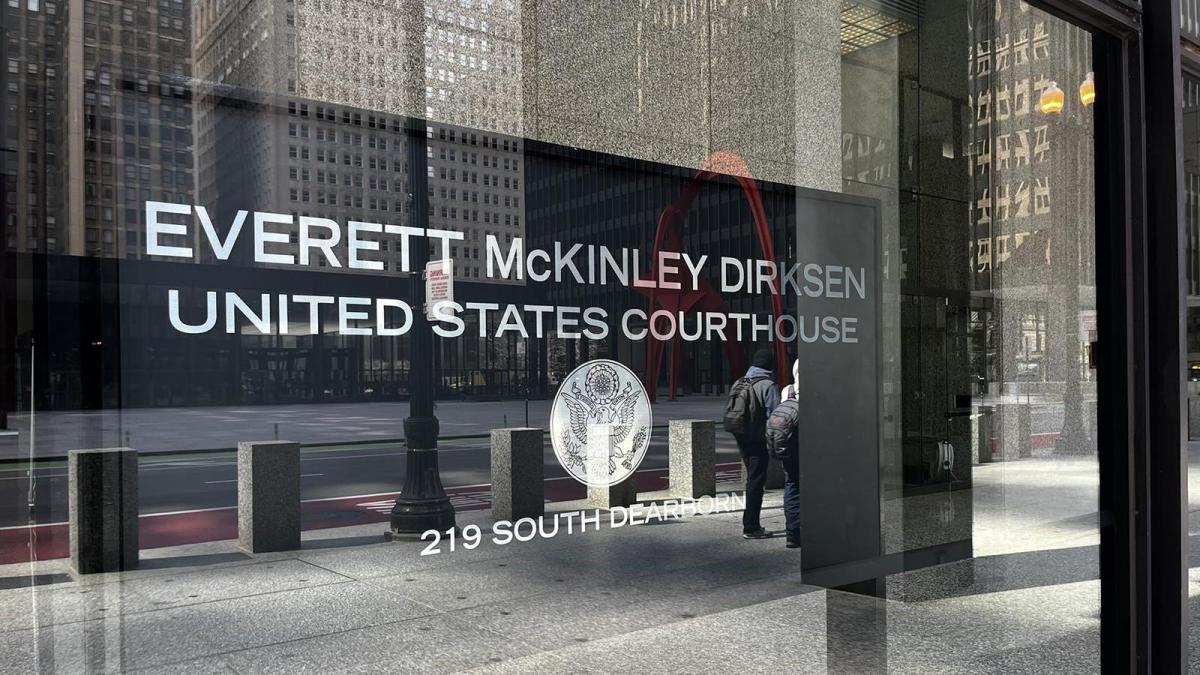
U.S. District Court Judge Mary Rowland rejected efforts by lawyers for the city to significantly curtail the duration of Snelling’s deposition and prevent lawyers for the five Black and Latino Chicagoans who had been repeatedly stopped while driving — both before and after they filed suit — from asking about Snelling’s handling of traffic stops while he served as commander of the Englewood (7th) Police District.
Three years ago, the American Civil Liberties Union of Illinois sued the city, calling CPD’s use of traffic stops the latest chapter in the department’s “long and sordid history” of racist discrimination.
Lawyers for the Chicagoans suing the city have asked Rowland to expand the lawsuit to include all Black and Latino Chicagoans who have ever been pulled over — or could be in the future. Rowland has yet to rule on that motion, but has already decided there is enough evidence that the city intentionally discriminated against Black and Latino drivers because of their race, and that the mass traffic stop program unlawfully burdens Black and Latino drivers disproportionately, court records show.
Federal court rules allow high-ranking corporate executives and government officials to avoid being forced to testify unless a judge determines they possess unique information or knowledge that cannot be obtained from other sources or employees.
Before Snelling retired on July 15, city lawyers asked Rowland to prevent him from being deposed, citing his busy work schedule and the ability of other members of his command staff to answer relevant questions about the department’s use of traffic stops.
After Snelling stepped down as the city’s top cop, city lawyers dropped that effort, acknowledging that the newly retired superintendent’s schedule was no longer packed. However, they asked Rowland to limit Snelling’s deposition to no more than three hours, rather than the seven hours requested, and restrict questions to his time as superintendent.
While Rowland limited Snelling’s deposition — which she said she expected to be “contentious” — to no more than six hours, she declined to place any restriction on the questions opposing lawyers can ask because he is no longer CPD superintendent.
“He has lost that protection,” Rowland said during a Wednesday morning hearing, ordering that Snelling’s deposition take place before the end of August.
Rowland said lawyers for the five Chicagoans suing the city had obtained documents that appeared to raise questions about whether Snelling ordered the officers under his command before he became superintendent to make a certain number of traffic stops.
State law bans law enforcement agencies from requiring officers to make a certain number of traffic stops. The department does not “utilize quotas” for traffic stops, according to a CPD spokesperson.
Rowland also ordered lawyers for the city to provide nearly 11,000 emails and text messages sent to and received by Snelling to the plaintiffs as soon as possible.
Lawyers for the plaintiffs also want to ask Snelling about his responses during an April 25, 2025, news conference to questions from WTTW News.
Initially, lawyers for the plaintiffs also sought to force Mayor Brandon Johnson, former Mayor Lori Lightfoot and former Mayor Rahm Emanuel, as well as their top public safety advisors, to be deposed, but dropped that demand after they agreed to testify in writing to a negotiated set of facts.
It is unusual for high-ranking former and current officials to be deposed in ongoing litigation, since their sworn testimony could expose the city to greater liability.
In August 2025, city lawyers agreed to pay $875,000 to resolve a lawsuit filed by 25 Chicagoans who each said they were brutalized by Chicago police officers during protests during the summer of 2020 triggered by the police murder of George Floyd. That settlement came one day before Lightfoot and Snelling were set to testify under oath in a deposition, court records show.
The settlement prevented former Chicago Police Supt. David Brown from being forced to testify in a deposition, according to court records.
Traffic Stops At Issue
Through August 2025, Chicago taxpayers have already paid $1.46 million to defend the lawsuit that accuses the CPD of making more than 1.5 million traffic stops between 2016 and 2023 based on dubious evidence of minor violations that took direct aim at Black and Latino Chicagoans but spared White Chicagoans, according to records obtained by WTTW News.
A request for an updated accounting is pending.
CPD officials reported making 224,846 traffic stops to state officials in 2025, as well as 267,240 additional traffic stops they did not report to state officials. A high-ranking Chicago Police Department official told alderpeople nearly a year ago that officials were working to “fix” the “discrepancy.”
It will be up to the next superintendent to finalize a new policy governing traffic stops, which have long been a flashpoint in the half-dozen serious efforts to reform CPD, since they put officers in close contact with Chicagoans, often under tense circumstances.
Officer Enrique Martinez was killed during a traffic stop in November, and Officer Ella French was killed during a traffic stop in August 2021.
During a March 2024 traffic stop, four officers fired 96 shots in 41 seconds at Dexter Reed, hitting him 13 times, shortly after he shot and wounded an officer, according to a preliminary investigation by the Civilian Office of Police Accountability. Reed had been stopped on suspicion for failing to wear a seat belt, according to COPA’s preliminary investigation.
After Reed’s killing more than two years ago, Snelling agreed to expand the consent decree to include traffic stops.
CPD leaders, city officials and the attorney general’s office have been negotiating behind closed doors for more than a year over whether CPD officers should be banned from making traffic stops based on minor registration or equipment violations that are designed to find evidence of “unrelated” crimes.
Snelling said in April 2025 that police officers must be allowed to continue stopping drivers for improper or expired registration plates or stickers and headlight, taillight and license plate light offenses to ensure that Chicago’s streets do not become more “dangerous for everyone who are driving.”
CPD’s policy acknowledges those stops are designed to find evidence of “unrelated” crimes.
However, the Community Commission for Public Safety and Accountability endorsed a policy in April 2025 to ban those stops in most cases, finding they “do more harm than good.”
No public progress on finalizing that policy has been announced.
WTTW News coverage of policing and police reform is supported by The Joyce Foundation.
Contact Heather Cherone: @HeatherCherone | (773) 569-1863 | [email protected]