Politics
Federal Judge Upholds Chicago, Cook County and Illinois Protections for Undocumented Immigrants, Tosses Trump Lawsuit
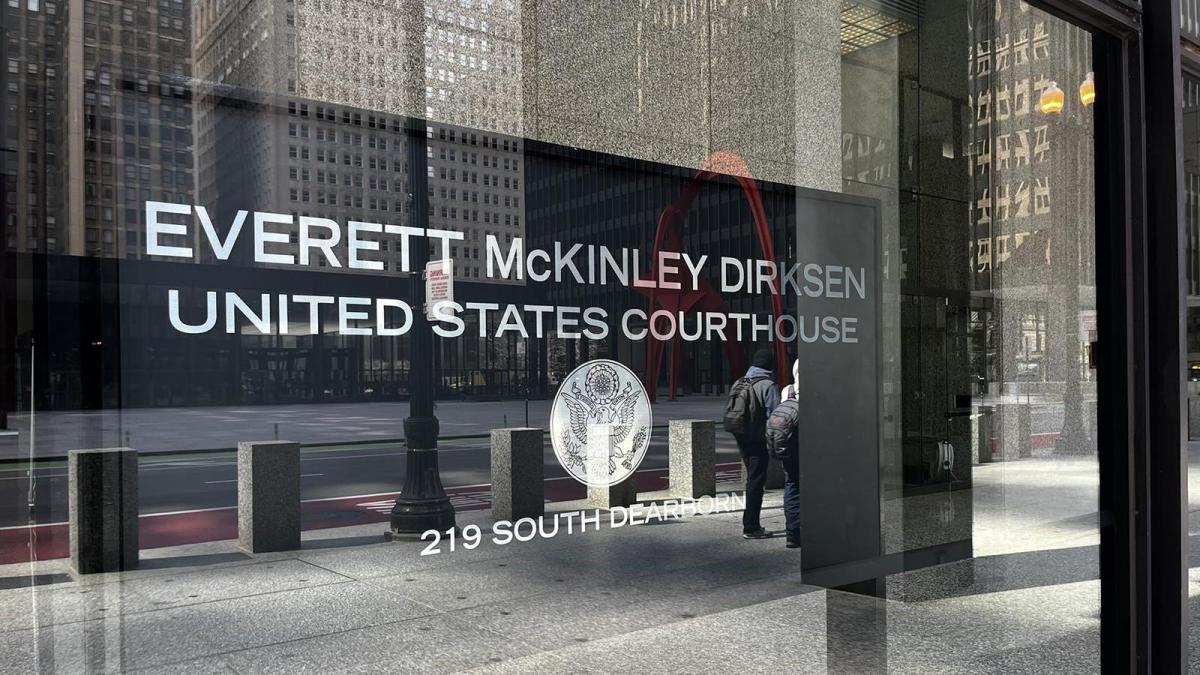 (Capitol News Illinois)
A federal judge refused Friday to invalidate the state, city and county laws designed to protect undocumented immigrants in Chicago by prohibiting local law enforcement officials from helping federal agents, tossing a lawsuit filed by President Donald Trump.
U.S. District Court Judge Lindsay Jenkins’ decision to grant Chicago Mayor Brandon Johnson and Illinois Gov. JB Pritzker’s request to dismiss the lawsuit filed by the Department of Justice without holding a full trial is a major win for officials seeking to prevent federal officials from slashing billions of dollars in federal aid to Chicago and Illinois.
Forcing Chicago and Illinois law enforcement officials to help federal agents conduct deportation operations is unconstitutional, Jenkins ruled.
“It would allow the federal government to commandeer States under the guise of intergovernmental immunity — the exact type of direct regulation of states barred by the Tenth Amendment,” Jenkins wrote.
The Trump administration’s lawsuit, filed in February, argued that the city’s Welcoming City ordinance and the Illinois Trust Act reflects “an intentional effort to obstruct the Federal Government’s enforcement of federal immigration law and to impede consultation and communication between federal, state, and local law enforcement officials that is necessary for federal officials to carry out federal immigration law and keep Americans safe.”
The suit also named Cook County.
A spokesperson for Johnson said he was pleased with the decision.
“This ruling affirms what we have long known: that Chicago’s Welcoming City Ordinance is lawful and supports public safety,” according to a statement. “The city cannot be compelled to cooperate with the Trump Administration’s reckless and inhumane immigration agenda. The city is safer when local law enforcement can focus on the needs of Chicagoans.”
Pritzker said on social media that Illinois “Illinois just beat the Trump Administration in federal court.”
“Unlike the President, we follow the law and listen to the courts,” Pritzker said.
The American Civil Liberties Union of Illinois celebrated the decision.
“We are pleased that the Court recognized that the Trump Administration cannot bully local communities into participating in their misguided immigration policies,” Ed Yohnka of the ACLU of Illinois said.
One of the first acts by President Donald Trump after taking office was to issue an executive order stripping self-proclaimed sanctuary cities of all federal funding. It is unclear what impact that order will have on the budgets of the city, county and state.
The Trump administration, which is likely to appeal, is working to implement the largest mass deportation in American history.
Johnson and Pritzker have repeatedly said Chicago and Illinois will continue to prohibit local and state law enforcement agents from helping Immigration and Customs Enforcement agents deport undocumented residents unless they have been convicted of a crime.
Johnson has previously blasted Trump’s efforts to deport undocumented immigrants as “unconscionable and abhorrent.”
Chicago’s Welcoming City ordinance is designed to ensure that all Chicago residents, regardless of their citizenship or immigration status, can obtain city services, including police protection and medical care.
One of the first things Trump did when he took office for the first time in January 2017 was to sign an executive order that sought to revoke millions of dollars in public safety grants to cities like Chicago, which has been a self-proclaimed sanctuary city since 1985.
The city’s Welcoming City ordinance, first approved in 2006, ratified an executive order issued by former Mayor Harold Washington. That ordinance has been amended twice, most recently in 2021 to ban Chicago police officials from cooperating with federal immigration agents in all cases.
Lawyers for Chicago defended the city’s status as a sanctuary city in court, ultimately winning a total victory that was upheld by the U.S. Supreme Court in 2020.
In 1997, the U.S. Supreme Court ruled that federal officials may not “impress into its service — and at no cost to itself — the police officers of the 50 States,” according to Illinois Attorney General Kwame Raoul.
Contact Heather Cherone: @HeatherCherone | (773) 569-1863 | [email protected]