Science & Nature
Chicago Has a New Botanic Garden: It’s the Lincoln Park Zoo
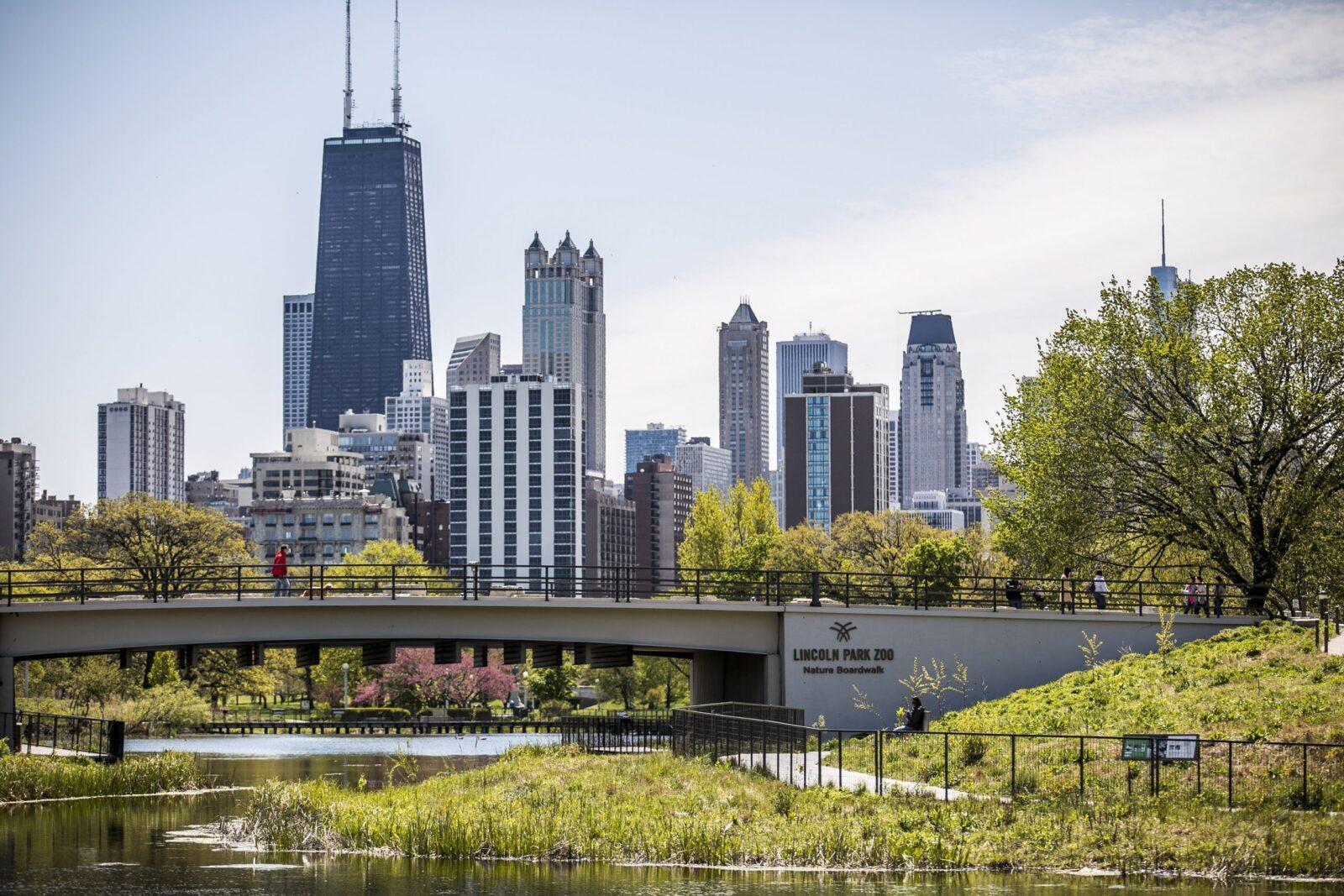 Lincoln Park Zoo's Nature Boardwalk has 14 acres of native plants, which helped contribute to the botanic garden accreditation. (Courtesy Lincoln Park Zoo)
One day, Lincoln Park Zoo may be as known for its hibiscus collection as its pride of lions.
That’s what the zoo’s horticulture staff is aiming for, at any rate.
Over the past decade, the zoo has been increasing its profile as a caretaker of plants and trees as much as animals, and it now has official accreditation as a botanic garden to show for it.
The new recognition, announced Tuesday, comes from Botanic Gardens Conservation International and acknowledges the zoo’s commitment to plant diversity, conservation and sustainability.
That makes the zoo a triple threat — an accredited zoo, arboretum and botanic garden.
Between indoor and outdoor vegetation, the zoo is home to some 300 species of plants and trees, ranging from expansive native plantings in the 14-acre Nature Boardwalk to tropical exotics used in animal exhibits, according to Katrina Quint, the zoo’s director of horticulture.
The plantings go well beyond traditional notions of “landscaping,” said Quint, who joined the zoo in early 2020, coming over from Morton Arboretum.
“The zoo’s really looking at creating a nature-based place for wildlife and creating natural habitat for species in our care,” she said.
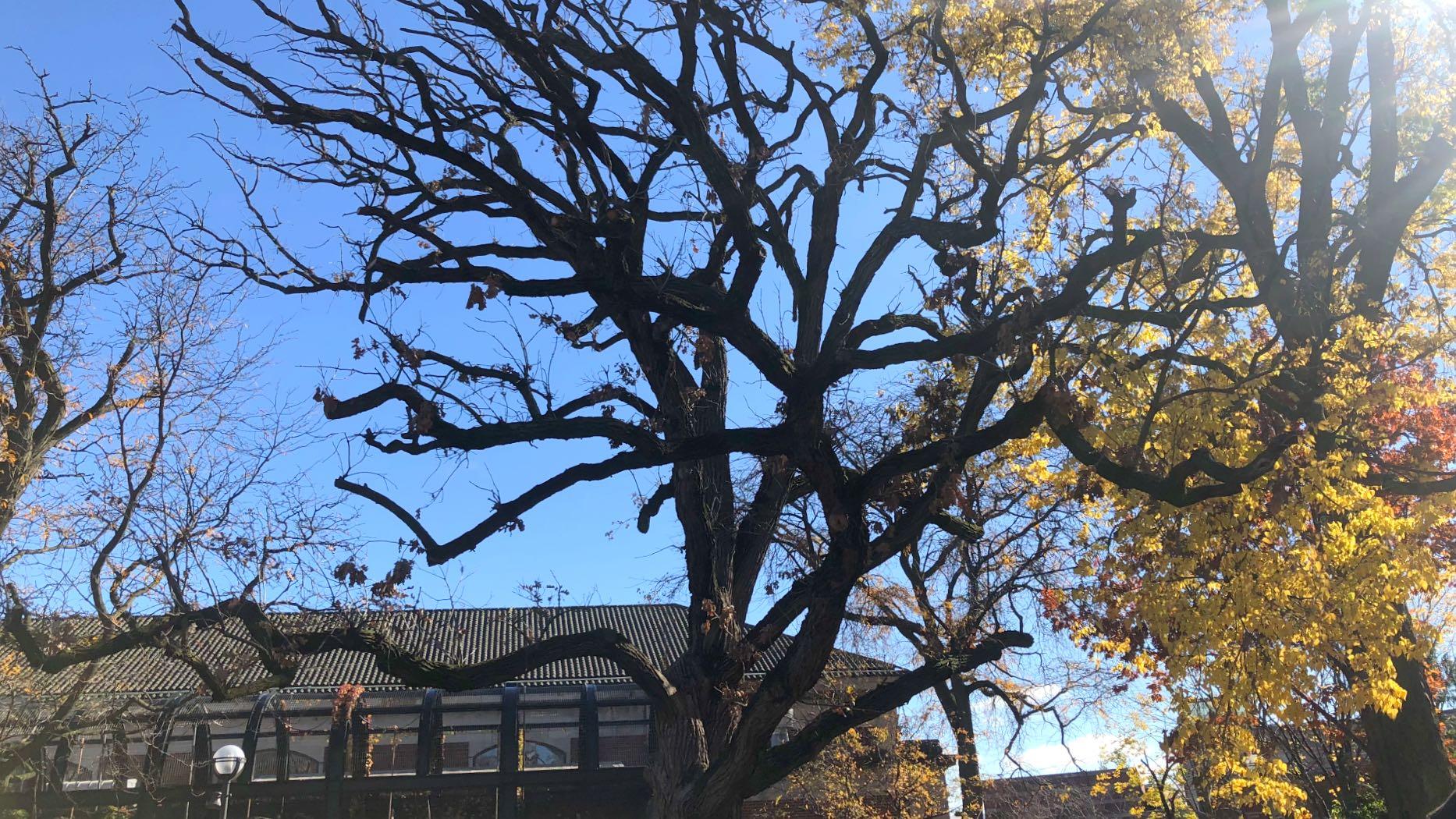 This 180-year-old bur oak drew visitors to the zoo before it was removed in 2023. (Patty Wetli / WTTW News)
The rate at which the planet is losing flora is “astronomical,” Quint said, and yet threatened and endangered plants receive far less attention than their animal counterparts.
The zoo is in a unique position to elevate the visibility of plants by building on the strong affinity humans have for animals, demonstrating how dependent animals are on plants for habitat and food.
“It’s all so interconnected,” Quint said.
Last year, she witnessed first-hand just how powerful a role the zoo can play in raising awareness of plants when it was announced that one of the zoo’s aged bur oaks — a tree older than the zoo itself — was slated for removal.
“I was stopped daily by people asking, ‘Where is it?’” Quint recalled. “People came to pay their respects.” (Originally estimated at 250-300 years old, the oak turned out to be 180 but, in a surprise twist, was actually two trees that had grown together, possibly from a pair of acorns that germinated at the same time, Quint said.)
While it was sad to lose the stately oak, it was also inspiring, she said, to see one of zoo’s trees treated like an individual, attracting visitors same as the animals in residence.
“It did bring us (horticulture) to the forefront,” Quint said.
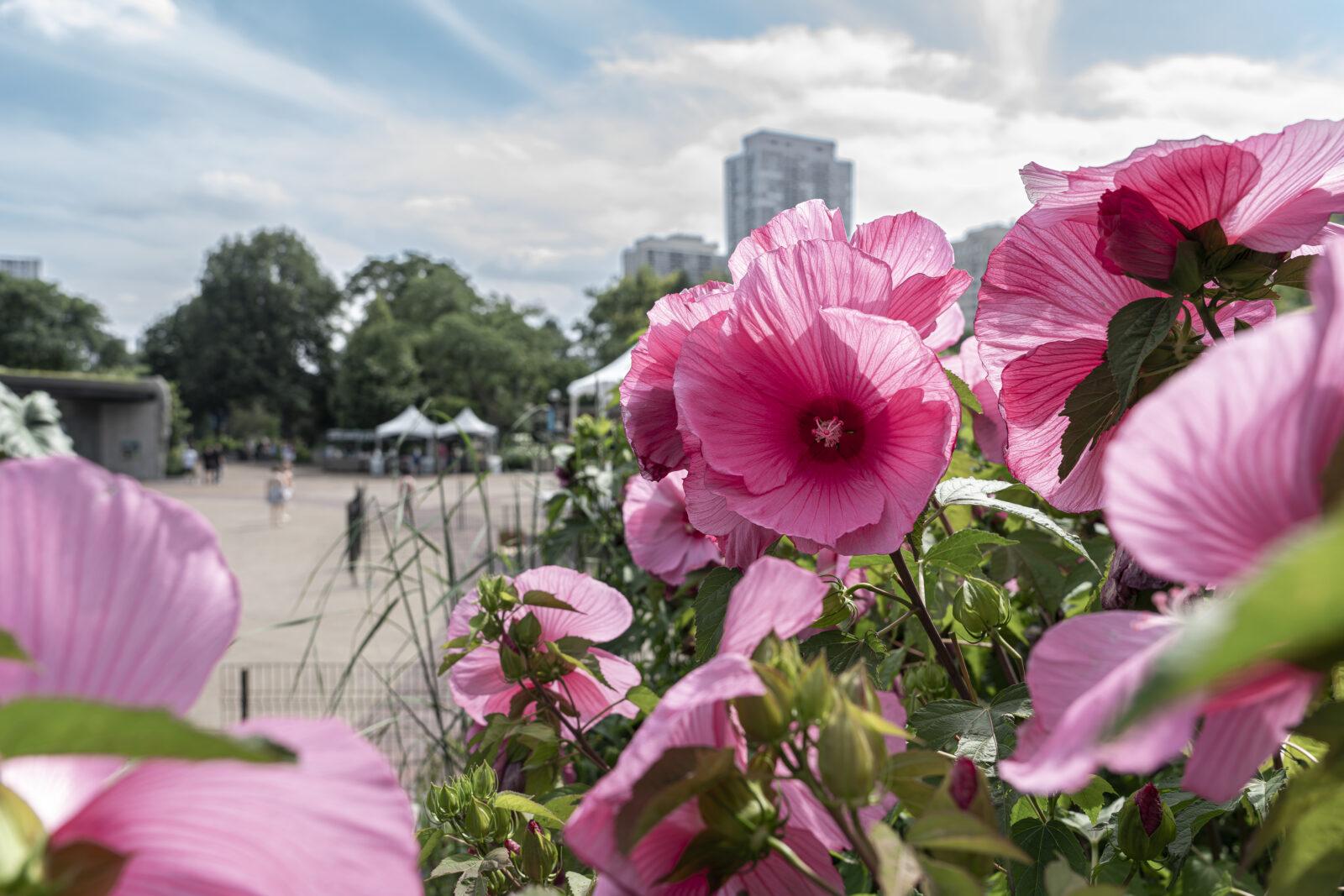 One of the more than 90 varieties of hibiscus at Lincoln Park Zoo. (Courtesy Lincoln Park Zoo)
As part of its bid for botanic garden status, Lincoln Park Zoo’s horticulture staff began creating a plant database in 2017, meaning there’s now a record for every planting within the zoo’s 50 acres.
The process called for a full zoo inventory, which will be repeated every three years.
For plants put in the ground from 2017 moving forward, there will be data collected on every significant “life event,” Quint said, which could range from storm damage to pruning to disease.
As helpful as this information will be to horticulture staff, it’s also a bonus for visitors, who can search the database and locate specific plants on the grounds. There are even suggested plant “tours,” including one of the zoo’s unique hibiscus collection — the only accredited perennial herbaceous hibiscus collection in the country.
People tend to think of hibiscus as a tropical plant, but four species are native to the U.S. — two of them to Chicago — and all of the zoo’s 90-plus varieties are hybrids of those four, Quint said.
Someday, she’d like to have the staff and space for the zoo to hybridize its own hibiscus varieties. And she’s looking forward to moving into more plant-based science and conservation projects.
“Over time, we will get there,” Quint said.
Chicago Set To Host Botanic-palooza
Chicago, the city in a garden, is about to become a global botanic hub.
Botanic Gardens Conservation International announced Wednesday that Morton Arboretum and the Chicago Botanic Garden have been selected to host the 9th Global Botanic Gardens Congress in summer 2027.
The Congress — the only global conference dedicated to botanic gardens — is held every three to four years. It hasn't take place in North America in 27 years.
The theme is expected to focus on the role botanic gardens play in habitat restoration in the wild, as well as in urban environments.
Contact Patty Wetli: @pattywetli | (773) 509-5623 | [email protected]