Health
Chicago-Area Mothers Struggle to Find Care as Labor and Delivery Units End Services
Chicago-area maternity services are becoming fewer and farther between.
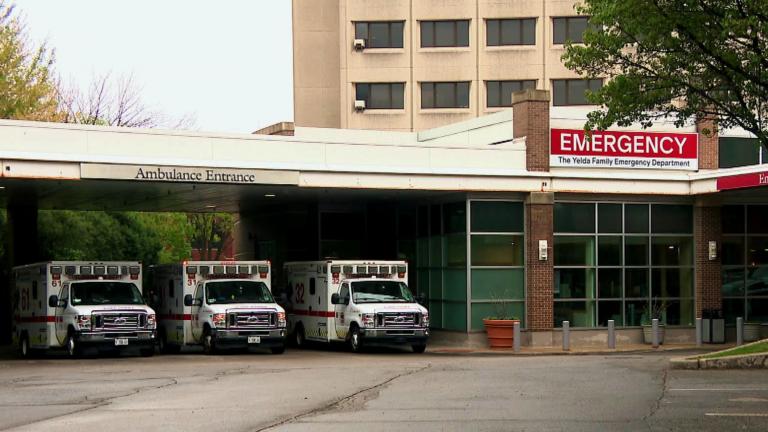
On Saturday, the maternity ward at Roseland Community Hospital, a safety-net hospital on Chicago’s Far South Side, shut its doors.
It comes just weeks after Prime Healthcare cut obstetrics care at Saint Joseph Medical Center in Joliet, Mercy Medical Center in Aurora and Resurrection Medical Center on Chicago’s North Side — making Roseland the fourth Chicago-area hospital to suspend labor and delivery services in just 30 days.
Dr. Joy West, the now former chair of the Department of OB/GYN at Roseland Community Hospital, said the news came as a shock to the community.
“We had known for a while that our volume was decreasing, but we didn’t think that it would happen so suddenly,” West said. “We were devastated. We’re still devastated.”
In a statement to WTTW News, Timothy Egan, president and CEO of Roseland Community Hospital wrote, in part, “Roseland Hospital’s Administration has fought a battle every day for 14 years to keep Labor & Delivery open in spite of tremendous odds. Suspending Labor & Delivery is not a decision Roseland Hospital’s Administration made by choice. It is the result of decades of historical underfunding of safety-net hospitals that have made it impossible to sustain services that this community depends on and deserves.”
Aside from federal funding cuts, Egan also attributed the decision to declining national birth rates.
West, who has worked at Roseland for 24 years, said this closure is just the latest in an ongoing national pattern.
“This is not an isolated incident,” West said. “Hospital labor and delivery units are closing across the country, and so the financial burden of maintaining L&D units falls not just on the hospital. It really is systems that create a devaluation of moms.”
According to the U.S. Centers for Disease Control and Prevention, Illinois lost 32 obstetric hospitals between 2016 and 2023.
Roseland is not the only safety-net hospital impacted by federal funding cuts. West Suburban Medical Center and Weiss Hospital closed their doors this year, further adding to growing concerns about healthcare deserts.
These closures are particularly concerning for the large number of Illinoisans who are set to lose health insurance coverage next year due to Medicaid work requirements.
Many patients at safety-net hospitals rely on being able to walk or take public transportation to receive medical care. Now, the closest hospital to Roseland that offers full maternal care is Trinity Hospital, which is more than four miles away and is set to close its obstetrics unit in 2027.
“Patients are gonna have to travel (a) longer distance, they’re gonna have to bear the burden of getting from communities where they’re already challenged with transportation issues, income issues,” West said. “And we know that maternal and fetal outcomes are poorer when patients have to travel far from home.”
According to a 2025 report from the Illinois Department of Public Health, Black women in Illinois are more than twice as likely to die from any pregnancy-related condition and three times as likely to die from pregnancy-related medical conditions than White women. The report also concluded that 91% of pregnancy-related deaths were potentially preventable.
West said she is concerned that these numbers could worsen, as Roseland and other newly closed labor and delivery units serve a high population of Black women.
“When you have communities that are already dealing with persistently high morbidity and mortality rates and you remove access to maternal healthcare, outcomes are gonna be poor,” West said. “It’s like removing a fire station from a community that has lots of fires.”
For hospitals without a labor and delivery unit, emergency room staff are expected to handle pregnancy-related emergencies. In most cases, patients will eventually be transferred to other hospitals to be fully treated once they are stabilized.
West and other staff members at Roseland are calling for state and local lawmakers to do more to ensure that more labor and delivery units do not close in the future.
“It means caring for and placing value on the most vulnerable women in the community,” West said. “It means taking time to look at the systems that are in place that are not working, that lead to these sorts of closure. It means simply putting our money where our values are, and that’s in the lives of women and babies.”