Arts & Entertainment
Manual Cinema’s ‘Frankenstein’ Comes to Life With Music, Puppetry and Cinematic Creations
For the last 200 years, Mary Shelley’s “Frankenstein” — and all of the novel’s subsequent adaptations — has resonated with vast audiences. Now, Shelley’s own life story gets to be front and center alongside the monster of a story she created.
The Emmy Award-winning, Chicago-based production company Manual Cinema brought its reimagining of the classic tale back to the Studebaker Theater just in time for spooky season. Combining the elements Manual Cinema is known for, the stage production melds shadow puppetry, hand puppets, live sound effects, live music and cinematic techniques that lend themselves to the company’s name — cinema by hand.
“It’s a marriage of process and product that unfolds in front of you,” said Drew Dir, co-creative director of the collective.
When watching the show, viewers can choose which aspect of the creation to focus on. The final product lives on a large movie theater screen above the stage while just below, in full view, there are puppeteers, musicians and performers making the work.
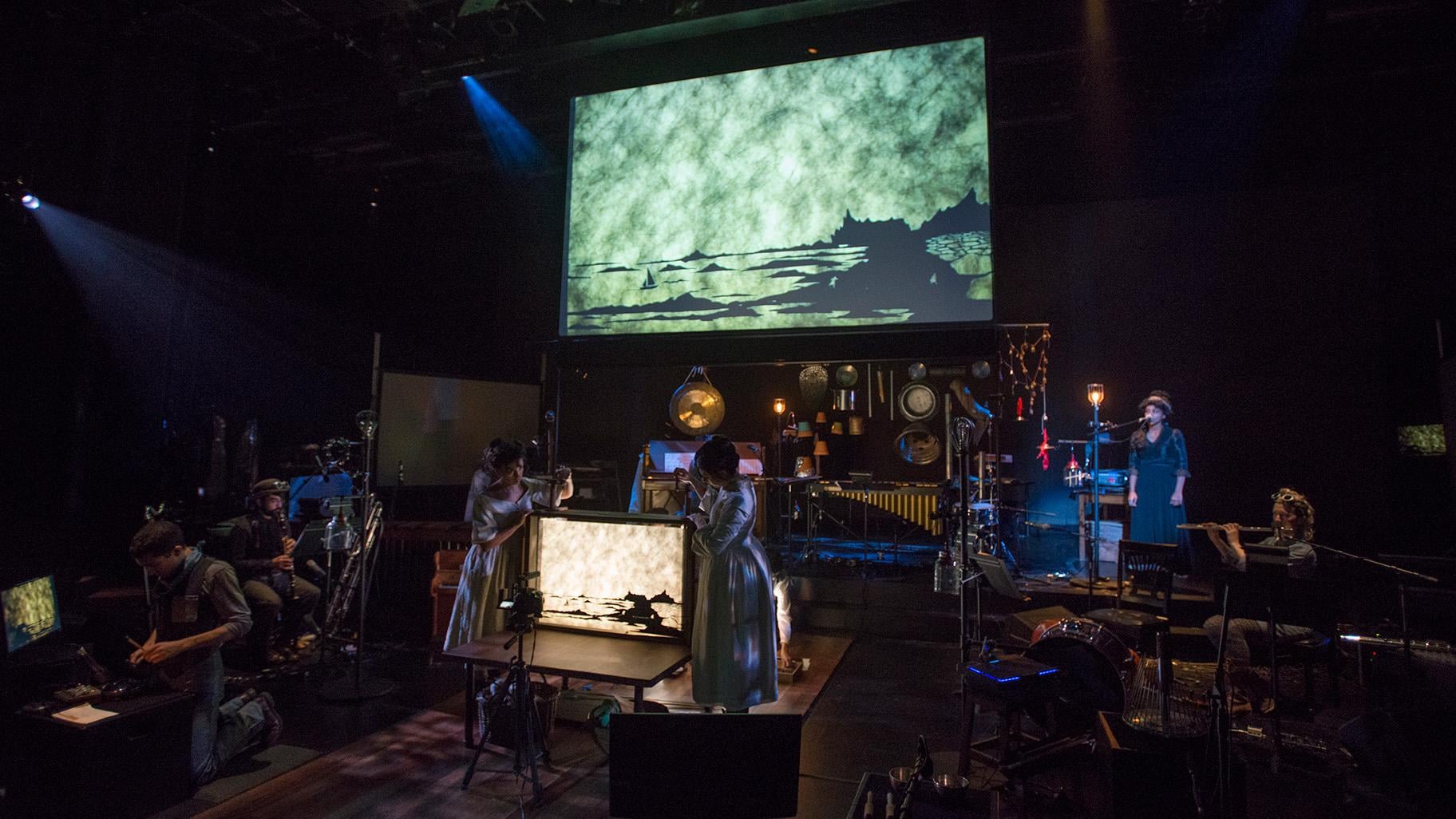 Manual Cinema’s “Frankenstein.” (Michael Brosilow)
It’s an homage to the centuries-old story that continues to captivate audiences.
“‘Frankenstein’ continues to have a lot of symbolic power in our culture,” Dir said. “Humankind has created lots of technologies that it has lost control of. Right now we’re developing a new kind of technology: artificial intelligence. Since the 19th century, at whatever historical epoch you’re in, readers have found residence in Mary Shelley’s ‘Frankenstein,’ and it felt like it spoke to their time.”
Manual Cinema wanted to give voice to the author behind the classic tale, emphasizing its themes of the horrors and beauty of creation — something Shelley was intimately familiar with. “Frankenstein” was written while Shelley was grieving her daughter, Clara, who died in infancy. Shelley’s mother, Mary Wollstonecraft, died 10 days after Shelley was born.
While points about birth and motherhood are clear in the original novel, most of the characters are male. All of the characters in Manual Cinema’s version, however, are portrayed by women. Sarah Fornace, co-artistic director of the company, plays Mary Shelley and later transforms into Victor Frankenstein.
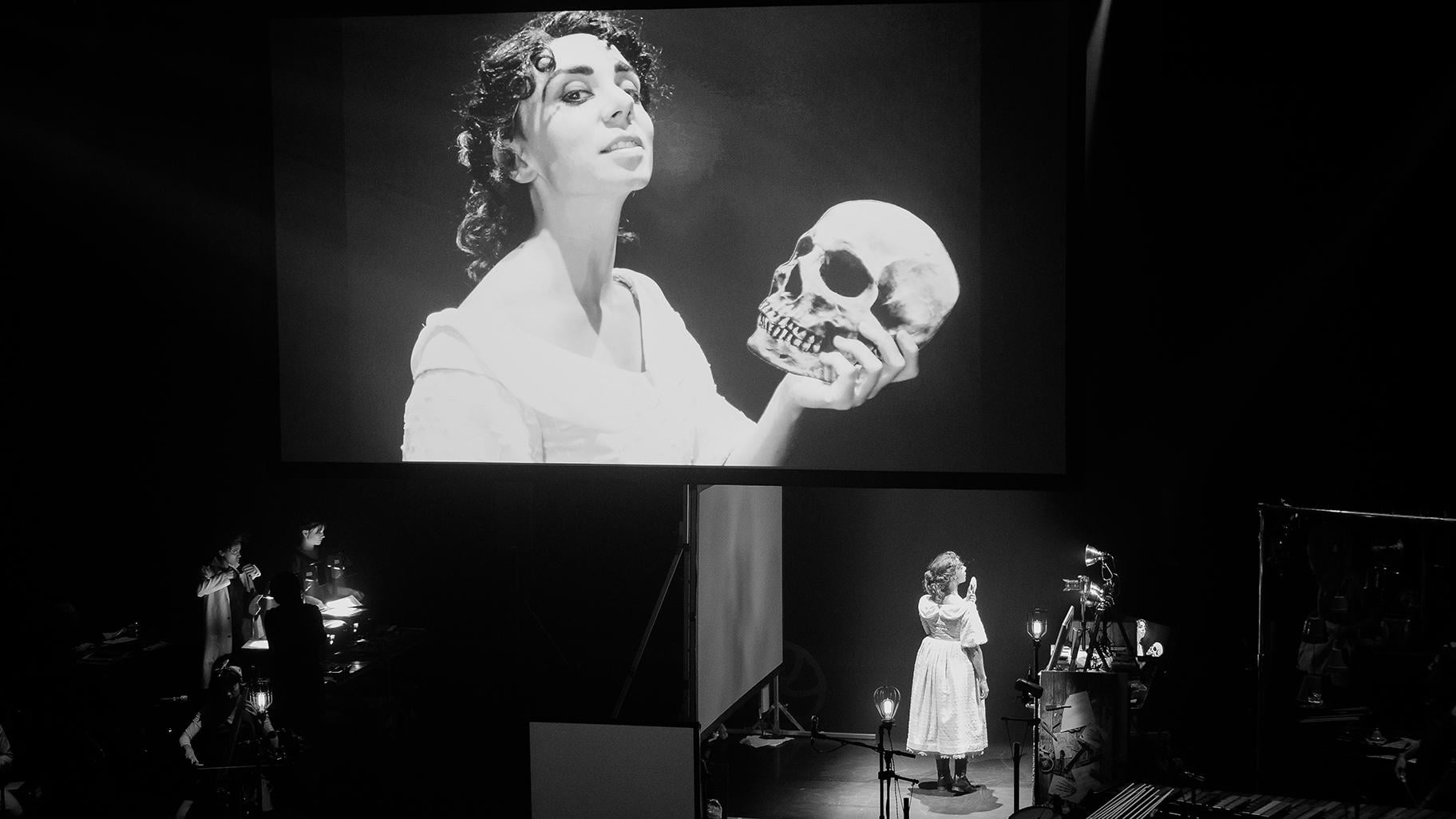 Sarah Fornace as Mary Shelley in Manual Cinema’s “Frankenstein.” (Tiffany Bessire)
“This is a pretty unique show for me,” said Fornace, who remarked that the show first premiered before the COVID-19 pandemic and before she had children. “I’ve been pregnant, breastfeeding and postpartum all while doing this production, so for me it’s also very tied into motherhood and the act of creating life and also the responsibilities of bringing them into society.”
Frankenstein’s creature in the show begins its life and consciousness the size of a human baby, adding to the symbology.
“Frankenstein” ends its Chicago run Sunday. Manual Cinema will return to the Studebaker for the company’s rendition of “A Christmas Carol” in December.
WTTW News arts coverage is supported by the JCS Arts, Health & Education Fund of the DuPage Foundation.