Politics
As Primary Season Wraps Up, Left-Wing and Establishment Candidates Vie for Control of the Democratic Party
Democrats remain mixed over what ideological direction the party should take. But across a series of closely watched primaries, they are sending a clearer message about the party’s path forward: They want change.
In marquee Senate primaries in Michigan and Minnesota, progressive candidates defeated two members of Congress with significant backing from party leaders. Wisconsin voters narrowly rejected a democratic socialist and chose David Crowley, a 40-year-old county executive who is seeking to become the state’s first Black governor.
The results so far this month deliver no clear ideological mandate. Instead, they add to mounting evidence from this year’s primaries of a Democratic appetite for turnover that is cutting across the party’s traditional divisions.
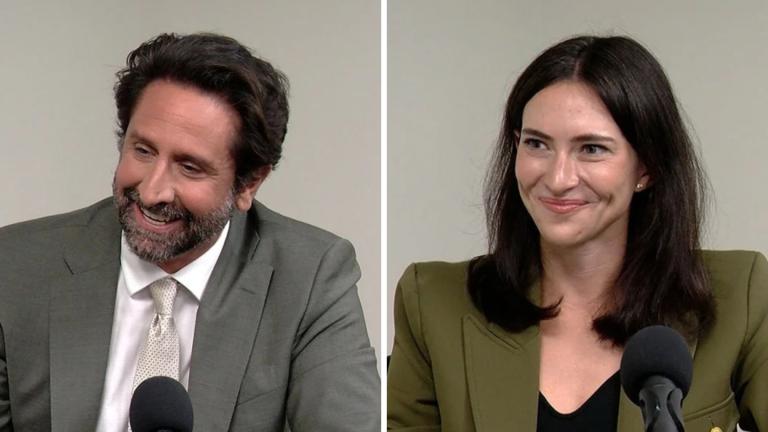
“A lot of what’s powering a lot of things in these elections is being anti-establishment,” said Jason DeSanto, a political speechwriter and professor at Northwestern School of Law. “We’ve heard about the power of money, both for and against candidates, the power of organizing, the power of anti-tech.”
The immediate challenge for Democrats is whether they can harness the frustration fueling revolts against their own party and turn it against Republicans in November. Beyond that looms the 2028 presidential race, when a new generation of leaders will compete to shape a changing Democratic Party.
Peter Giangreco, a partner at Democratic political consultancy The Strategy Group, worked on Crowley’s campaign. Giangreco said challenges from the left could give Republicans an opportunity to maintain control of Congress in 2026 and the White House in 2028.
“The left gave us Mandela Barnes, Francesca Hong, tried to give us Graham Platner in Maine,” Giangreco said. “This is the problem we have with the left — they embrace really unpopular positions like abolishing Thanksgiving.”
Hong’s defeat came after a number of her past comments resurfaced, including support for defunding the police and a call to cancel Thanksgiving, which she said was a joke.
Crowley’s win illustrates a tension for the party’s ascendant left flank. Candidates running on populist economic messages have found growing success with Democratic voters. But some positions associated with the progressive movement’s recent past remain vulnerabilities — particularly among voters worried about electability in November.
Sean Duffy, co-chair of the Chicago Chapter of the Democratic Socialists of America, pushed back on the notion that DSA candidates can’t win general elections.
“I don’t think Thanksgiving is the prime issue for any voter,” Duffy said. “I think voters were thinking about, ‘How do I afford to put food on my table?’ That’s what DSA candidates are focused on. We’re focused on how we can center a working class agenda that understands people’s needs matter more than anything else.”
Duffy added that Democratic voters across the country are choosing left-wing candidates over establishment Democrats, signaling a willingness to embrace a new generation of candidates.
“The left didn’t give you any of these candidates,” Duffy said. “The Democratic voter base did.”
Giangreco said left-wing candidates’ willingness to campaign with controversial figures, most notably Twitch streamer Hasan Piker, has distracted from what might otherwise be more successful campaigns. Michigan Senate candidate Abdul El-Sayed, who defeated moderate challenger Haley Stevens last week, campaigned with Piker multiple times leading up to the primary.
“They go campaign with folks who are huge millstones around their neck when they get to the general election,” Giangreco said. “El-Sayed, who is a very talented candidate, unlike some of the others that I mentioned like Graham Platner and Hong, had to spend a whole week on the defensive.”
DeSanto said Democrats need to look for a candidate who can draw together the increasingly disparate parts of their base in 2028.
“What looks good on paper is not always what’s good in practice,” DeSanto said. “It has to be someone who can bring together the different parts, the larger social zeitgeist, and be a good communicator. That means bringing a lot of people in.”
The Associated Press contributed to this report.