Politics
Thousands Rally, March in Chicago for National ‘No Kings’ Day of Protest
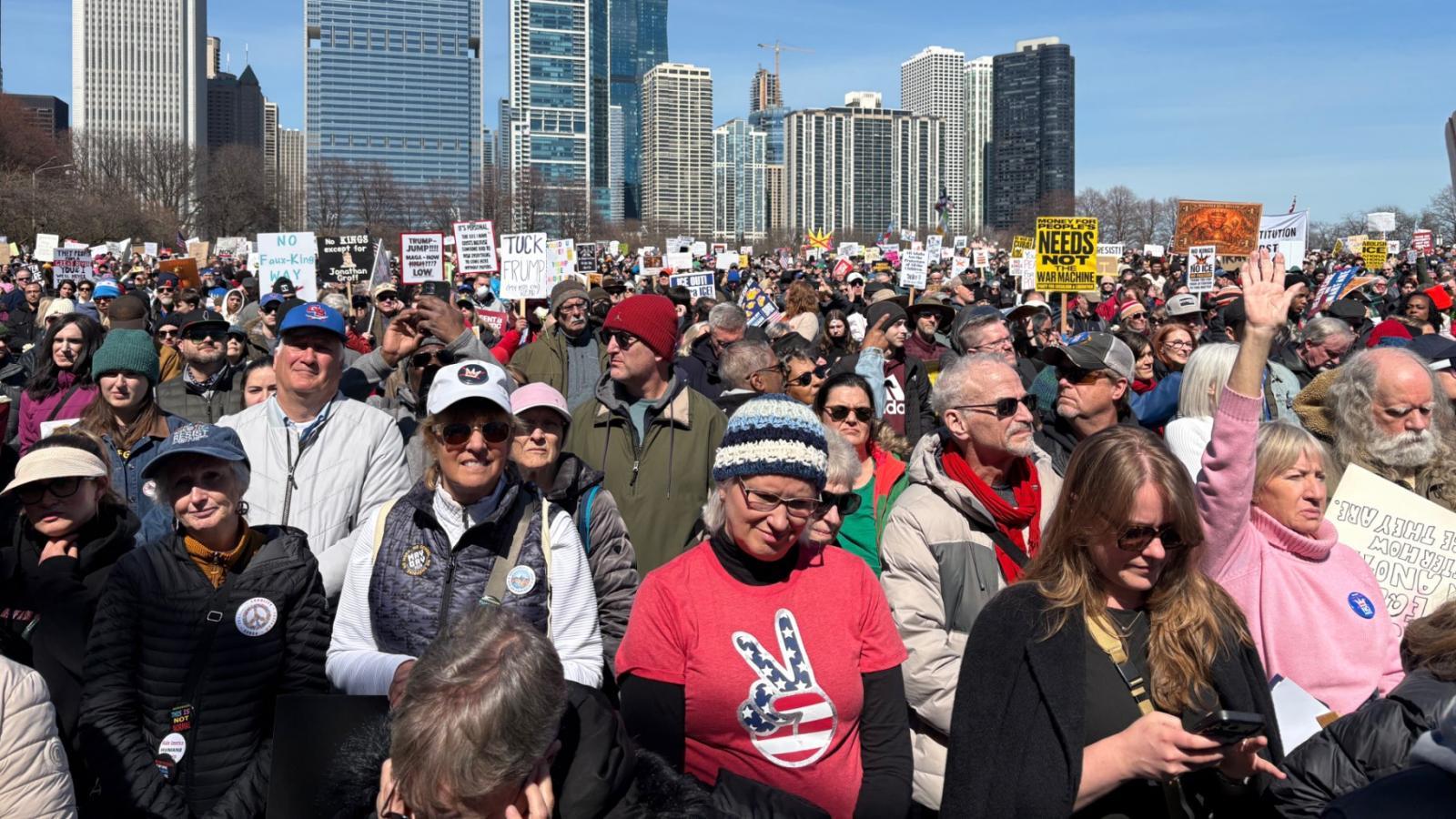
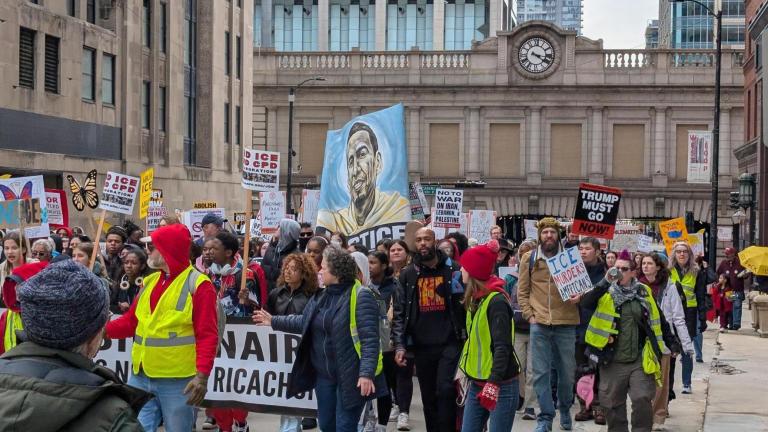
Thousands gather in Chicago’s Grant Park for a rally and march as part of the national “No Kings” protest on March 28, 2026. (Joel Ortiz / WTTW News)
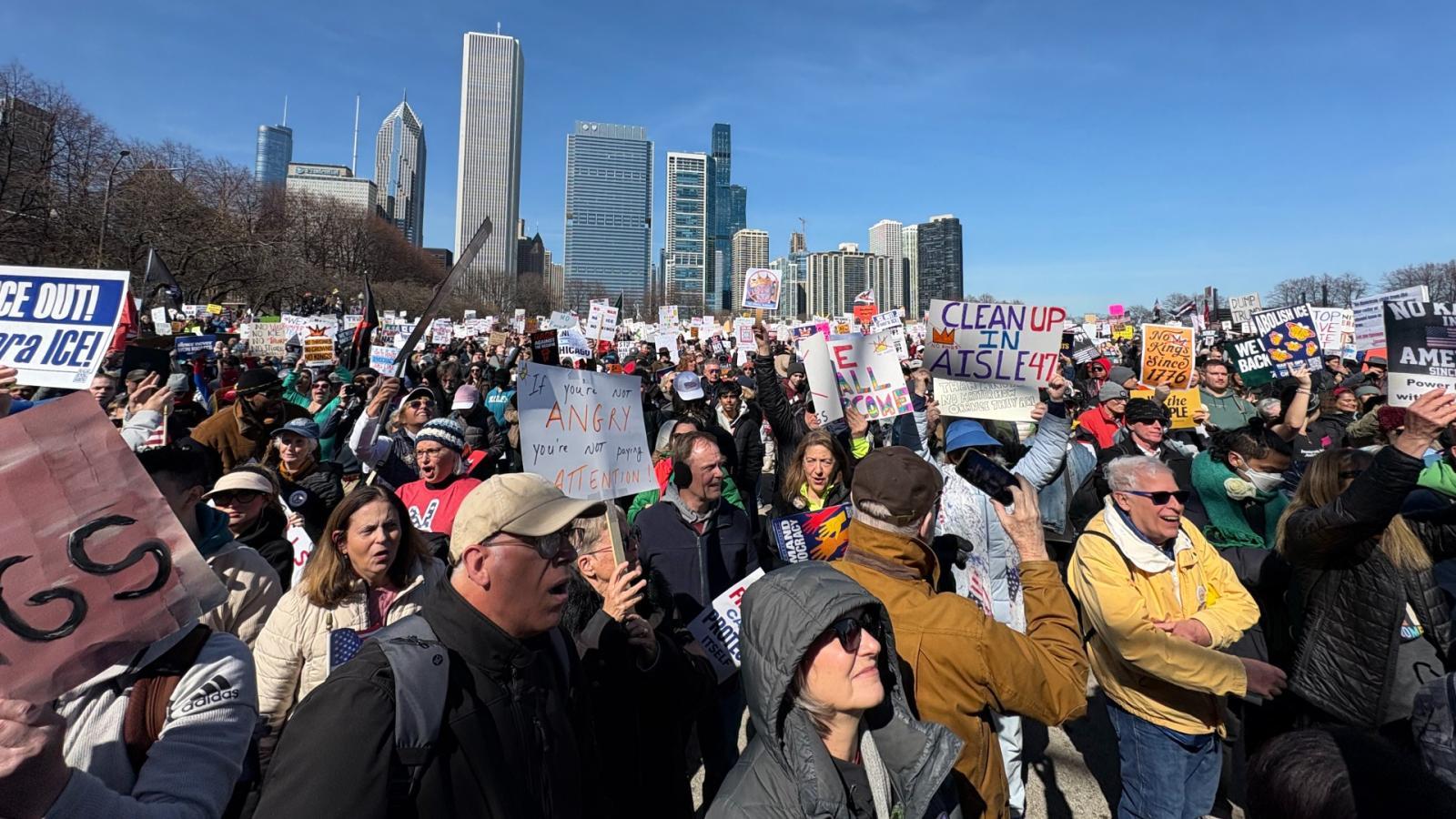
Thousands gather in Chicago’s Grant Park for a rally and march as part of the national “No Kings” protest on March 28, 2026. (Joel Ortiz / WTTW News)
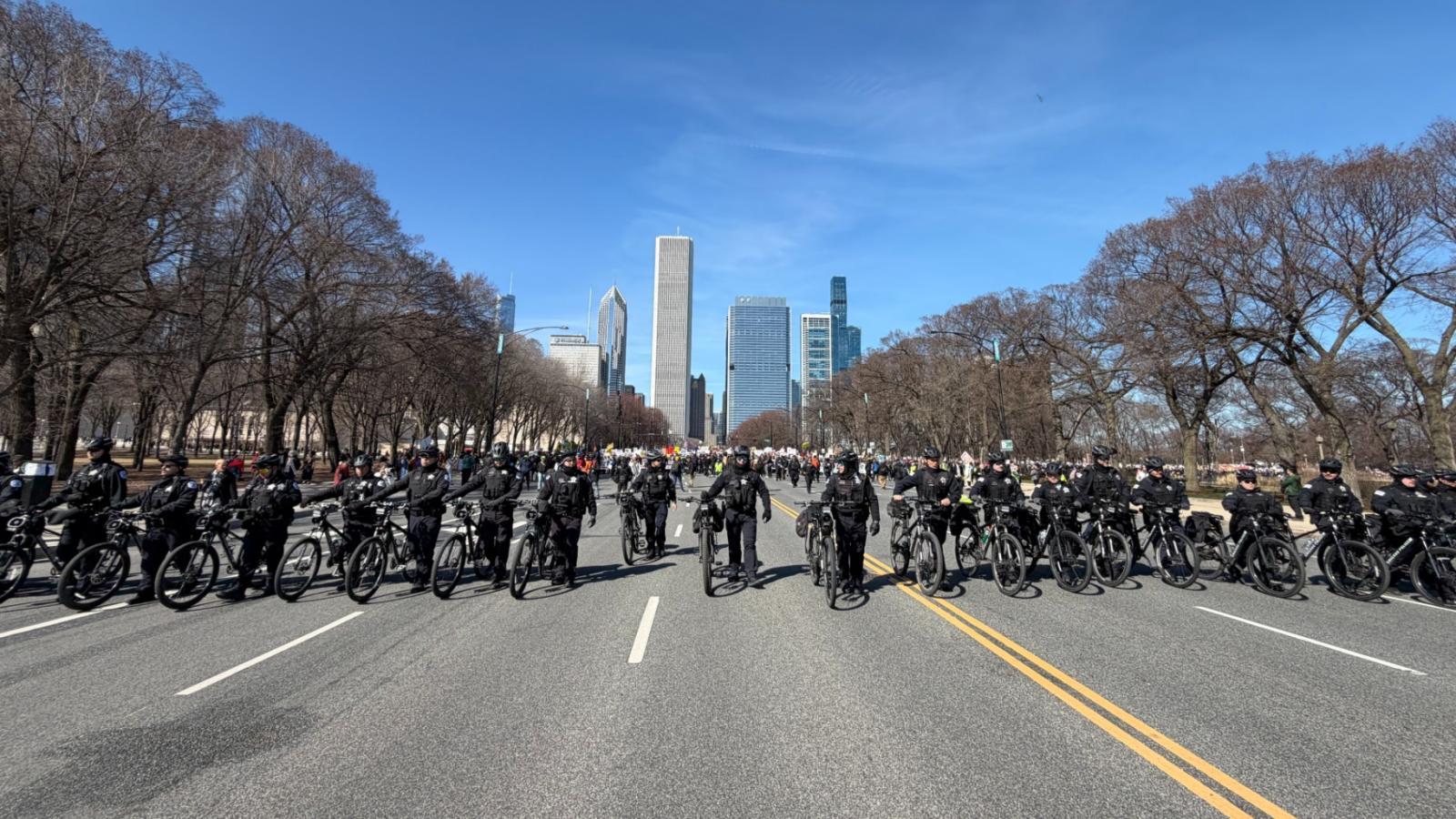
Chicago police officers before the start of the march. (Blake Thor / WTTW News)
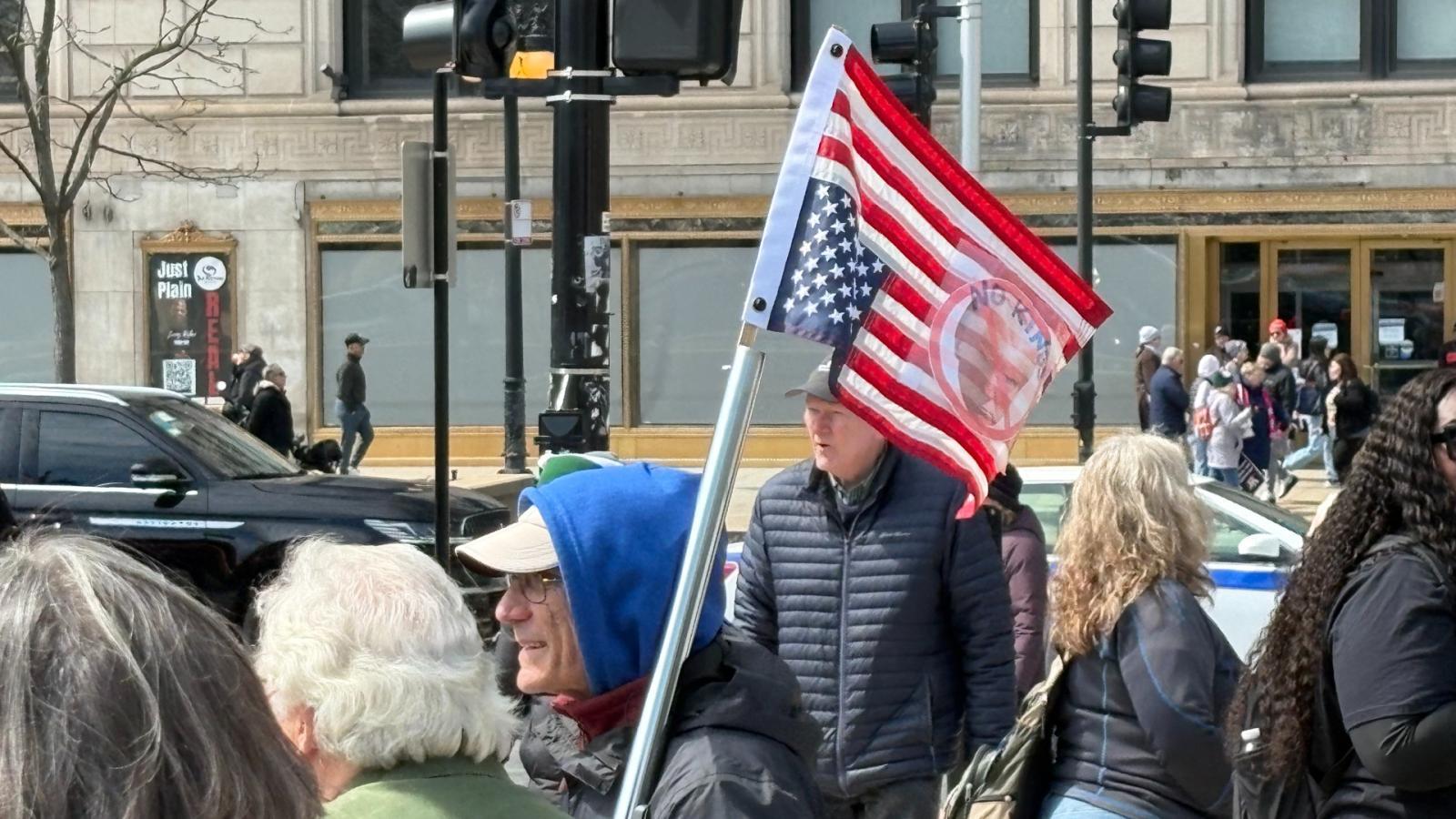
Thousands gather in Chicago’s Grant Park for a rally and march as part of the national “No Kings” protest on March 28, 2026. (Joel Ortiz / WTTW News)
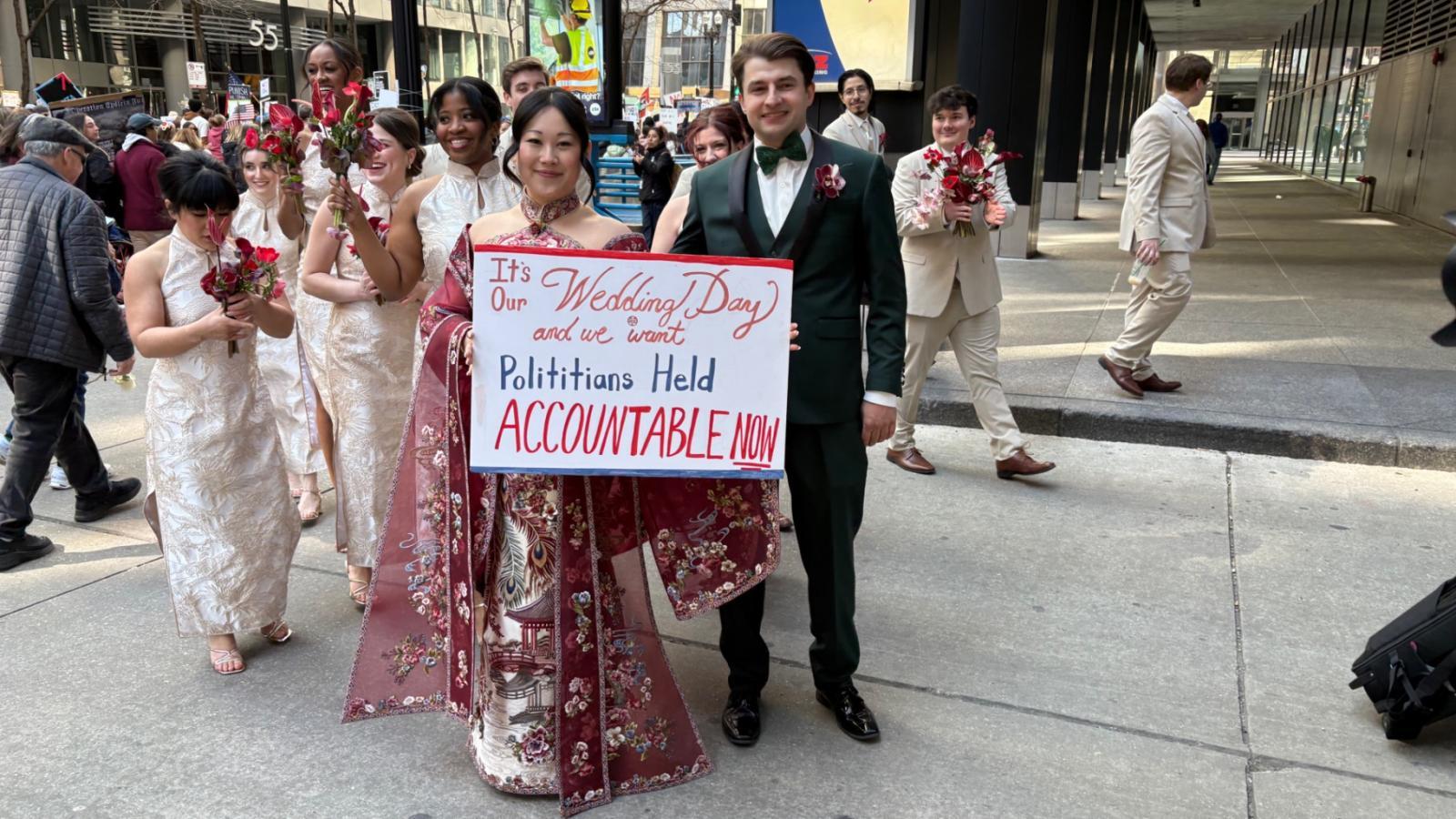
Newlyweds Sarah and Matt Bruns hold a sign during the “No Kings” protest on March 28, 2026. (Joel Ortiz / WTTW News)
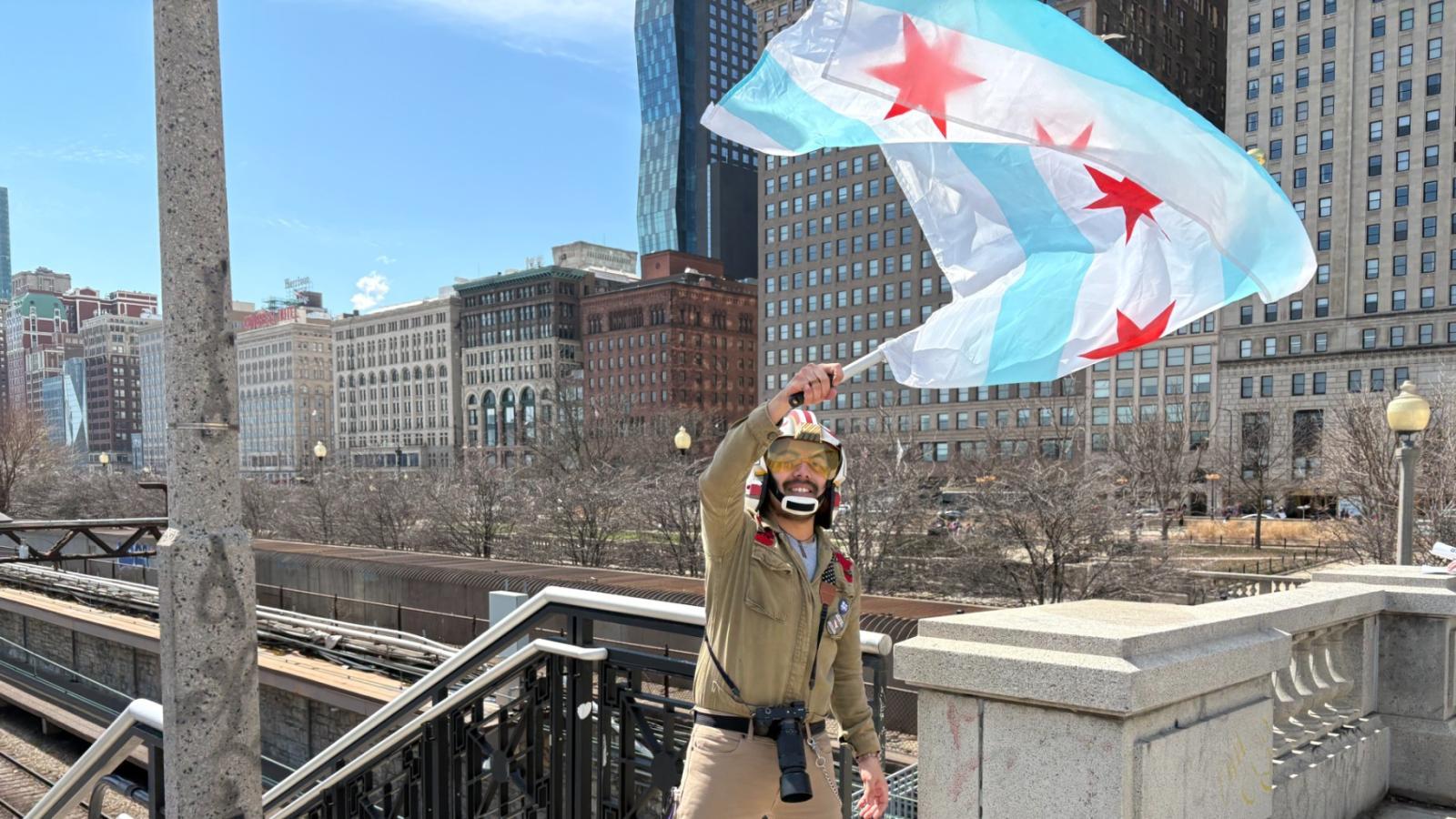
Daniel Saldaña, 25, a Chicago resident, attends the “No Kings” protest on March 28, 2026. (Joel Ortiz / WTTW News)
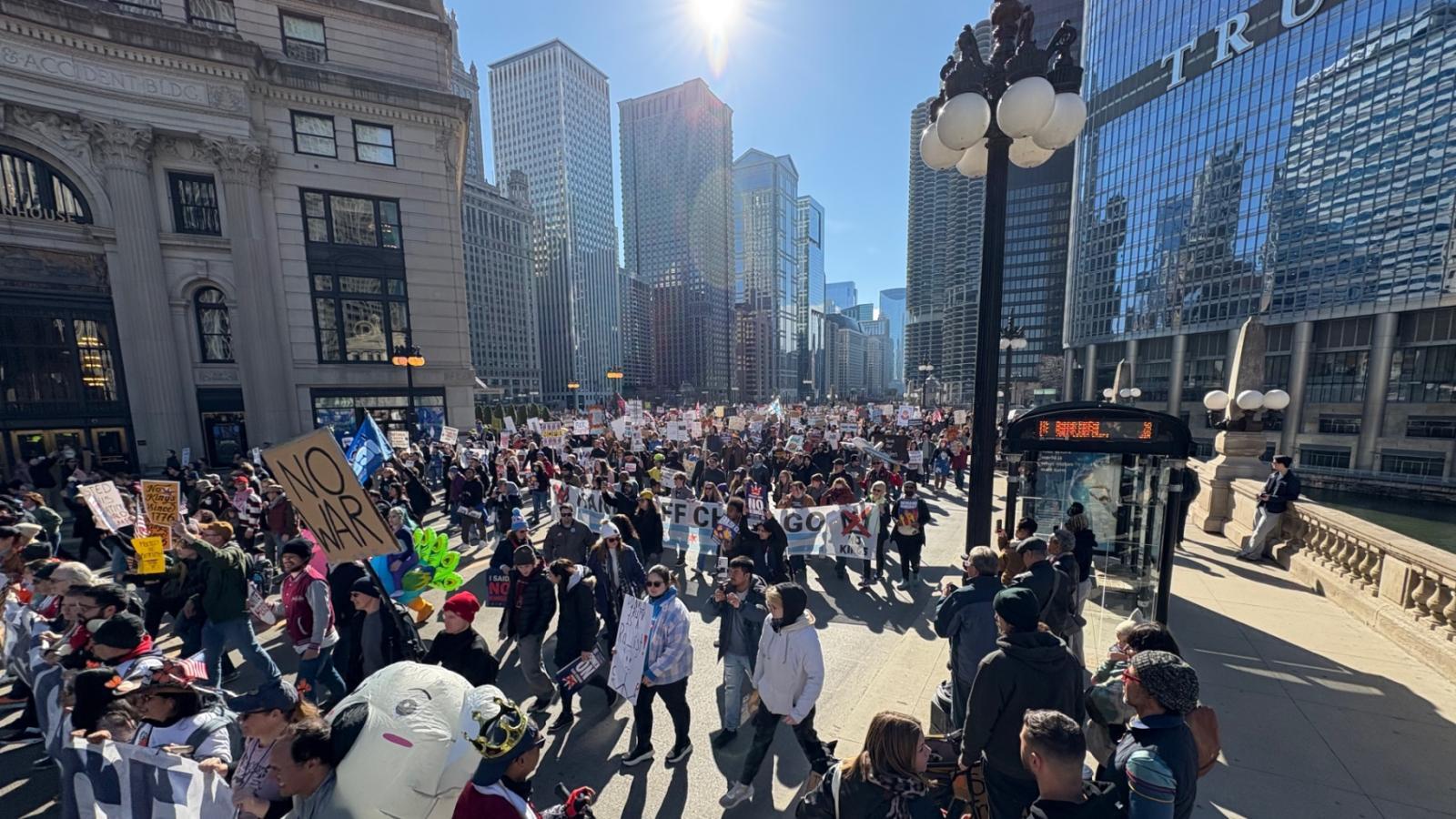
Thousands gather in Chicago’s Grant Park for a rally and march as part of the national “No Kings” protest on March 28, 2026. (Joel Ortiz / WTTW News)
Thousands of people across the Chicago area joined “No Kings” protests Saturday as part of a nationwide day of demonstrations.
In downtown Chicago, a rally drew thousands to Grant Park before a march made its way through the city’s streets.
Luis Gomez, an ACLU Illinois staff member, said before the gathering that disenchantment with ICE was animating the protest.
“We want to protect our immigrant communities, we want ICE out of our cities,” he said. Gomez added that the protest serves to affirm the First Amendment and the right to protest.
Saturday’s events were expected to include millions of protesters in more than 3,000 planned demonstrations across the U.S., including numerous events in Chicago and the surrounding suburbs.
The White House has dismissed the rallies with spokesperson Abigail Jackson describing the protests as the product of “leftist funding networks” with little real public support.
Chicago police report there were no major incidents after the conclusion of the downtown rally and march.
The “No Kings” theme was orchestrated by the 50501 Movement, a national group advocating for democracy and against what they call the authoritarian actions of the Trump administration. The name 50501 stands for 50 states, 50 protests, one movement.
The Chicago demonstration is taking place after the area was targeted in the Trump administration’s “Operation Midway Blitz” immigration enforcement effort and amid ongoing military action in Iran.
According to event organizers, more than 5 million people took part in the first round of No Kings protests in June 2025. Months later in October, 7 million people participated in the 2,700-plus rallies held across the country during the second No Kings protest, organizers said.
In front of the Petrillo Music Shell in Grant Park, a large crowd of protesters gathered for the afternoon rally.
DJ Sergio Fernandez played several songs including “All You Fascists Bound to Lose,” which some of the participants in the crowd cheered and clapped along to.
Representatives from the dozens of local organizations behind the rally gathered on the stage, including Indivisible Chicago, the Sierra Club, ACLU Illinois and Planned Parenthood Illinois.
Sen. Dick Durbin, Lt. Gov. Juliana Stratton, U.S. Rep. Chuy Garcia and Evanston Mayor Daniel Biss were among the many local officials gathered.
In his three-minute speech, Chicago Mayor Brandon Johnson called for wealthy Illinoisans to pay more in taxes.
“This is just not about electing people. This is making sure that the people have the power. Are you with me, Chicago?” Johnson called to the crowd. “Are you ready to continue this fight, Chicago? Well, I want you to enjoy this moment as we march, but we’re not done. We’re coming back to the streets of Chicago on May 1 to have a day of action to ensure that the ultra rich in the state of Illinois and across this country finally paid their fair share.”
In his speech, Julian DeShazier, senior pastor at University Church Chicago in Hyde Park, memorialized the Rev. Jesse Jackson, who died last month.
DeShazier called for attendees to see themselves in the struggles of other groups.
“We must see the struggle of the Black woman as our struggle, to see the attack against immigrants as an attack against each of us,” DeShazier said. “Say yes to their struggle Chicago, say yes to solidarity, to putting your color next to theirs. Say yes to the Rainbow Coalition.”
Lia Sofia Lopez, a student at Little Village Lawndale High School, said immigrants, slaves and oppressed people built this country and now is the time to fight this administration to protect human rights.
“And even though we are tired today, we are not tired of fighting for our rights and our freedoms,” Lopez said. “We are not tired of fighting for the future generation and our generation … if we do not stop and try to fight this administration, everything we know and love is getting ripped away from us.”
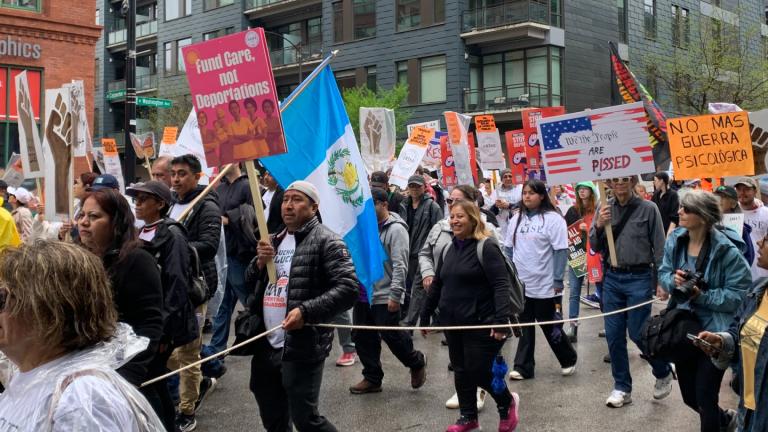
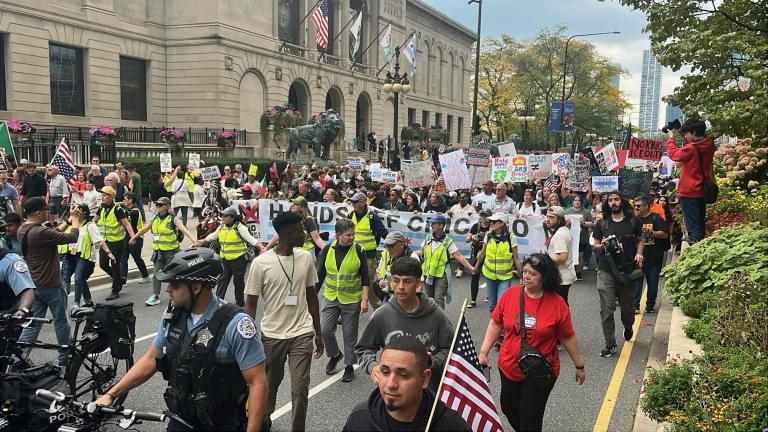
After the rally, blocks of protesters made their way through downtown streets. CPD officers were seen on bikes leading the protest march. In the days leading up to the demonstration, Johnson said officers would be activated to ensure the protest stays peaceful.
Video: Thousands march through downtown Chicago as part of the national “No Kings” protest on March 28, 2026. (Joel Ortiz and Blake Thor / WTTW News)
Marchers Take to the Streets
Ruben Maciel-Perez, 31, traveled from Aurora to Chicago for the protest. He said the gathering was especially personal for him as a Mexican American.
“ICE for one, being in our streets and taking people unlawfully from our immigrant community. Because I’m Mexican, that hits more closer to my home,” Maciel-Perez said.
Maciel-Perez also expressed frustration for the current cost of living. He encouraged more protests and civil disobedience.
“We have to start actually being more annoying and more persistent toward the people that have actual power,” he said.
John Baker, a member of La Salle Street Church, was singing the freedom song “Ain’t Gonna Let Nobody Turn Me Around,” with dozens of other churchgoers as the march went by.
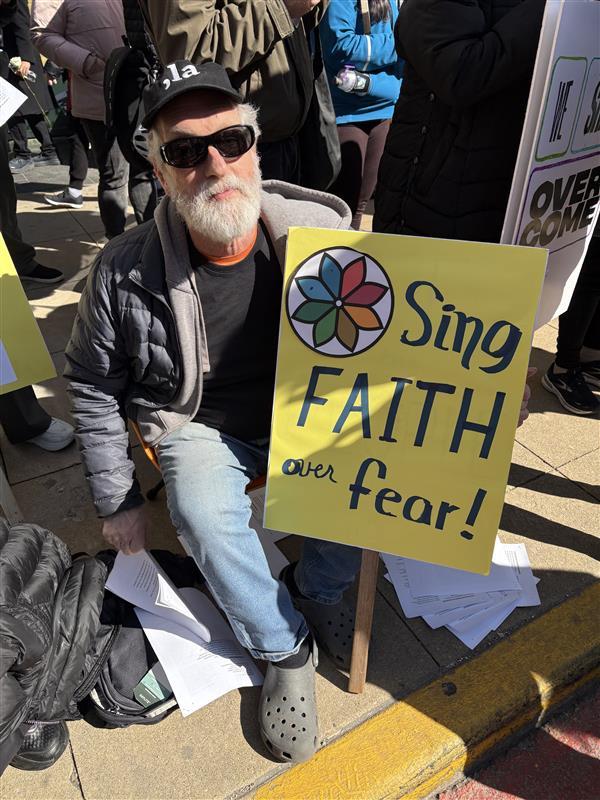 John Baker, a member of La Salle Street Church, at the “No Kings” protest on March 28, 2026. (Joel Ortiz / WTTW News)
Baker, 72, said he has been protesting to mix civil rights and Christianity since he was 20 years old.
“Religious communities have always stood for civil rights,” Baker said. “If you think about Martin Luther King and all the church leaders that he gathered for the march on Selma, that’s why we’re here, partly because of the faith to take care of one another.”
FiFi Moy, 61, called attention to the fight for abortion rights. She said being part of the rally makes her feel part of something much larger.
“You come out here, and it actually feeds your soul, because even people who didn’t intentionally come but just see you, they honk their horns, they’re like waving their fist, and you feel you don’t feel alone anymore,” Moy said. “… We are going to make the change. This is what makes me have hope still.”
Chants during the march chants rang out, including: “Free, free Palestine.”“Hey hey, ho ho, Donald Trump has got to go.” “Whose streets? Our streets!” and “2, 4, 6, 8 fight for love not for hate.”
Miquari Sanders, a bucket drummer, set up on State Street ahead of the rally performing for attendees on their way to the rally. He said he hoped to bring the energy of the crowd up and lift their spirits.
“It’s a little insane, too,” Sanders said of recent immigration raids in Chicago. “So I’m against ICE and Donald Trump, so that’s basically why I’m here.”
Today’s protest was the third No Kings rally for John Freberg, a lifelong Chicagoan from Beverly, who held a sign mocking Trump.
“He seems so proud of doing horrible things,” Freberg said. “He’s a child, and it feels like he’s going through potty training, and that’s what motivated the sign.”
Freberg, 71, said he wants to express his frustration with “pointless wars, control by billionaires and a criminal president,” referring to Trump’s 2024 criminal conviction for falsifying business records.
National and International Gatherings
Large crowds protested Saturday against the war in Iran and President Donald Trump’s actions in “No Kings” rallies across the U.S. and in Europe.
Minnesota took center stage, with thousands of people standing shoulder-to-shoulder to celebrate resistance to Trump’s aggressive immigration enforcement.
Minnesota’s flagship event on the Capitol lawn in St. Paul drew Bruce Springsteen as its headliner. He and other speakers praised the state’s people for taking to the streets over the winter in opposition to a surge of U.S. Customs and Immigration Enforcement agents.
Springsteen performed “Streets of Minneapolis,” the song he wrote in response to the fatal shootings of Renee Good and Alex Pretti by federal agents. Springsteen lamented Good and Pretti’s deaths but said the state’s pushback against ICE has given the rest of the country hope.
“Your strength and your commitment told us that this was still America,” he said. “And this reactionary nightmare, and these invasions of American cities, will not stand.”
Rallies also took place in more than a dozen other countries, from Europe to Latin America to Australia, Ezra Levin, a co-executive director of Indivisible, a group spearheading the events, said in an interview. Countries with constitutional monarchies call the protests “No Tyrants,” he said.
U.S. organizers told reporters in an online news conference Thursday that they expected Saturday’s protests to be larger than the first two rounds of No Kings rallies.