Politics
Alderpeople Weigh in on the Path Forward for Budget Negotiations After Johnson’s Plan Fails to Advance
Mayor Brandon Johnson’s $16.6 billion budget proposal for 2026 suffered a major blow Monday when the Chicago City Council’s Finance Committee rejected it in a 10–25 vote.
A number of alderpeople oppose Johnson’s proposed corporate head tax, which would impose a monthly $21 per employee tax on companies with more than 100 employees, arguing it will stifle business growth in Chicago.
Johnson said in a news conference that despite the setback in City Hall, his administration is standing firm on the head tax, setting up a debate likely to run close to the Dec. 30 deadline to pass a budget.
“We stand by our budget proposal,” Johnson said. “We stand behind the progressive revenue that we have put forward because this moment calls for those with means to put more skin in the game.”
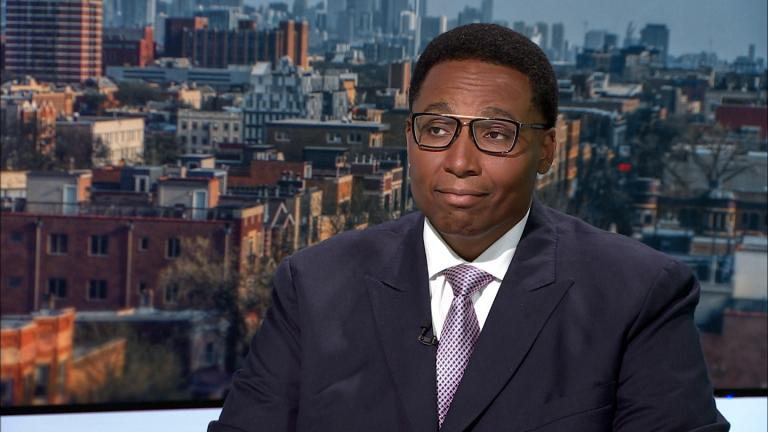
Alds. Daniel La Spata (1st Ward), William Hall (6th Ward) and Bill Conway (34th Ward) joined “Chicago Tonight” to discuss the ongoing budget negotiations. Here’s a snapshot of where they stand:
Reaction to Johnson’s Budget Failing in Committee
On Monday, 18 members of the City Council’s Finance Committee voted to adjourn, signaling that a large bloc preferred more debate over taking a final vote.
The attempt to adjourn failed, leading to the 10-25 vote rejecting Johnson’s proposed budget.
Johnson pressed for a vote even after it became clear most City Council members opposed the revenue ordinance, leading some alderpeople to believe he wanted them on the record opposing the head tax.
Hall likened the stalling negotiations in City Hall to the recent record-long 43-day federal government shutdown.
“Trump has found his way into City Hall,” Hall said. “These are some of the same tactics we saw in D.C. with the government shutdown and we now see them in the city of Chicago. We see nitpicking, we see arguments but no solutions, no counters to negotiate. … I see the beginning of a stand-down.”
Johnson has called for a recess until early December to give time for alderpeople to come up with their own proposals to raise revenue.
La Spata was one of the 18 alderpeople who voted to delay a vote on Johnson’s revenue ordinances, arguing that he and his colleagues needed more time to assess every option.
“There’s questions about how do we find in a way that is progressive, that, as Ald. Hall called for, asks those who can pay more and pay their fair share to pay their fair share, but also do it in ways that continues to grow our economy rather than deter economic growth,” La Spata said. “That’s a needle that we can thread, and I know that we can thread, but it deserves more time and deliberation. If we knew that the votes weren’t there for the revenue package, we should’ve taken the time to get to a place that everyone can agree on.”
The Ernst & Young Report and Budget Cuts
The city hired consulting firm Ernst & Young to produce a report analyzing Chicago’s finances and outlining ways to cut costs and boost revenue. The report cost $3.1 million, and identified between $530 million and $1.4 billion in potential savings and new revenue.
Johnson’s budget proposal only includes $80 million in cuts recommended by the report.
Hall commended Johnson for allowing an accounting firm to perform an audit on the city, but pointed to the identified cuts as those that would “break the backs of Chicagoans.”
“When you look at those recommendations, those recommendations phase in over time, especially in the year 2026,” Hall said. “So the committee is doing its job in finding efficiencies for the year 2026. … I have yet to find an idea that does not break the backs of Chicagoans. If you ask any Chicagoan right now, ‘Do you want to pay more in their property taxes?’ they’ll say no. If you ask them, ‘Do you wanna pay more on garbage fees?’ they’ll say no. If you ask them if they want to get nickel and dimed on other fees, they’ll say no.”
Johnson has said he would veto any budget that cuts the Chicago Police Department’s budget, and has also opposed reducing services such as street sweeping and snow removal.
Conway said the city should focus on trimming its own departments and eliminating inefficiencies instead of cutting services for Chicagoans or asking them to pay more.
“I agree we don’t wanna ask people in the 6th Ward, the 34th Ward or the 1st Ward for more money, and that’s why we have to be efficient with taxpayer dollars, and the report had some clear places to do that,” Conway said. “For example, fleet optimization. The average car owned by the city is driven 7,000 miles a year, and Ernst & Young said we can get 29.6 million (dollars) in efficiency in Year 1 — there’s 3 million of that in the budget. Procurement — only 51% of the stuff we buy goes through the procurement department. They identified $55-111 million in savings we could get through that — only $10 million in this budget.”
La Spata, who said the current budget proposal will need significant changes before it can pass, argued for a plan that pairs new revenue with cuts identified in the Ernst & Young report.
“We sometimes conflate cuts with efficiencies,” La Spata said. “Efficiency is providing the same high level of service to Chicagoans that they deserve and doing it with the same amount or less revenue. There’s so much more in the Ernst & Young report that we can dig into. There is no single way that we are going to get to a balanced budget, we should all be clear on that. It’s efficiencies, it has a revenue side to it. It’s more transparency in terms of how we use our revenue.”
Is the Head Tax a Nonstarter?
Johnson’s proposed tax on corporations has become the most incendiary part of his spending plan and the sticking point for many alderpeople.
Conway said that more cuts outlined in the Ernst & Young report need to be implemented before a head tax is considered.
“What I hear in the 34th Ward is we need to show taxpayers that we are being efficient with their tax dollars before we go asking for more, and Ernst & Young identified several areas in savings,” Conway said. “We need to really go back to departments and show taxpayers we’re being efficient with those dollars, that we have worked that out before we do anything like a head tax.”
Hall said he doesn’t see any budget passing unless it asks wealthy Chicagoans to “put more skin in the game.”
“I don’t see a way forward unless corporations pay their fair share,” Hall said. “We’ve made concessions for corporations, and in those concessions we are saying this tax will be reinvested directly into the communities, number one, that need investment. … It’s now the time for corporations to pay for the roads they drive on, for the utilities that they use and stop breaking the backs of the employees and using them as pawns to threaten to leave.”