Politics
CTA ‘Fully Committed’ to Red Line Extension Despite Trump Administration Move to Pause Funding
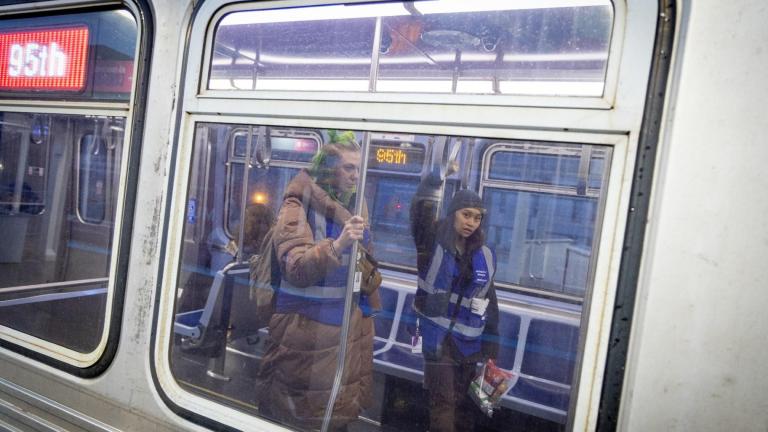
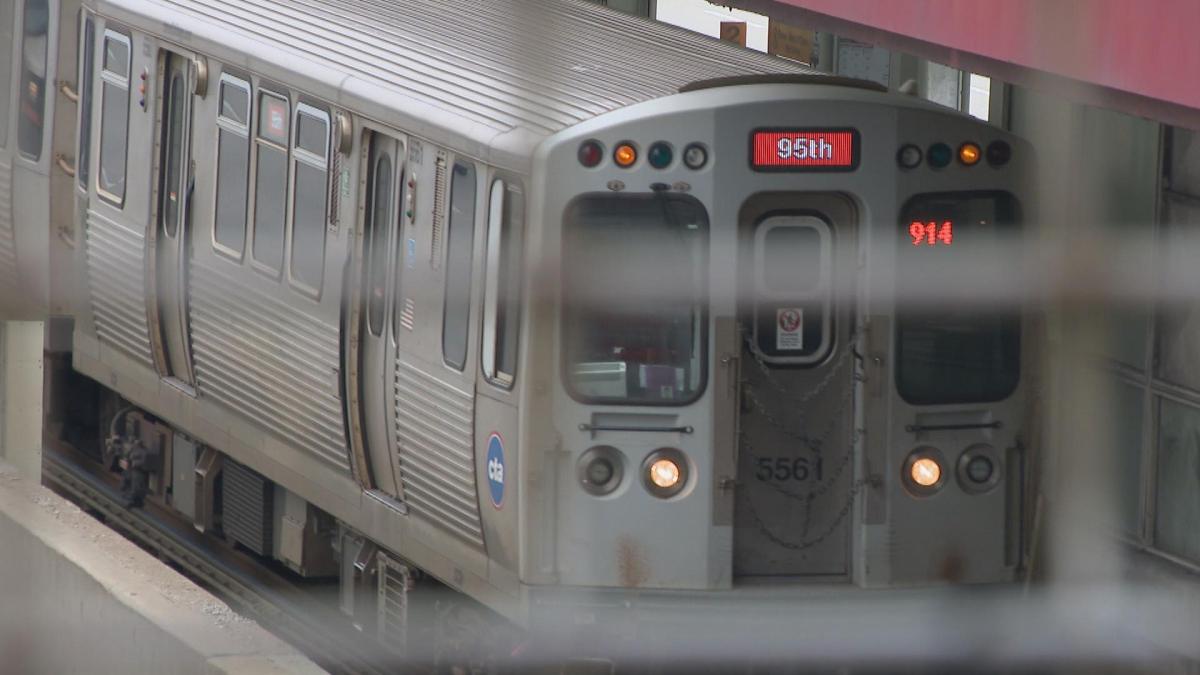 A Red Line train is pictured in a file photo. (WTTW News)
Chicago Transit Authority leaders doubled down on their commitment to the long-awaited Red Line Extension on Wednesday, despite the Trump administration saying it would put a pause on releasing nearly $2 billion in federal funding amid a review of the project’s contracting.
The funding freeze, which came despite a full funding agreement executed earlier this year, comes amid a broader anti-DEI push from the administration. In announcing the pause, federal officials said they’d be examining whether the Red Line Extension involves “race-based contracting” that Trump officials claim are discriminatory.
But longstanding federal rules the CTA followed to land the agreement for Red Line Extension funding mandated that the transit agency take into account so-called disadvantaged businesses controlled by women or Black and Latino owners.
“I want to be very clear that CTA is fully and entirely committed to the Red Line Extension project,” CTA Acting President Nora Leerhsen said at a meeting of the agency’s board of directors.
CTA was notified of the “temporary pause” in funding for the Red Line Extension and the Red-Purple Modernization effort on the North Side this past Friday. Leerhsen told directors that the agency has a 14-day period that began Tuesday in which to respond to federal officials, and said the CTA will do so in full.
Read More: Chicago Organizers Feel Whiplash as Trump Administration Freezes Funding for Red Line Extension
The CTA leader also affirmed that pre-groundbreaking work is still underway for the extension, which will bring stops to Far South Siders at 103rd Street, 111th Street, Michigan Avenue near 116th Street, and 130th Street. Officials hope to get shovels in the ground in early 2026, making good on a decades-old promise to bring train service all the way to Chicago’s southern boundary.
Board members commended CTA officials for navigating the unexpected roadblock, which critics argue is yet another illegal funding freeze from the current administration. Director Roberto Requejo applauded the agency’s measured response, adding that the agency complied with every relevant regulation at the time it struck a deal for the federal funding.
“This is exceptional, this is not normal,” Requejo said.
Budget Plans
Leerhsen also confirmed that the agency will release three versions of its 2026 budget on Monday – one that anticipates no additional public funding to make up a projected budget shortfall; one that anticipates receiving enough money to backfill a gap; and one that anticipates the Northeastern Illinois transit system getting an additional $1.5 billion, an amount agency leaders, transit advocates, and some lawmakers have advocated for as a chance to transform local public transportation.
The Regional Transportation Authority last week revised the budget deficit facing CTA, Metra, and Pace next year to $200 million, down from the more than $700 million originally projected. That new estimate is due to higher sales tax collections, cost savings, and an expected 10 percent fare increase. The RTA also shifted $74 million in funding from Metra and Pace to CTA to delay the agency going over a fiscal cliff, but warned that major disruptions could still occur later in 2026 without Springfield taking action. Lawmakers are set to return for the first of six scheduled veto session days on Tuesday.
Bus Lane Enforcement Cameras
The CTA also took a key final step toward implementing automated bus lane enforcement, which involves cameras mounted on buses to capture drivers illegally parked in a bus lane, bus stop, or bike lane. The board in March approved a contract for six cameras, which have been installed and are undergoing testing. Directors on Wednesday OK’d an intergovernmental agreement with the city to transmit information on lane violators to the Chicago’s Department of Finance, which issues tickets.
CTA officials said they expect to begin sending that data next week. During the first 30 days, all violators will receive a warning. After that grace period, drivers will receive one warning before being ticketed.
At last check, eight city vehicles were also equipped with the cameras. The CTA says that through August, the city’s issued some 24,000 warnings and more than 7,000 violations.
The pilot area for the automated enforcement system is bounded by the lake, Ashland Avenue, Roosevelt Road and North Avenue. The ordinance authorizing the enforcement scheme allows for revenue sharing from the tickets between the city and CTA, though no such agreement has been finalized.
Contact Nick Blumberg: [email protected] | (773) 509-5434 | @ndblumberg