Science & Nature
31 Tornadoes in the Chicago Area? A Look at What’s Behind Extreme Weather
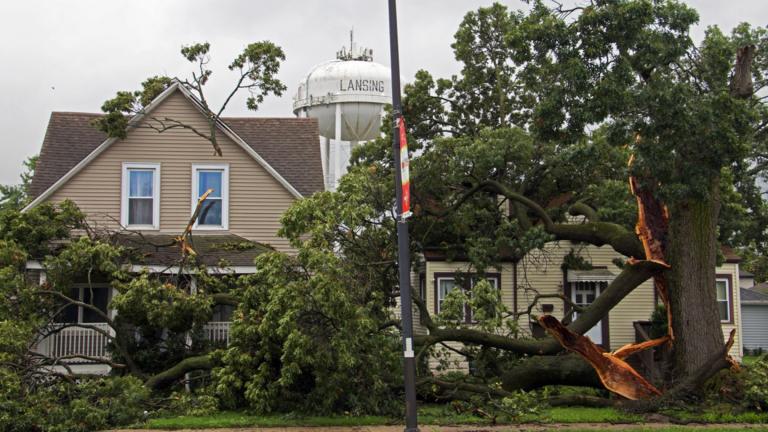
Illinois is still assessing the damage after a series of severe storms hit the state two weeks ago.
The National Weather Service in Chicago has so far reported 31 tornadoes in one storm event — surpassing the previous daily record of 22 measured just last year.
While there’s debate over how these storms should be defined — researchers are looking into the factors leading to extreme weather and how to protect communities.
Trent Ford, the Illinois State Climatologist, said while it’s easy to connect climate change to extreme heat or cold, the same can’t be said about storms that create tornadoes, hail and other severe storms.
“What we do see is that over the last 30, 40 years, we have seen trends of increasing tornado activity,” Ford said. “So as models get more advanced as computation methods get more advanced, we’re able to see more and more of those connections … but I think a lot more work needs to be done to really solidify what that actually means.”
Ford compared the current methods to “using a hatchet for something that requires more of a scalpel.”
Scott Collis, a scientist and department head at the Argonne National Laboratory, also pointed to the advances in technology that could make it easier to predict and track severe weather like tornadoes.
“Not only do we need to have higher resolutions — so basically a better digital camera gives you more detail,” Collis said. “We also need to build new physics into the climate models. We need to understand the physics of cities, of these small scale structures, the physics, frankly, of how the lake interacts with the city, as well.”
When it comes to deadly weather, Collis also pointed out that extreme heat needs to be monitored as well.
While about 76 people are killed a year from tornadoes, over 170 people die from heat related causes, he said.
“And extreme heat — it discriminates,” he said. “Because it will go after the most vulnerable populations: those without access to air conditioning, those that cannot take rest breaks and those with underlying comorbidities at the same time.”
So ensuring emergency services have ways to properly warn communities of extreme weather is vital, Ford said. No deaths were reported from the storms on July 14 and 15. He said that’s not just a coincidence.
“That’s the work of resources and research and just the hard work of folks in the National Weather Service and county and state emergency management,” Ford said. “And it’s those kinds of events like we had a couple of weeks ago that really show the value of investments in those services, particularly the National Weather Service… and so making sure that we can dedicate those resources to the National Weather Service is paramount.”