Politics
Illinois House Speaker Emphatic That Bears, Sox Won’t Get Public Funding for Stadiums
Not only did the Chicago Bears and White Sox fail to win state funding for new stadiums before the General Assembly’s session ended last week, the teams shouldn’t expect to notch a legislative win later this year.
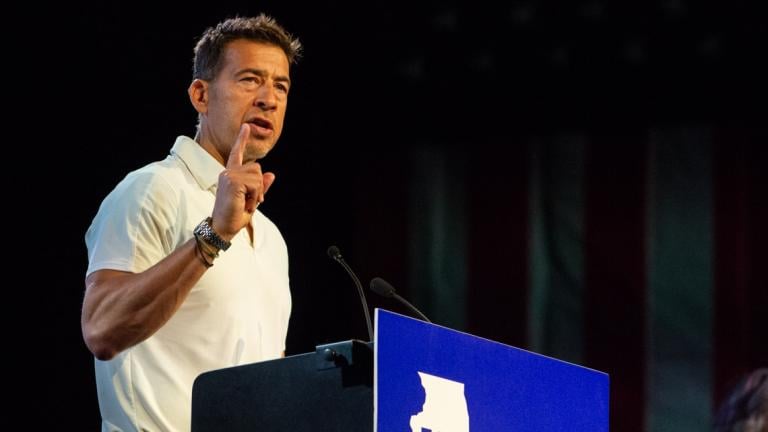
“As we’ve said to the Bears over and over again, to the White Sox, and also to the Chicago Red Stars, there’s just no appetite to use taxpayer funding to fund stadiums for billionaires,” House Speaker Emanuel “Chris” Welch told WTTW News in an interview Monday. “Even after the election.”
Those four words — “even after the election” — send a strong signal that the teams don’t stand much of a chance. That’s because the post-election period is when lawmakers traditionally take their most risky votes because they’re either lame ducks not returning to public office, or at least further away from asking voters to be reelected.
“You know, even after the election, I just think it’s, things we have to focus on: the kitchen table issues,” Welch said. “People want to make sure their groceries are affordable, their rent is affordable, you know, that they have a roof over their head. The last thing they want us to be talking about is stadiums for sports teams.”
Already, the speaker predicts Springfield will be dealing with a surfeit of demands next year.
“This was a tough budget year. Next year is going to be another tough budget year,” Welch said. “But one of the things that we’ve been able to do as Democrats – the party in charge – we’ve been able to be fiscally responsible. We’ve been fiscally responsible and compassionate as well.”
How to rescue Chicago-area transit agencies, which are forecasted to face a collective $730 million deficit come 2026, is among the high-dollar demands already greeting lawmakers.
Welch said experts from the House Democratic Caucus will spend the summer and fall examining the issue.
“That’s one of our main challenges ahead,” Welch said.
New State Budget
The revenue portion of the overall package for the new budget barely passed last week, taking three tries in the House to win the bare minimum 60 votes necessary, despite Democrats having 77 members (plus an additional seat that’s currently vacant).
Welch said unexpected “emergencies” came up that triggered the need for three attempts.
“It’s sausage-making and in sausage-making, things are unpredictable,” he said.
But he also indicated that it took work to get his fellow Democrats on board.
The revenue measure was seemingly tailor-built to bring more money into state coffers without angering voters.
Illinois is projected to raise at least $750 million in new revenue. Those gains come from new taxes on video gaming terminals and businesses (like Kayak, Expedia and Priceline) that re-book hotel rooms. Taxes were also raised on sportsbooks, the amount corporations can deduct in net operating losses was lowered and the amount of the sales tax that retailers can pocket was capped.
“We’re talking about some pretty powerful corporations,” Welch said of the interests working against those tax increases. “I think they had every lobbyist in Springfield on their payroll.”
In the end, it resulted in a “balanced budget,” he said. Welch predicts it will lead to future increases in Illinois’ credit rating.
Illinois has continuously received credit upgrades during Gov. J.B. Pritzker’s time in office, but started from such a poor position that it remains the lowest in the nation.
Legislative Staffers Union Fight
A group of House Democratic state employees attempting since last year to formally form the Illinois Legislative Staff Association (ISLA) on Friday sued Welch in his capacity as speaker for violating the Workers’ Rights Amendment, the latest addition to the state constitution.
The amendment, which Welch helped to pass in 2022, guarantees workers’ right to collectively organize and bargain.
Welch has maintained that previous state law exempts legislative employees.
As of Monday night, Welch said he has yet to be served with the lawsuit, though he had read it.
The suit accuses Welch of violating the constitution’s new union protections, and said that he “unlawfully created a climate of fear among the Speaker’s staff and among the members of the ILSA and sought to chill the open exercise” of the nascent union’s “rights to engage in good faith bargaining.”
Welch said that his record on labor is clear, and notes that in 2023 he sponsored and helped shepherd through the House legislation that would remove the legal exemption and give public employees who work at the statehouse the ability to unionize, but that the bill has since stalled in the Senate.
“He (Senate President Don Harmon) knows my position on the bill. I’m a big supporter of that issue,” Welch said. “And certainly, there’s that bill and other bills that have passed the House and haven’t moved in the Senate. That’s a point of frustration that we have every year. What I think those employees should do is, similar to the conversations they’ve had with me, they should continue to have those conversations in the Senate.”
Meanwhile, Welch defended an election and campaign finance proposal (House Bill 4488) blasted by reformers.
Should Pritzker sign the measure into law, it would lift all limits on political party committees transferring money to candidates – essentially giving party leaders even greater influence.
“Even Mike Madigan didn’t do this,” said Alisa Kaplan, executive director of Reform for Illinois, in a news release. “It’s a step backward that will increase legislative leaders’ power over their members while supercharging the election money arms race and depriving constituents of the chance to be represented by more independent candidates.”
Welch said the proposal was jointly agreed to by Pritzker and Harmon.
“You’re going to know where the money’s coming from,” he said. “We file reports. The sun is shining on the process. And we thought it was one of the changes that was needed. We agreed upon it.”
During the fall primary, campaign committees affiliated with Welch — the first Black speaker of the House — spent roughly $1.7 million to defeat an incumbent Democrat, state Rep. Mary Flowers of Chicago, who is the longest-serving Black member of the House.
Welch said his goal in trying to unseat her was to “make things better.”
“That was one of those things that at the end of the day was going to make the House better, make our caucus better, and I think eventually make that district better and the entire state,” he said. “Sometimes we can overstay our welcome, you know, and that’s a situation where I think change was needed.”
Contact Amanda Vinicky: @AmandaVinicky | [email protected]